
What Engine Does McLaren Use in F1?
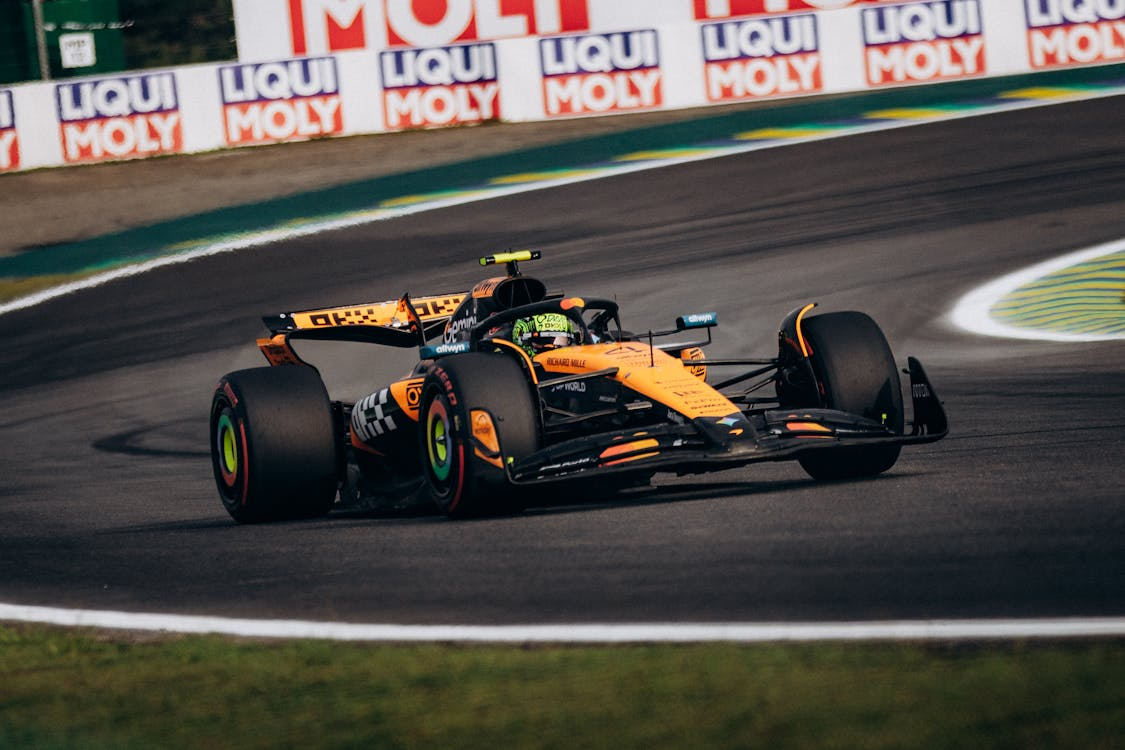
McLaren uses Mercedes-AMG power units in Formula 1. Recent cars run the Mercedes-AMG F1 M13 E Performance 1.6-litre V6 turbo hybrid - a unit that links two of motorsport's most recognizable names and gives the Woking team a proven, high-performance base.
This supplier choice reflects Mercedes-AMG's strong record with V6 turbo hybrid engines. A renewed agreement now extends the partnership through 2030, covering both the current regulations and the major 2026 power unit overhaul. That gives McLaren a stable, long-term foundation for its F1 ambitions.
Who Makes the Current McLaren F1 Engine?
McLaren's engines come from Mercedes-AMG High Performance Powertrains (HPP). This division of Mercedes-Benz builds advanced hybrid F1 power units to meet strict FIA technical regulations. All Mercedes-AMG F1 powertrains are produced at HPP's site in Brixworth, UK.
McLaren and Mercedes-Benz share a long history with many highs. Today Mercedes supplies engines to several teams, including its own works team, Williams, and Aston Martin. The link with McLaren remains strong, built on shared goals and a focus on speed and reliability.
What Is the Technical Specification of McLaren's F1 Engine?
The Mercedes-AMG F1 M13 E Performance is built to meet modern F1 hybrid regulations. It is a 1.6-litre V6 turbo hybrid that revs to 15,000 RPM, delivering power and efficiency through a smart mix of combustion and electrical systems.
Main components of the power unit:
- Internal Combustion Engine (ICE): 1.6-litre V6, 90-degree layout, 24 valves
- Turbocharger (TC): single-stage compressor and exhaust turbine on a common shaft
- MGU-K: recovers kinetic energy; up to 2 MJ per lap recovery and 4 MJ per lap deployment; max 50,000 rpm
- MGU-H: linked to the turbo; unlimited energy recovery and deployment; max 125,000 rpm
- Energy Store (ES): lithium-ion battery; up to 4 MJ per lap storage
- Control Electronics (CE)
| Engine Type | 1.6-litre V6 Turbo Hybrid |
| Cylinder Angle | 90 degrees |
| Max RPM | 15,000 RPM |
| MGU-K Recovery | Up to 2 MJ/lap |
| MGU-K Deployment | Up to 4 MJ/lap |
| MGU-H RPM | Up to 125,000 RPM |
| Energy Store | Up to 4 MJ/lap |
| Min. PU Weight | 151 kg |
| Injection Pressure | Up to 500 bar |
The ICE uses high-pressure direct injection at up to 500 bar with one injector per cylinder. The exhaust turbine can spin at 125,000 rpm. The ERS combines the crankshaft-linked MGU-K and the turbo-linked MGU-H. The power unit must meet the F1 minimum weight of 151 kg and fuel flow limits.
How Has McLaren's F1 Engine Supplier Changed Over Time?
McLaren has worked with many engine suppliers across its F1 history, and these choices often shaped its results. Over time, changes in rules, technology, and partners played a major part in the team's success.
McLaren is one of F1's most successful teams, with 189 wins, nine Constructors' titles, and 12 Drivers' titles. Those results came with help from different engine makers, showing McLaren's ability to adapt and keep pushing for wins.
1968-1982: Ford-Cosworth DFV Era
McLaren rose with the Ford-Cosworth DFV (Double Four Valve), a key engine of the time for many teams. In 1974, Emerson Fittipaldi won the drivers' title and McLaren took the constructors' title with Ford power. James Hunt won the 1976 drivers' title by a narrow margin, again with a Ford engine.
This period helped build McLaren's standing in F1 and showed how a strong, reliable engine can shape results. The DFV defined an era, and McLaren used it to great effect.
1983-1992: TAG-Porsche and Honda Dominance
In the mid-1980s, McLaren partnered with TAG, which had Porsche build the engines. The setup worked well: Niki Lauda won the 1984 drivers' title, and Alain Prost followed in 1985 and 1986. The TAG-Porsche package also delivered in the constructors' fight.
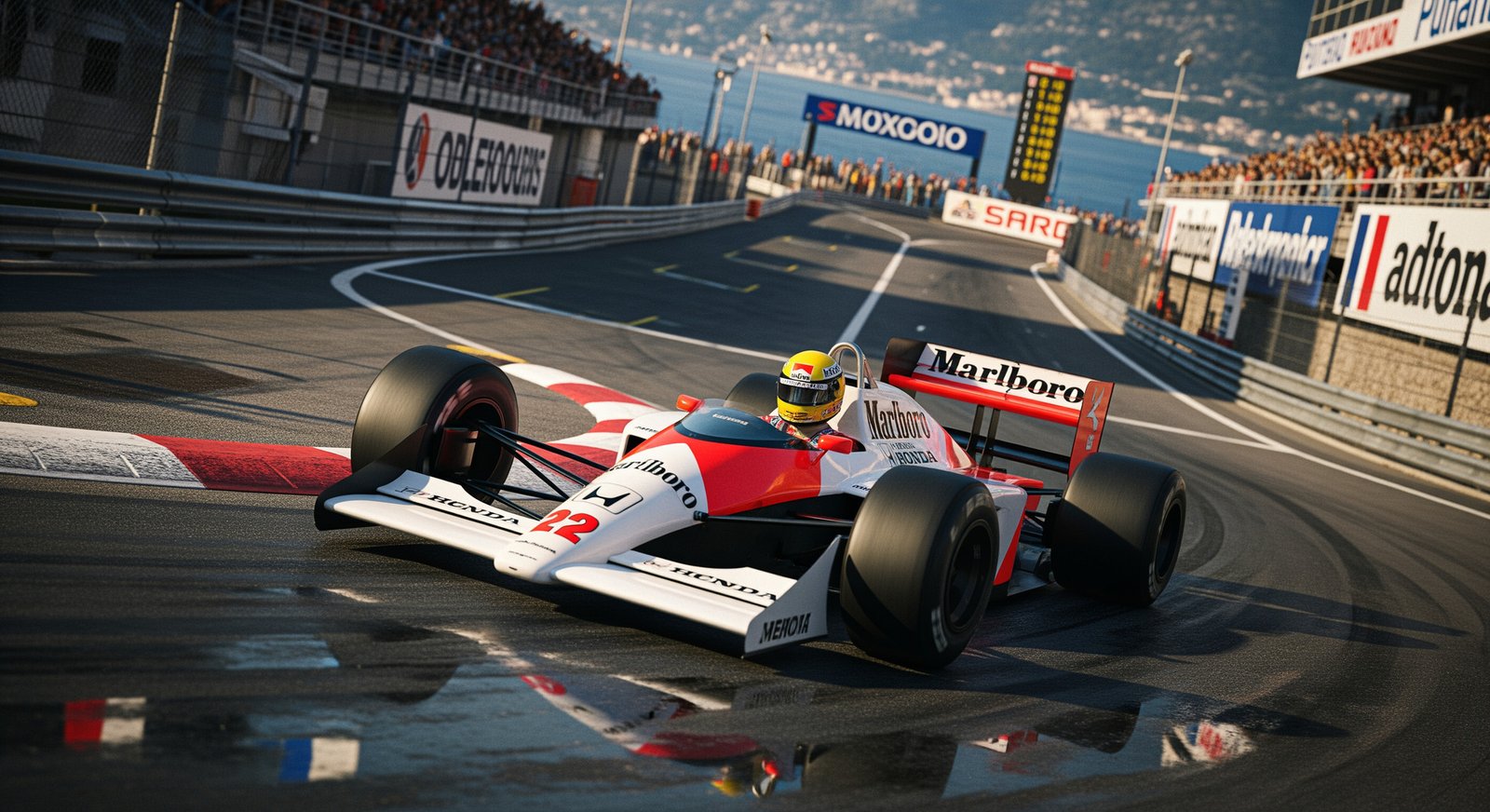
From 1988 to 1991, McLaren's Honda phase was even stronger. With Ayrton Senna and Alain Prost, the team swept four straight constructors' and drivers' title doubles. Senna took three of those drivers' crowns and Prost one, making this run one of F1's most dominant.
1993-1994: Ford, Lamborghini, and Peugeot
After Honda, McLaren switched suppliers several times. The team returned to Ford in 1993, tried Lamborghini in 1994, then used Peugeot. This was a short stopgap while searching for a long-term partner. Some promise showed, but no title challenge materialized.
1995-2014: Mercedes Partnership
In 1995, McLaren teamed up with Mercedes-Benz, starting a long and successful run. For much of this time, Mercedes focused its F1 engine work on McLaren, highlighting how strong the relationship was.
McLaren-Mercedes won big with Mika Hakkinen's back-to-back drivers' titles in 1998 and 1999, and Lewis Hamilton's first championship in 2008. Across two decades, Mercedes power helped McLaren take three Drivers' titles, one Constructors' title, and 78 race wins. Mercedes also powered the first hybrid-era race win using KERS at the 2009 Hungarian Grand Prix, highlighting its technical strength.
2015-2017: Honda Return
McLaren returned to Honda in 2015, hoping to repeat past success. It was a difficult period. The engines lacked performance and reliability, and the team ran mid-pack. No titles came from this partnership, which showed how demanding F1 engine development can be and how much is at stake with a supplier choice.
2018-2020: Renault Power Units
After Honda, McLaren moved to Renault for 2018. The aim was a steadier, more competitive package. Reliability and performance improved, but the team still chased the front-runners while rebuilding its form.
2021-Present: Back to Mercedes Engines
To return to title contention, McLaren rejoined Mercedes power in 2021. The move paid off quickly: the team won the 2021 Italian Grand Prix, the first victory by a customer team using Mercedes power. Since then, McLaren has scored regular podiums and strong pace, with the deal now running to 2030.
Why Doesn't McLaren Build Its Own F1 Engines?
People often ask why McLaren does not build its own modern F1 engines. The main reason is cost. Creating a front-running power unit today requires huge investment that even major performance brands may find hard to justify.
Modern F1 engines are complex hybrid systems combining combustion with advanced electrical components. Building them requires significant R&D budgets, specialized facilities, and large teams of engineers. Global manufacturers like Mercedes-Benz, Honda, Renault, and Ferrari can fund this and apply the technology to road cars.
For McLaren, buying engines means it can focus resources on the chassis, aerodynamics, and racing operations - areas where the team has historically been strong.
What Does the Mercedes Engine Mean for McLaren's F1 Performance?
Switching back to Mercedes power in 2021 helped McLaren move up the grid. The engine brings proven pace, advanced hybrid technology, and a base of shared experience that fits well with McLaren's chassis philosophy.
Many regard the Mercedes unit as one of the grid's best, and pairing it with McLaren's chassis has lifted overall performance. Results like the 2021 Italian Grand Prix win and consistent podiums show how well this combination works. With reliable power and strong performance, Lando Norris and Oscar Piastri can fight near the front.
Power Output and Hybrid System
The Mercedes-AMG F1 M13 E Performance is a V6 turbo hybrid known for high power output and strong efficiency. A powerful combustion engine works with an energy recovery system (ERS) to add electric boost and charge on the move.
With a 15,000 RPM limit, high-pressure direct injection, and an efficient turbocharger, the car accelerates hard and reaches strong top speeds.
The ERS includes:
- MGU-K: captures energy under braking and deploys it for extra power
- MGU-H: captures heat energy from the exhaust and manages turbo speed
Energy goes into a high-capacity battery and is released when the driver needs it for overtaking or defense. Good power combined with smart energy management makes McLaren quick at both high-speed circuits and tighter tracks.
Reliability and Competitive Impact
Reliability matters enormously in F1. Engine trouble can end a race and bring grid penalties. Mercedes has a strong record for reliable units, which helps McLaren run hard without the constant threat of failures - a marked change from the difficult Honda years.
With a high-performance engine, McLaren can design a bolder, more efficient chassis, confident the power unit will cope. A long deal running to 2030 lets the team plan car development around known engine characteristics, building a more complete package. Close collaboration with Mercedes-AMG HPP helps McLaren extract the maximum from the combination.
What Engine Will McLaren Use for Future F1 Seasons?
F1 engine regulations keep moving forward, and McLaren has already secured its supply arrangements for the next phase, including the major rule change in 2026.
Current Power Unit Agreements
McLaren's agreement with Mercedes-Benz now runs through to 2030. This extended deal provides certainty across both the current and incoming regulations. The Mercedes-AMG M13 E Performance 1.6-litre V6 turbo hybrid remains the core of McLaren's current setup.
This arrangement works for both sides: McLaren gets a proven engine, and Mercedes strengthens its role as a leading F1 supplier. Since 2021, results have improved steadily, helping McLaren climb the constructors' standings.
Expected Engine Supplier Changes for 2026 and Beyond
F1 introduced a new power unit formula in 2026, changing how engines are built and deployed. McLaren and Mercedes-Benz extended their deal to 2030, making McLaren an early customer for the 2026 Mercedes-AMG unit alongside the works team.
The 2026 power units split output roughly 50% from the internal combustion engine and 50% from electric power, targeting over 1,000 hp. They run on 100% sustainable fuel.
The electrical side is significantly more powerful, using a single 350 kW motor - nearly three times the output of the previous MGU-K - supported by a high-performance battery system.
Mercedes-AMG HPP began development of these units in mid-2022 under the cost cap. This long-term plan gives McLaren a stable, cutting-edge supply base for the new era.
| Years | Engine Supplier | Highlights |
| 1968-1982 | Ford-Cosworth DFV | First titles in 1974; Hunt's 1976 drivers' crown |
| 1983-1987 | TAG-Porsche | Drivers' titles in 1984, 1985, 1986 |
| 1988-1991 | Honda | Four straight double titles with Senna and Prost |
| 1993-1994 | Ford/Lamborghini/Peugeot | Short-term suppliers; no title runs |
| 1995-2014 | Mercedes | 3 Drivers', 1 Constructors', 78 wins |
| 2015-2017 | Honda | Reliability and performance struggles |
| 2018-2020 | Renault | Improved stability; rebuilding phase |
| 2021-2030 | Mercedes | 2021 Monza win; long-term deal into new rules |