
What Engines Do F1 Cars Use?
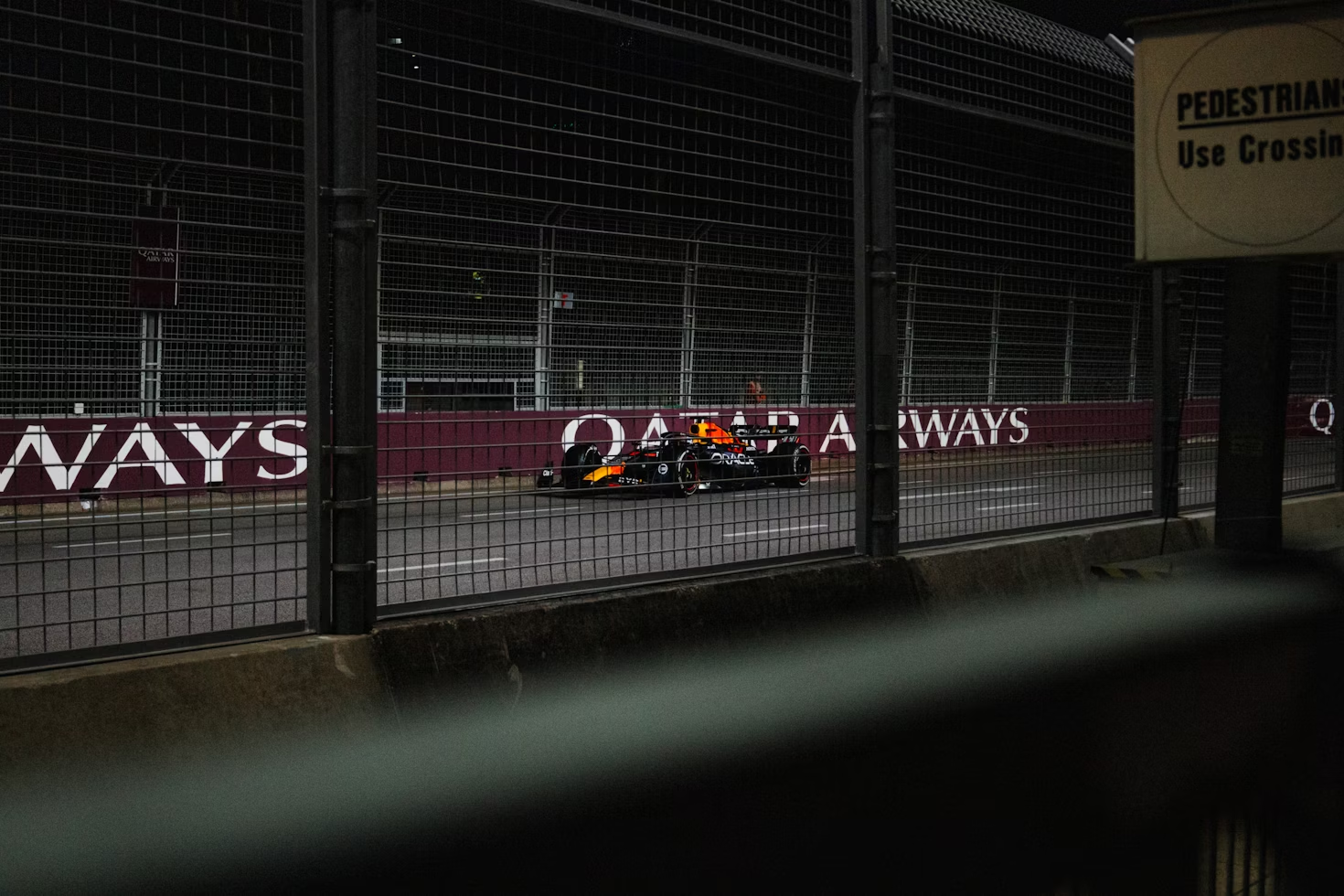
The design of these power units keeps pushing power, efficiency, and sustainability forward, showing F1's role as a test area for car technology. Every part is carefully made and tightly controlled to keep racing fair and to push new ideas.
What Is an F1 Power Unit?
An F1 power unit is more than a petrol engine. It is a combined system built for high performance and smart energy use. Since 2014, the term 'power unit' reflects the big role of hybrid tech. It includes an Internal Combustion Engine (ICE), electric Motor Generator Units (MGUs), an Energy Store (ES), and Control Electronics (CE).
All parts work together to deliver huge power while following strict fuel flow and other rules. A strong power unit is central to any winning car. It is also the most expensive single part of an F1 car, with a standard fee of about €15,000,000 for a customer deal.
What Makes F1 Engines Unique?
F1 engines stand out because they mix very high power, strong efficiency, and advanced hybrid tech within tight rules. Road car engines often run below 6,000 rpm; F1 engines run up to about 13,000 rpm under current fuel limits.
Teams have always looked for more power. They adopted smart ideas like pneumatic valve springs (first used by Renault in 1986) for higher revs, and lighter pistons and rods through better metals and design.
The forces inside are extreme: piston acceleration can reach about 95,000 m/s², around 9,700 g. To handle this, F1 engines use short strokes and multiple cylinders. Constant innovation within strict rules is what makes them special.
Types of Engines Used in F1 History
F1 has used many engine types since 1947, with changing rules and many makers shaping each era.
From 1947 to 1953, rules allowed 4.5 L naturally aspirated engines or 1.5 L supercharged units. Fuels were open, from petrol to alcohol and nitro-methane. Power could be up to 425 hp, with the BRM Type 15 said to reach 600 hp in 1953 using a 1.5 L supercharged engine.
From 1954 to 1960, naturally aspirated engines were cut to 2.5 L (supercharged cars were limited to 750 cc, but none raced in the World Championship).
From 1961 to 1965, the 1.5 L naturally aspirated formula arrived. It seemed weak at first, but by 1965 it was fast.
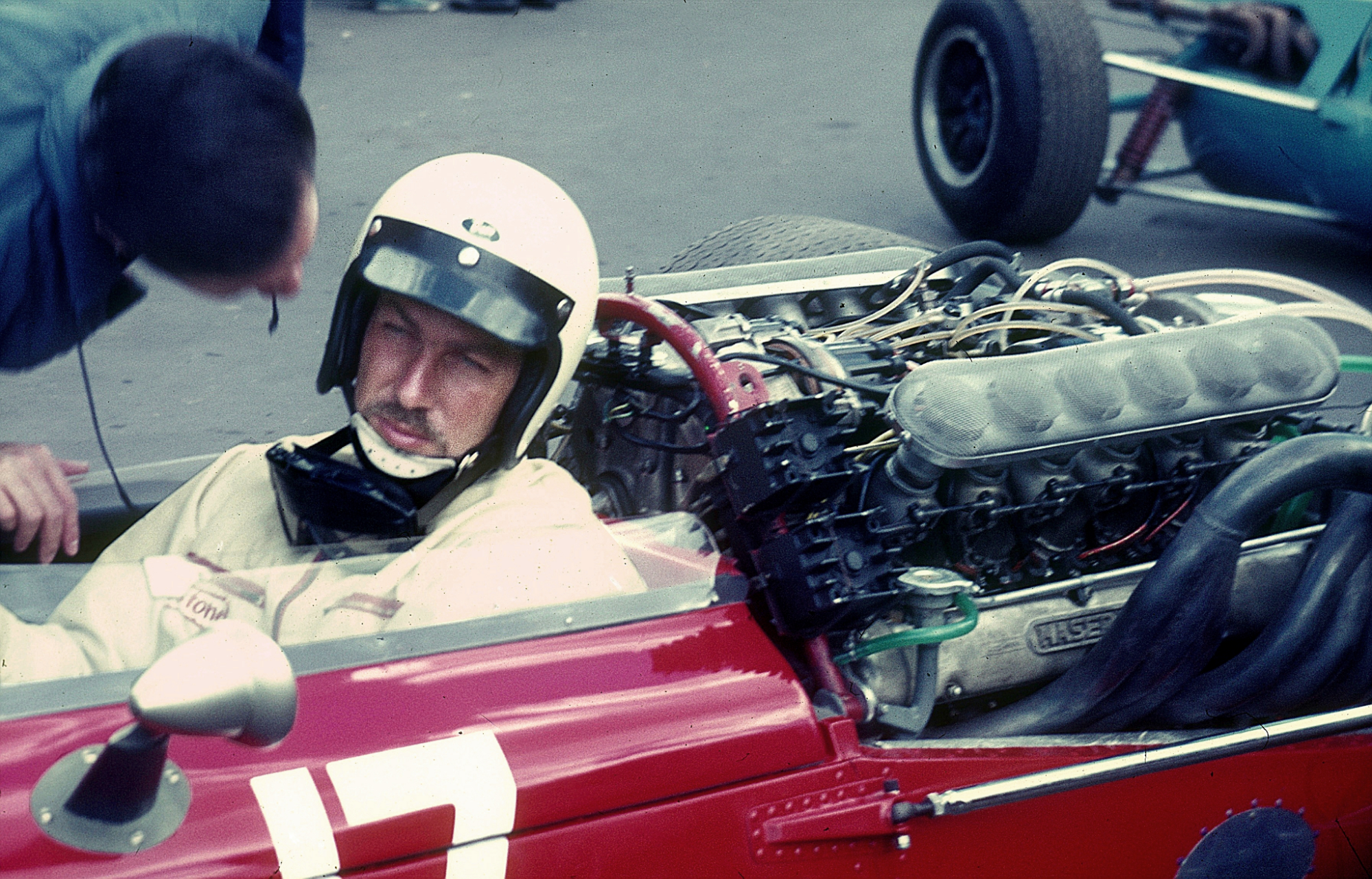
From 1966 to 1971, F1 moved to 3.0 L naturally aspirated or 1.5 L forced-induction engines. The Cosworth DFV, a 3.0 L V8, became a legend of that time.
How Have F1 Engines Changed Over the Years?
F1 engines have changed again and again due to new rules, new tech, and the chase for speed. Each period brought new problems and breakthroughs that reshaped the sport.
The sport moved from simpler, naturally aspirated engines to the wild turbos of the 1980s, and then to today's complex hybrid power units. The goal has not been only more power, but also better reliability, fuel use, and cleaner tech.
Major Eras of F1 Engine Regulations
F1 history can be split into clear rule eras, each leaving a big impact on the sport's style and tech direction. Changes often came from safety aims, the push for new ideas, or cost control.
From 1947 to 1953, pre-war style rules allowed both 4.5 L naturally aspirated and 1.5 L supercharged engines. The mid-1950s to mid-1960s moved to smaller engines: first 2.5 L naturally aspirated (1954-1960), then 1.5 L (1961-1965), which drove teams to get more from small engines.
The late 1960s started the 3.0 L naturally aspirated era, led by the Cosworth DFV. Turbos came back in the late 1970s and 1980s, bringing massive power before being banned in 1989. Later came the V10 focus, then V8s, and the hybrid era began in 2014.
Naturally Aspirated vs Turbocharged Periods
Some eras favored naturally aspirated engines, others turbos, each with its own sound, power delivery, and tech hurdles.
For many years, F1 used naturally aspirated engines like the Cosworth DFV. They breathed by air pressure alone and revved high with a raw sound. Peak outputs were huge, with early 2000s V10s over 900 hp, and Ferrari's 1994 Tipo 043 V12 at about 850 hp, the strongest naturally aspirated V12 in F1.
Turbos surged in the late 1970s and 1980s after Renault's 1977 start. Ferrari, BMW, Honda, and Porsche joined in. By compressing intake air, turbos made extreme power, leading to the mid-1980s "1,000 hp era." The BMW M12/13 straight-4 turbo hit around 1,400-1,500 hp in qualifying. Safety and reliability concerns ended turbos in 1989. Turbos returned in 2014 with fuel flow limits and a focus on efficiency.
V8, V10, and V12 Engine Years
Rules and trends also shifted cylinder counts, creating V12, V10, and V8 eras.
V12s gave smooth power and a high-pitched scream. Ferrari pushed V12s, peaking with the Tipo 043 in 1994, but weight and complexity led to their fade.
The 3.0 L V10 era (1995-2005) is remembered for sound and speed. From 2000, all teams had to use V10s to keep costs down. Power topped 1,000 hp and revs passed 20,000 rpm (Toyota in 2005). BMW hit 19,200 rpm in 2003. This was a high point for naturally aspirated design.
In 2006, rules switched to 2.4 L V8s to cut speed and cost. They soon made 720-800 hp at about 19,000 rpm by 2008. KERS arrived in 2009, hinting at the hybrid future.
Hybrid Era: 2014 to Present
In 2014, F1 made a big change to turbo-hybrid power units, reshaping performance, efficiency, and system complexity.
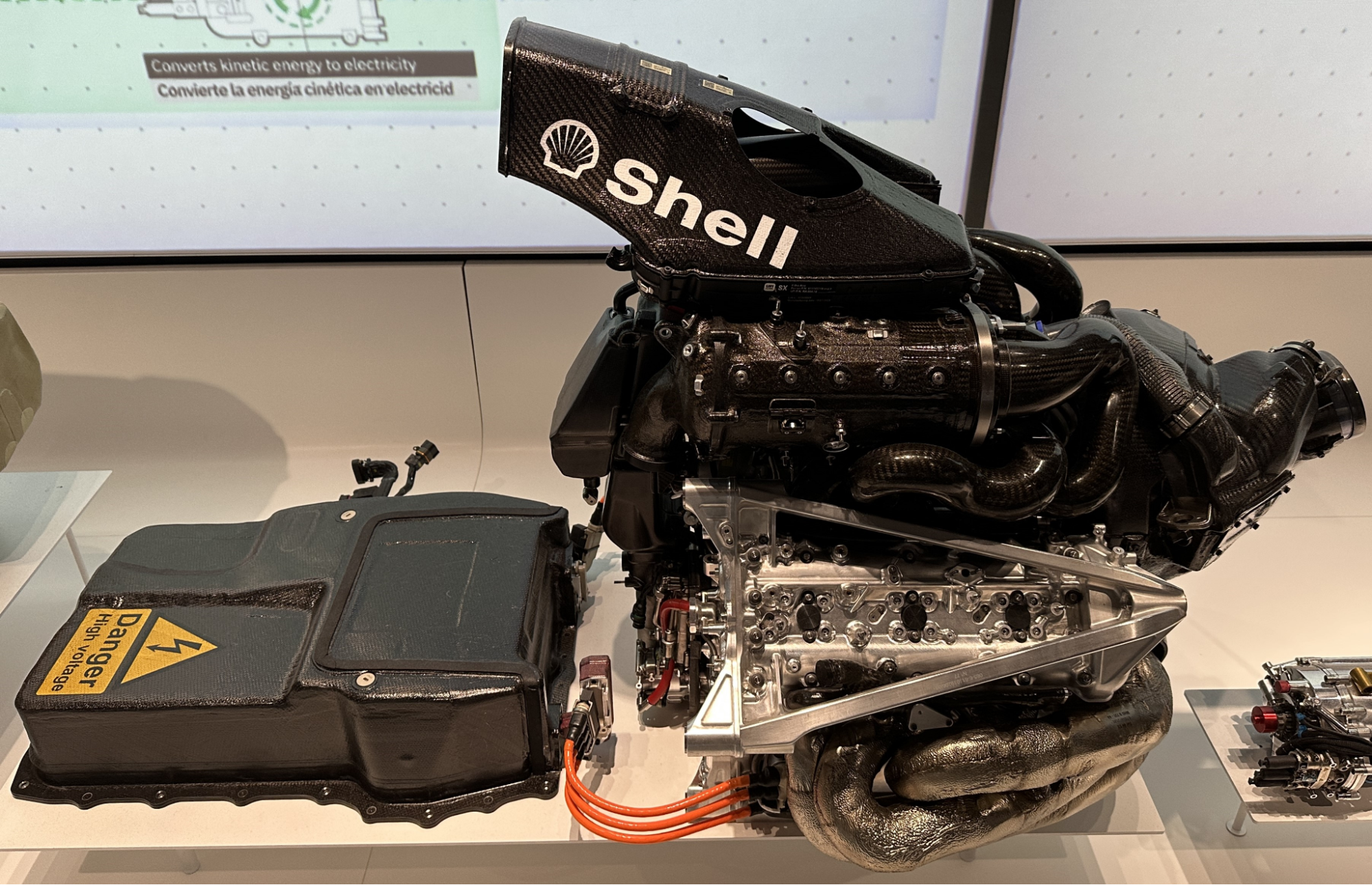
The rules brought 1.6-liter V6 turbos plus energy recovery. The package includes the ICE, Turbocharger (TC), MGU-K (recovers braking energy), MGU-H (recovers exhaust energy), Energy Store (ES), and Control Electronics (CE). The name "power unit" reflects this multi-part setup.
Mercedes led early with a clever turbo layout and won eight straight constructors' titles. Fuel flow limits (100 kg/h) moved focus to thermal efficiency. While the rev cap is 15,000 rpm, engines usually run around 12,000-13,000 rpm. Today's units reach roughly 1,000 hp with far better fuel use and smarter energy control.
What Are the Key Specifications of Current F1 Engines?
Modern F1 power units blend mechanical and electrical parts under tight FIA rules. These rules cover layout, size, fuel, energy recovery, and weight. Knowing the basics helps explain why these cars are so fast and complex.
| Spec | Value |
| Layout | 90° V6 turbo-hybrid |
| Displacement | 1.6 liters |
| Bore x Stroke | 80 mm x 53 mm |
| Fuel flow limit | 100 kg/h above 10,500 rpm |
| Injection pressure | Max 500 bar |
| Fuel | Petrol with at least 10% advanced sustainable ethanol |
| Typical operating rpm | ~12,000-13,000 rpm |
Engine Configuration: V6 Hybrid Turbo
Each current F1 car uses a 1.6-liter, 90-degree V6 turbo-hybrid set by rules since 2014. Bore is 80 mm and stroke is 53 mm. While 1.6 liters sounds small, the single turbo raises intake pressure to make far more power than a same-size naturally aspirated engine. This compact layout balances power, packaging, fuel use, and energy recovery targets.
Combustion, Power Output and Efficiency
Modern F1 combustion is a clear example of getting big power from a small engine under tight fuel limits. These engines run very lean with fast burn rates. A mechanical compression ratio up to 18:1 is allowed, and effective compression rises further with boost, pulling more energy from each drop of fuel.
Total output often tops 1,000 hp from engine plus hybrid. The piston engine alone makes about 840 hp, and the MGU-K adds up to 160 hp. Because of fuel flow rules, engines run near 12,000-13,000 rpm, not at the absolute rev limit. Better efficiency also cuts heat and noise compared with older eras.
ERS and Hybrid Technology
The Energy Recovery System (ERS) and hybrid gear provide a large share of performance by turning waste energy into power.
The MGU-K recovers braking energy and turns it into electricity, which goes to the Energy Store or straight to the crankshaft. It can add up to 120 kW (160 bhp) for a set time each lap. The MGU-H sits on the turbo shaft, taking heat energy from the exhaust. It can send power to the MGU-K, charge the battery, or spin the compressor to remove turbo lag. The MGU-H has no set recovery limit.
These systems raise performance and reduce fuel use. The MGU-K adds on-demand power, and the MGU-H keeps the turbo responsive and improves thermal efficiency. Control Electronics manage how energy flows so the car stays quick within fuel rules.
Fuel and Forced Induction Systems
Fuel and turbo systems play a big part in how today's units make power, under strict FIA rules.
Fuel must include at least 10% advanced sustainable ethanol (since 2022). Direct injection uses up to 500 bar pressure with one injector per cylinder. Fuel flow is capped at 100 kg/h above 10,500 rpm, pushing teams to get more work from each gram of fuel.
A single turbo supplies boost. There is no direct boost cap, but typical absolute pressure is around 4.0-5.0 bar. The MGU-H sits on the turbo's common shaft and can capture exhaust energy or spin the compressor to remove lag. This close link between fuel, turbo, and hybrid systems gives both big power and high thermal efficiency.
Which Manufacturers Supply F1 Engines Today?
Only a few makers have the budget and know-how to build F1 power units. In 2024, four suppliers power the grid, each with its own approach.
They run their works teams and also supply customers, creating partnerships that can shape both championships. A strong power unit can decide wins and titles.
Mercedes
Mercedes has led much of the hybrid era since 2014. Their split-turbo layout helped them win eight straight constructors' titles from 2014 to 2021.
Back as a works team since 2010, Mercedes also supplies others. Their unit remains quick and dependable, often around or above 1,000 bhp. Mercedes has 238 Grand Prix wins, with the latest listed as the 2025 São Paulo Grand Prix.
Ferrari
Ferrari has raced every F1 season since 1950 and builds engines in Maranello. Ferrari engines helped secure 16 constructors' and 15 drivers' titles.
From V12s and V10s to today's V6 hybrid, Ferrari has long chased power. In 2023, Helmut Marko said, "Ferrari is the most powerful engine." Ferrari has 249 World Championship wins, from 1951 to the 2024 Mexico City Grand Prix.
Red Bull Powertrains (Honda/Red Bull)
Red Bull Powertrains grew from a strong Honda partnership that began in 2019. It led to Max Verstappen's 2021 title with what many saw as the best unit on the grid.
After Honda's exit at the end of 2021, Red Bull formed RBPT and took over the project under an engine freeze, with Honda still giving support by agreement.
Since debuting as Honda RBPT in the 2023 Bahrain Grand Prix, the project has 35 wins, including 14 in a row in 2023. From 2026, Red Bull will link with Ford as Red Bull Ford Powertrains.
Renault/Alpine
Renault, now racing as Alpine, has a long record as supplier and works team. Their engines powered Williams and Benetton to six constructors' titles in the 1990s.
Renault brought turbos to F1 in 1977 and won drivers' and constructors' titles as a works team in 2005 and 2006. They then powered Red Bull to four straight titles (2010-2013). The hybrid era has been tougher, with Alpine noting a 20-30 bhp gap in 2023.
Alpine is the only team using an engine from its parent, Renault, which has 169 wins. Renault announced on September 30, 2024, that it will end its engine program after 2025 and will not build units for 2026.
How Much Power Do Current F1 Engines Produce?
Modern F1 power units deliver huge power from a small 1.6-liter base while following strict fuel rules. They combine a strong engine with advanced hybrid systems.
Exact numbers vary by maker, setup, and track, but overall output is very high and carefully managed through energy recovery and deployment.
Horsepower Figures Explained
Today's cars often reach about 1,000 hp combined from the ICE and MGUs.
The V6 engine makes roughly 840 hp. The MGU-K can add up to 160 hp. Teams manage the boost across a lap and race. Most of the time, cars run near 850 hp while recovering energy, with full boost used for about 33 seconds per lap for passing or maximum speed.
Makers differ slightly. Reports have put Mercedes near 1,015 bhp, Ferrari as high as 1,030 bhp (about 970 bhp in race trim), Honda near 1,014 bhp in 2021, and Renault at or around 1,000 bhp. Getting this from a 1.6-liter V6 shows how advanced these units are.
How Hybrid Systems Impact Performance
The hybrid side is central to modern F1 performance. Without it, cars would be slower and use more fuel.
The MGU-K recovers braking energy and adds up to 120 kW (160 bhp) to the crankshaft, giving a push for overtakes and defense. Stored energy can be used later, extending usable energy over a race without burning extra fuel.
The MGU-H (ending in 2026) recovers exhaust heat and can spin the compressor to remove turbo lag. This brings instant and steady power delivery. With unlimited heat energy recovery, it lifts thermal efficiency a lot. Managed by the control system, MGU-K and MGU-H help reach huge power while staying within fuel limits, making these the most thermally efficient racing engines ever used in F1.
What Are the Rules for F1 Engines?
F1 engine rules are among the tightest in racing. They balance new technology, close competition, cost control, and cleaner running. The rules cover design, size, fuel, energy recovery, and even how many parts a driver may use in a season.
The FIA updates the rules often, prompting new designs and strategies. Knowing these rules helps explain the challenges engine makers face.
Engine Component Limits and Penalties
To cut costs and boost reliability, each driver has a set number of power unit parts for a season. For a 24-race 2025 calendar, the limits are:
- Internal Combustion Engine (ICE): 4 units
- Motor Generator Unit-Heat (MGU-H): 4 units
- Motor Generator Unit-Kinetic (MGU-K): 4 units
- Turbocharger (TC): 4 units
- Energy Store (ES): 2 units
- Control Electronics (CE): 2 units
- Exhaust (EX): 8 units (four sections, 8 allowed for each section)
Go over the limit, and grid penalties apply. The first extra unit of any of the seven elements gives a 10-place drop. Further extra units give 5 places each time. If total penalties exceed 15 places, the driver starts from the back.
Penalties add up, so multiple changes at one event can send a driver to the rear. A part counts as used once the car exits the pit lane in an official session.
Teams often plan changes at tracks where starting at the back hurts less, swapping several parts at once to refresh their pool for future races. This avoids the past habit of frequent engine changes that drove up costs.
The Engine Freeze and Upcoming Regulation Changes
F1 is under an engine freeze from 2022 through the end of 2025. The freeze stops development on key parts: ICE, TC, and MGU-H from March 1, 2022; ES, MGU-K, and CE from September 1, 2022.
The main reason is to shift money and effort to the new 2026 units. While frozen, changes are still allowed for reliability, safety, or cost reasons with FIA approval.
From 2026, F1 will keep the 1.6 L turbo V6 but change much else. The MGU-H will be banned. The MGU-K will jump to 350 kW (470 bhp) from 120 kW (160 bhp), with more driver control. The ICE power target will drop to about 400 kW (540 bhp) from roughly 630 kW (850 bhp).
The sport will move to fully sustainable fuel, and fuel limits will be based on available energy rather than mass. Audi will join, Ford will partner Red Bull Powertrains, Honda has registered for 2026, and Renault will leave engine supply after 2025.
Which F1 Engines Hold the Most Records?
Some engines did more than win races-they set records and defined eras. These units delivered results and pushed tech forward.
From total wins to title streaks, a few makers stand out for long-term success.
World Championships by Engine Manufacturer
Ferrari leads with 16 constructors' titles, built on steady in-house development from early years through the 2000s and today.
Renault has 12 constructors' titles, powering Williams and Benetton in the 1990s and Red Bull in the early 2010s. Their push for new tech, including early turbo work, helped deliver those results.
Ford Cosworth holds 10 constructors' titles. The Cosworth DFV opened the door for many independent teams with a fast, reliable engine that won across years.
Mercedes has 9 constructors' titles, eight of them in a row in the hybrid era (2014-2021), showing modern-era engineering strength.
Others include Honda with 6, Climax with 4, Repco with 2, and Honda RBPT with 2 (2022-2023). Porsche (TAG) also took 2 in the mid-1980s.
Most Wins and Technical Achievements
Ferrari leads World Championship Grand Prix wins with 249, across V12s, V10s, and today's V6 hybrids.
Mercedes sits on 238 wins, with a rapid rise in the hybrid era. Their split-turbo idea is a key example of smart design.
Ford (mainly Cosworth) has 176 wins. The Cosworth DFV is perhaps the most successful single engine design, winning from 1967 into the 2000s. It once scored 22 straight wins (1972 Austrian GP to 1974 South African GP) and another run of 20 (1968 British GP to 1970 Monaco GP).
Renault has 169 wins, with strong spells in the 1980s turbos and 1990s V10s. They pushed ideas like pneumatic valve springs and helped pioneer the V6 hybrid era. Honda has 89 wins, with peaks in the late 1980s and again with Red Bull. The Honda RA168E powered McLaren to 11 straight wins in 1988. Honda RBPT already has 35 wins, including 14 in a row in 2023.
These makers brought big power and key steps like turbocharging, pneumatic valves, and advanced energy recovery that changed how F1 engines work.
What's Next for F1 Engines?
F1 always looks ahead. With the freeze ending after 2025, a new set of power unit rules arrives in 2026.
This change is more than a small update. It reshapes how the units make power, how clean they run, and how new makers can join.
Planned Engine Changes for 2026 and Beyond
In 2026, F1 will keep the 1.6 L V6 turbo but make major changes elsewhere.
The MGU-H will be removed to cut cost and complexity. The MGU-K will rise to 350 kW (470 bhp), so around half of total output will be electric (about 20% today). The ICE target will drop to about 400 kW (540 bhp).
Audi will enter as a supplier in 2026. Ford will team with Red Bull Powertrains. Honda has registered for 2026. Renault will stop after 2025. The FIA also listed Ferrari, Mercedes-AMG, and Alpine as registered for 2026, though Alpine will need a new supplier after 2025. Looking further ahead, General Motors (Cadillac) is set to supply power units from 2029, with the Cadillac Formula One Team joining in 2026 using customer Ferrari power at first.
Focus on Sustainability and Efficiency
The 2026 rules put a strong focus on cleaner running and better energy use, from engine design to fuel.
Power units will run on fully sustainable fuel with zero fossil carbon, made synthetically or from non-food biomass. This move supports global clean transport goals and lets F1 push new fuel tech that can help road cars later.
Even without the MGU-H, higher MGU-K power and sustainable fuel will keep efficiency high. Fuel limits will be set by available energy from a standard fuel spec, not just mass, pushing makers to get more work from each unit of energy. This plan links engine design and energy source to cut emissions while keeping F1 fast and relevant.