
What Happened to Renault F1?
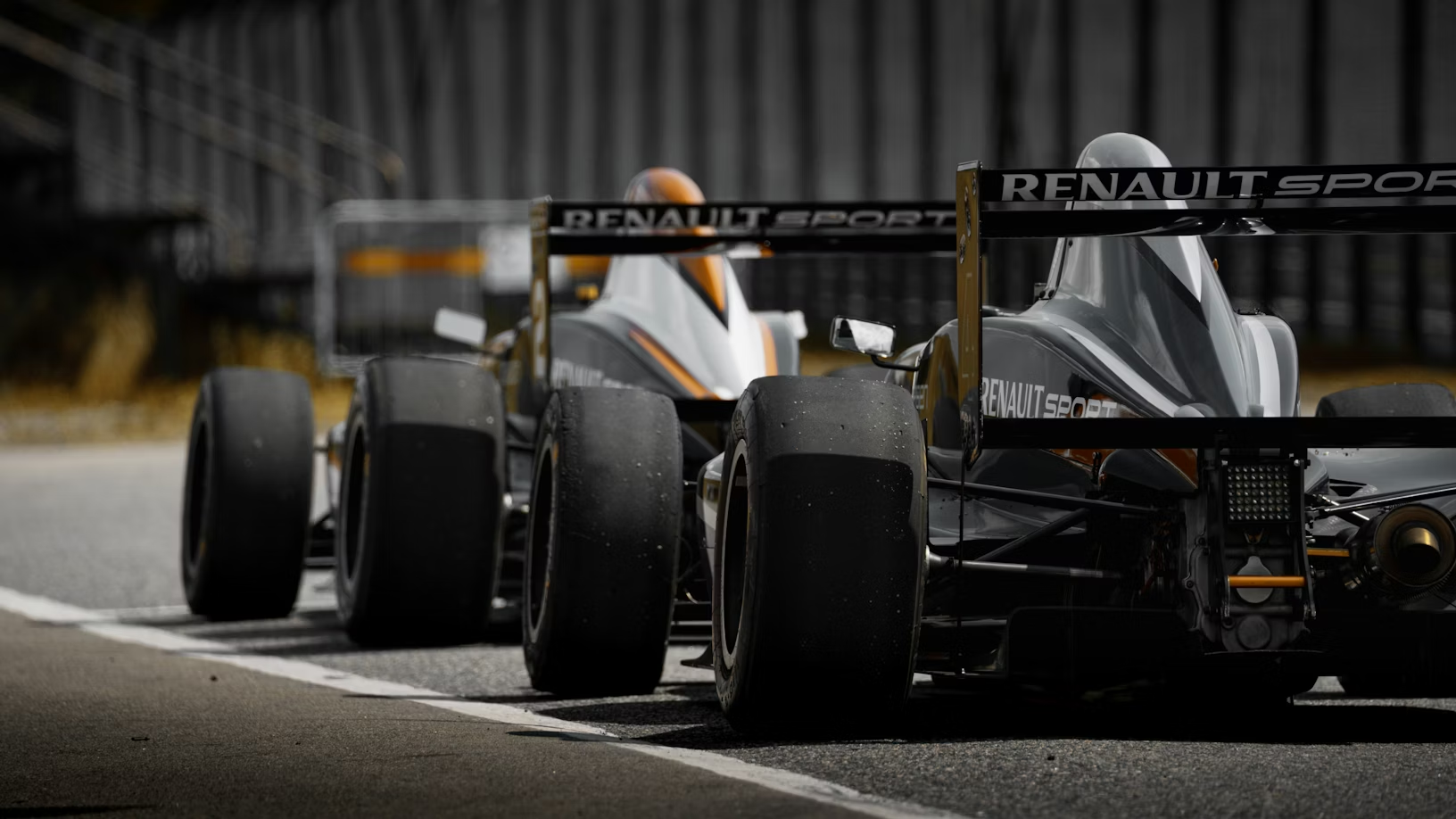
Renault F1 did not disappear - it became Alpine F1 Team starting with the 2021 season. The Enstone squad kept racing under a new badge, identity, and set of goals, driven by group CEO Luca De Meo's decision to use Formula 1 as a platform for growing the Alpine road-car brand.
A Brief History of Renault's Formula 1 Involvement
Renault has a long, rich story in Formula 1. Over the years, it brought new ideas, strong engineering, and big wins. The company has played many roles: race winner as a full team, title-winning engine supplier, and a pioneer in turbo technology. This background sets the stage for the move to Alpine.
The French brand has been a steady, if sometimes uneven, player at the top level of racing. Its F1 effort often lined up with wider business goals and the direction of the car market, shifting as the company's brand plans changed.
Key Milestones from Renault's F1 Debut to Recent Years
Renault launched its Grand Prix effort in 1977 with a bold turbo engine idea. Early on, it was fast but fragile, yet the team stuck with it and helped start a turbo era that reshaped the sport.
After stepping away and returning at different times, Renault rose again in the 1990s as an engine supplier, powering Williams and Benetton to titles. In the early 2000s, Renault came back as a full works team and achieved some of its best results.
| Year(s) | Milestone |
| 1977 | F1 debut and introduction of turbo engine |
| 1992-1997 | Engine supplier for Williams/Benetton title runs |
| 2002-2011 | Works team era, including title years |
| 2010-2013 | Engine supplier for Red Bull's four straight doubles |
| 2016 | Return as a works team (Enstone/Viry program) |
| 2021 | Rebrand to Alpine F1 Team |
Major Achievements and World Championships
Renault's peak as a constructor came in 2005 and 2006, with back-to-back Drivers' and Constructors' titles led by Fernando Alonso. The blue and yellow cars became a symbol of sharp design and winning form.
Later, Renault engines powered Red Bull Racing to four straight doubles from 2010 to 2013. Across both roles-constructor and supplier-Renault left a big mark on modern F1.

What Happened to Renault F1?
Renault F1 changed its name to Alpine F1 Team for 2021. This was a planned move by the Renault Group, not a snap decision. The Enstone squad kept running, but with a new badge, look, and goals.
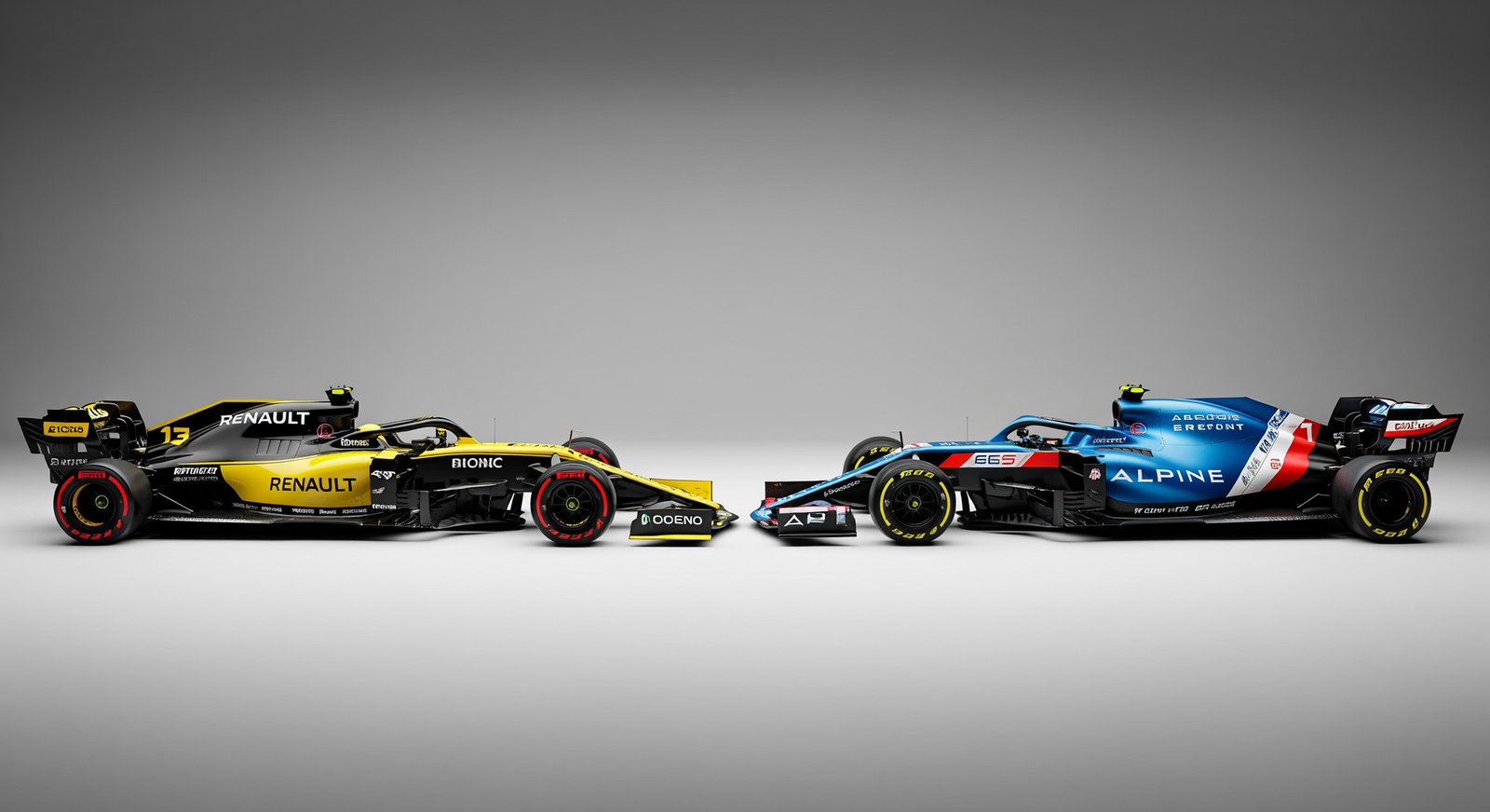
The change was deeper than a title and paint job. It was part of a broader plan to use F1 to grow Alpine. The yellow-and-black Renault look made way for red, white, and blue, but the company kept its place on the grid, just under a new name.
Why Did Renault Rebrand as Alpine F1 Team?
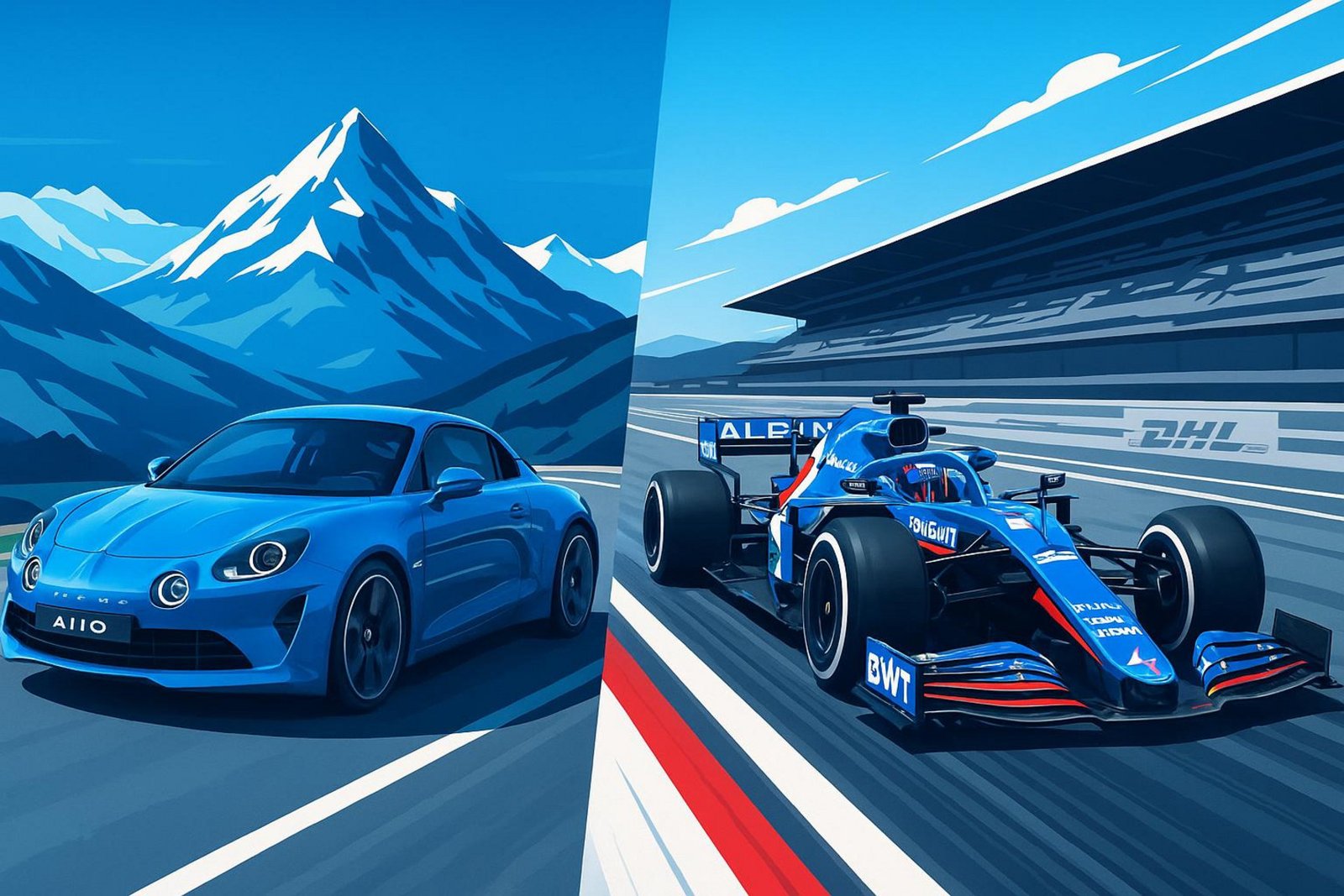
The switch to Alpine was led by Group CEO Luca De Meo, who arrived in 2020. He reshaped the company to focus on four pillars: Renault, Dacia, Alpine, and New Mobility. The F1 team became a key tool to push Alpine, best known then for the A110 sports car.
The idea was simple: use F1 to spotlight Alpine's racing roots and French engineering on a global stage. Alpine had history in rally and Le Mans, but had not run as a maker in F1. The rebrand placed Alpine front and center, with fresh values and a bold identity.
What Were the Motivations Behind the Rebranding Decision?
- Make F1 spending work harder by promoting Alpine directly
- Use the budget cap era to run a tighter, clearer program
- Lift Alpine's brand value and, in turn, support road-car sales
- Set a sharper sporting target and a cleaner story for fans
- Bring back big names (like Alonso) to boost interest
The budget cap from 2021 helped reset the cost scale in F1. It favored smarter plans over open-cheque spending. That timing made the Alpine move more appealing. Renault also locked into F1 through the 2025 Concorde Agreement, setting a base for the new phase.
Factors Leading to Renault F1's Change
Shifting Renault F1 into Alpine came from many linked reasons: company strategy, money pressures, leadership turnover, and on-track form. Together, they pointed to a new direction.
Car makers everywhere are rethinking racing spend as markets and tech change. Renault chose to aim its F1 effort at building Alpine's name while keeping costs tighter and the message clearer.
Corporate Strategy and Group Reorganization
Luca De Meo set out to streamline the group and give each brand a clear role. For Alpine, a niche sports car brand, F1 offered a global shop window and a strong identity.
The plan: use the F1 team to help Alpine grow. Track results would build brand power, and a stronger Alpine would help justify steady backing for the team.
Leadership Changes and Their Impact
The years around the rebrand saw many changes at the top. That included exits and short stints for key figures, which hurt stability and long-term plans.
- Cyril Abiteboul (team lead during the changeover) left
- Marcin Budkowski, Otmar Szafnauer, Bruno Famin, and Oliver Oakes held leadership roles with mixed tenures
- Alain Prost (Special Advisor) departed after disputes with then-CEO Laurent Rossi
- Long-time Sporting Director Alan Permane left alongside Szafnauer
Frequent changes at senior level damaged morale and direction. Daniel Ricciardo's early exit after one year was widely linked to that instability.
Financial Considerations and Budget Cap Pressures
F1 is expensive. Even with Renault's resources, running a works program costs a lot. The 2021 budget cap changed the game, pushing teams toward smarter spending and clearer choices.
Renault used the Alpine shift to refocus the spend and improve value. In 2023, a 24% stake in Alpine F1 was sold to investors, valuing the team at about $900 million. That move lowered Renault's direct outlay while riding a higher team valuation.
Performance Challenges and Lack of Recent Success
Form before and after the name change has swung up and down. The team scored a huge win at the 2021 Hungarian Grand Prix with Esteban Ocon, but steady podium fights were rare. The group often fell short of the front-running pace needed to chase titles.
Renault engines, once a standout strength, struggled early in the hybrid era. The rough 2014 season with Red Bull showed reliability issues, and later years still lagged top rivals at times. With fewer wins and rising pressure, the Alpine rebrand offered a clean slate and a public reset.
Alpine F1: The Next Chapter for Renault in Formula 1
The move from Renault F1 to Alpine F1 marked a big moment in the company's racing story. This was a strategic shift with a new badge, a clear purpose, and a plan for future gains. The Alpine name carries racing heritage and French flair, which the team put front and center.
The aim was to grow a strong culture, bring in talent, and set bold targets. The Alpine phase was pitched as a fresh climb back to the sharp end.
How Has the Alpine Brand Changed Renault's F1 Identity?
Alpine refocused the team's image from a broad group brand to one centered on performance. The most visible change was the livery: from yellow-and-black to the French flag colors of red, white, and blue. This linked the team straight to Alpine's story and roots.
Beyond looks, Alpine stands for a racing spirit, ingenuity, and elegance-traits the team wants to live up to. The Enstone factory now builds Alpine-badged chassis, while Renault E-TECH hybrid engines from Viry-Chatillon power the cars through 2025.
What Are Alpine F1's Future Goals and Ambitions?
From day one, Alpine spoke about getting back on the podium and fighting for wins. Team leaders talked openly about wanting to stand at the front again. There was even talk of a "100-race plan," which later drew criticism for being unrealistic.
The team is committed to F1 through at least 2025. With new power unit rules arriving in 2026, Alpine aims to adapt well and climb the order. The long-term goal remains clear: become a steady front-runner and build a strong team identity that draws talent.
Impact of Management Changes on Renault and Alpine F1
For Renault and Alpine, leadership has always mattered. Shifts at the top of the team and inside the Renault Group have shaped strategy and results. The years around the Alpine move were especially unsettled, with rapid changes in key jobs.
Constant changes made long-term planning hard. This affected morale, technical choices, and performance. Stability, which is key in F1, was often missing.
How Did High-Profile Exits Affect Team Performance?
Big-name exits had clear effects. When leaders left, they took plans and momentum with them. A series of team principals brought different styles and goals, which meant frequent resets.
Losing senior figures like Alan Permane added to the disruption. Ricciardo's departure after a year showed how instability can ripple into driver choices, hurting results.
What Are the Consequences of CEO and Principal Turnover?
Frequent turnover leads to several problems:
- Loss of hard-won knowledge and direction
- Stop-start development plans
- Sliding morale among staff
- Short-term reactions replacing steady leadership
At the group level, changes at the very top add uncertainty. Luca De Meo, who shaped the Alpine plan, leaving in mid-July 2025, left open how a new leader might view the F1 program. The public criticism of the team by ex-CEO Laurent Rossi in 2023, followed by Otmar Szafnauer's firing, showed how quick, harsh moves can undercut consistency.
Performance and Results Since the Move
The 2021 switch to Alpine was meant to spark a new push up the grid. Results since then have mixed great moments with tough stretches. Formula 1 is unforgiving, and small missteps in design, operations, or driver management show up fast.
Looking at Alpine's results since the name change helps explain what worked and what did not.
Race Results and Standings Post-Renault Era
- 2021 Hungarian GP: Esteban Ocon scored a standout win
- 2021 Qatar GP: Fernando Alonso returned to the podium
- Double podium at São Paulo with Ocon and Gasly showed the car's peaks
Still, steady front-running pace has been rare. In the current 2025 season, Alpine sits last with 11 points from 10 races, showing the scale of the task. Lower finishes also hit future prize money, adding financial pressure.
Driver Lineup Evolution and Key Signings
Drivers have been a major storyline. Alonso returned in 2021 to partner Ocon, giving the team experience and speed. After Alonso moved on, Pierre Gasly joined Ocon to form an all-French pair.
The handling of junior star Oscar Piastri-who left after a contract mess-was a public setback. Keeping talent and managing changes cleanly remains a key challenge for Alpine.
Technical Direction and Changes in Operations
Enstone continues to build the chassis, and Viry-Chatillon has supplied the Renault E-TECH hybrid. But the power unit program came under strain in the hybrid era and often fell short of the best.
In late 2024, Renault decided to stop F1 engine production at Viry after 2025, turning Alpine into a customer team from 2026. The Viry site will shift into a "Hypertech" engineering hub, with an F1 monitoring group to keep skills sharp, but it will not build new F1 engines.
A switch to Mercedes power in 2026 is exciting. That could bring a stronger engine but ends full control over a key performance area.
Common Questions About Renault F1's Status
The switch to Alpine, plus recent engine decisions, has led to many questions. The Renault name has deep roots in F1, so fans want to know what it all means and what might happen next.
Here are clear answers to the biggest questions.
Could Renault Return as a Constructor in the Future?
A return under the Renault name as a full works team is very unlikely anytime soon. The group has put its effort behind Alpine as the face of its F1 plans. Shutting down the Viry F1 engine build after 2025 makes a Renault-only comeback even harder.
Starting a fresh power unit from zero would take years and huge spending. Reversing the course now would go against current priorities and the tighter cost era.
What Does This Mean for Renault's Engine Supply Program?
Ending engine build at Viry after 2025 means Renault will step away from making F1 power units. Alpine is the only team using Renault engines today. From 2026, Alpine is set to run a customer engine, with Mercedes as the likely partner.
Viry will stay active as a "Hypertech" hub with an F1 monitoring group to keep know-how alive for Alpine projects. F1 work at Viry will continue through 2025, but the long run of Renault as a standalone F1 engine maker will end-closing a major chapter that began with turbo breakthroughs and many title wins.
Looking Ahead: Renault's Vision in Formula 1
As F1 rules and costs change, Alpine's plan is also shifting. The rebrand and the end of in-house engine build set a clear path: focus on Alpine, run a leaner program, and pick the right partners to climb back up the order.
The 2026 power unit rules are both a test and a chance. Alpine wants to keep a strong presence, even with a new operating model.
Alpine's Strategy for the Upcoming 2026 F1 Regulations
With no in-house engine after 2025, Alpine's 2026 plan centers on being a customer team. The approach includes:
- Use a proven engine (likely Mercedes) to gain immediate power unit strength
- Cut heavy engine R&D costs and focus funds on chassis and operations
- Keep technical knowledge at Viry through the Hypertech hub and monitoring unit
- Work on tight integration between the supplied engine and the Enstone-built chassis
The goal is to get a strong, reliable package on track while keeping spending under control.
Is There Potential for a Renault Comeback?
A full comeback with Renault as an independent constructor or engine maker looks unlikely for the foreseeable future. The Alpine shift and the end of the Viry F1 engine program are big steps that are hard to reverse. Building a fresh engine is costly, complex, and slow.
The Renault name will remain linked to F1 through Alpine through 2025 engines and the Hypertech work, but the main focus now is making Alpine a success. A future return under the Renault badge would need a major change in company direction and new, large investment - neither of which seems likely on the current path.