
When Did F1 Start?
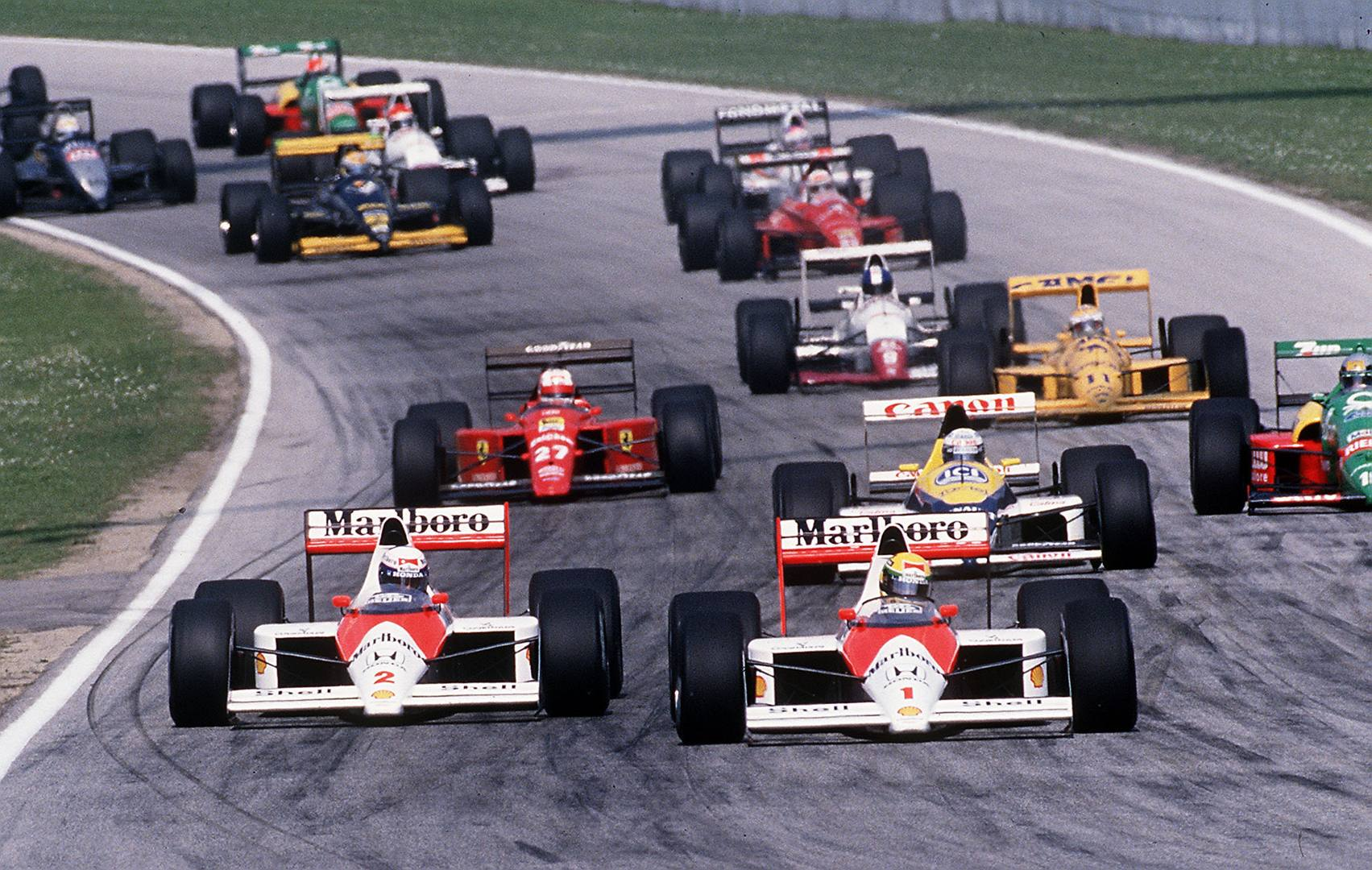
Formula 1's World Championship officially began in 1950, but the roots of the sport reach back to the European Grand Prix races of the 1920s and 1930s. The sport we know today, with shared rules and fans all over the world, grew directly out of those exciting pre-war races.
The word "Formula" means a fixed set of rules that every car and driver must follow, covering things like car design, engine size, and which parts can be used. The "1" shows that it is the highest level of this kind of racing.
While the official championship began in 1950, the base for it was built over many years of racing and technical progress.
Origins of Formula 1 Racing
The roots of Formula 1 go back to the early days of car racing, especially the European Grand Prix championships of the 1920s and 1930s. In those years, the idea of open-wheel, single-seat race cars really began to take hold. Racing before and after World War II changed a lot, but the hunger for speed and competition stayed the same.
Ideas for a drivers' world championship were already being discussed in the late 1930s, showing how popular and organized Grand Prix racing had become. World War II stopped these plans, but the dream did not disappear. When the war ended, interest in racing came back strongly.
The Fédération Internationale de l'Automobile (FIA), created in 1904 as the Association Internationale des Automobile Clubs Reconnus (AIACR), was key in shaping these early racing efforts. After it was reorganized and renamed in 1947, the FIA worked on creating a new Grand Prix formula.
This "International Formula" was first called Formula A, Formula I, or Formula 1, with the final name used to show it was the top level. The new shared rules agreed in 1946 are seen as the real start of modern Formula 1 and prepared the way for the global sport it later became.
The First Official Formula 1 Grand Prix
Although the Formula 1 rules were set out in 1946 and used from 1947, choosing the very first F1 race is a bit unclear and still discussed by historians. The 1946 Turin Grand Prix, held on September 1 and won by Achille Varzi in an Alfa Romeo 158 Alfetta, is often named as the first race run under the new rules, even before they were fully official.
Then there was the 1947 Swedish Winter Grand Prix, won by Reg Parnell, though its status is doubted because it was run on ice. Many historians instead point to the 1947 Pau Grand Prix, won by Nello Pagani in a Maserati 4CL, as the first race that truly matched the spirit and rules of Formula 1.
Still, the real landmark was the start of the World Championship itself.
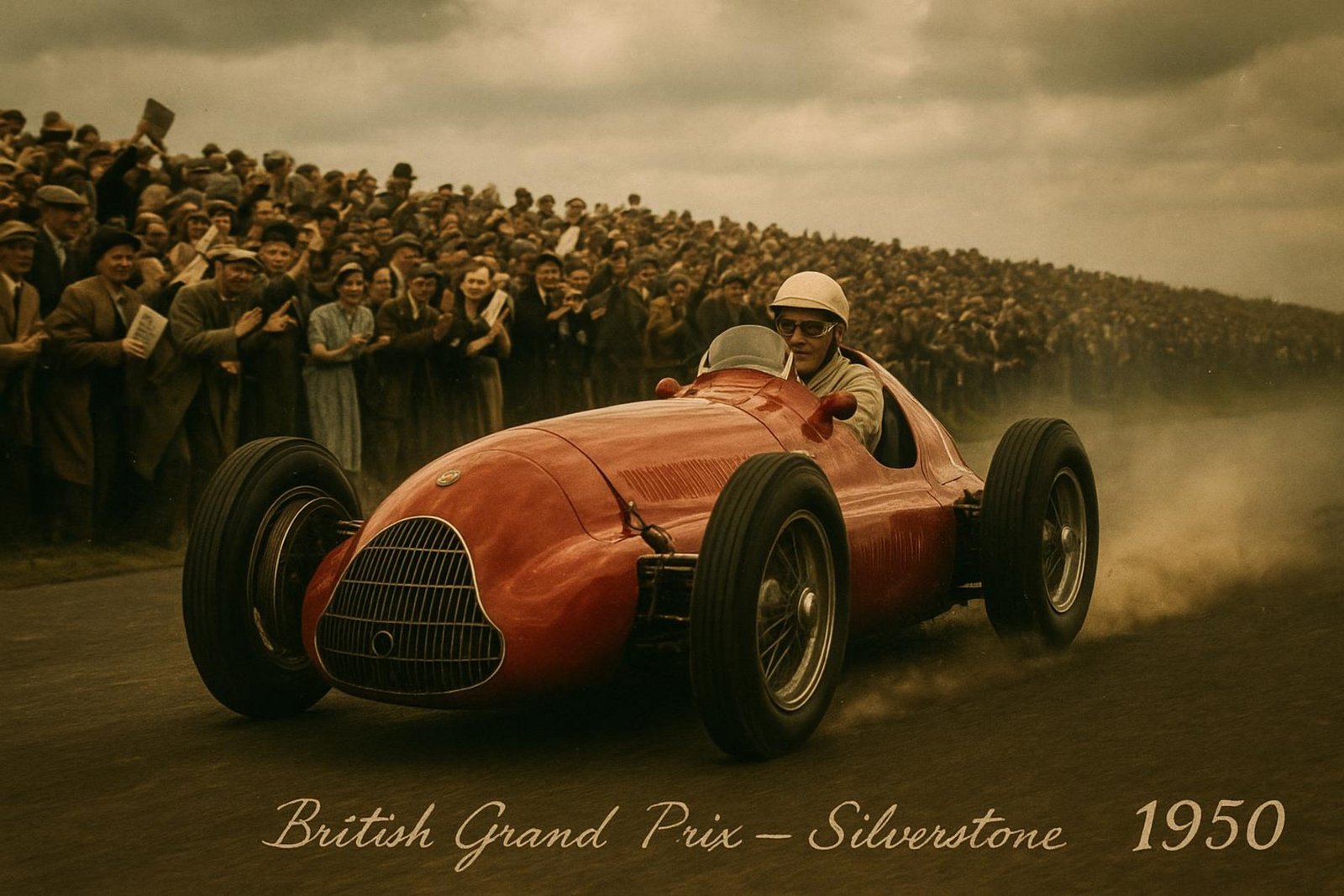
The first official World Championship race, the 1950 British Grand Prix, took place at Silverstone Circuit in the United Kingdom on May 13, 1950. It was a major event, attended by King George VI, Queen Elizabeth, and Princess Margaret, the only time a ruling monarch has watched a British motor race in person.
As many as 120,000 people were at the track to see history. The Alfa Romeo team, using their strong 158 "Alfetta" cars, dominated the race. Giuseppe "Nino" Farina won and later became the first F1 World Champion.
Creation of the Formula One World Championship
The choice to start a drivers' world championship was made in 1947, as racing was being rebuilt after the war. It took until 1950 to agree on every detail, including a points system to decide the champion. This new World Championship pulled together the most important races into one series with a clear title to fight for.
The first championship in 1950 had seven races, mostly held in Europe, plus the Indianapolis 500 in the United States. Adding the Indy 500 showed that the sport already had global aims. Points were given based on finishing positions, with an extra point for the fastest lap. This basic system shaped the later Drivers' and Constructors' Championships.
The Constructors' Championship only began in 1958, but team rivalry was already strong, with Alfa Romeo, Ferrari, and Maserati all fighting to be the best.
How Did Formula 1 Develop in Its Early Years?
The early years of Formula 1 mixed old traditions with new ideas and technology. All this happened as the world was trying to rebuild after the war. The sport quickly moved on from using mostly pre-war cars and started to use new designs and engineering approaches that would shape its future.
This change was not easy. Rising costs made it harder for small, private teams to compete, and bigger manufacturers started to lead the way.
This pressure drove teams and engineers to pursue better speed, safety, and efficiency - helping turn F1 into the high-tech, high-stakes sport it is today.
Racing Before and After World War II
Before Formula 1 became a name, Grand Prix racing in Europe was already very popular. The championships of the 1920s and 1930s created the base for what would follow.
Drivers raced powerful, often very dangerous cars on circuits that were often just public roads closed off for the event. Different countries ran their own races, and rules were not always the same, though many used similar limits on engine size and car weight.
When World War II started, racing stopped. Countries focused on the war effort, and race tracks fell silent. But the love of racing did not die.
Right after the war, only a few Grand Prix events took place, and the sport had to be rebuilt almost from zero. The FIA, newly reorganized, led this effort and created a new Grand Prix formula in 1946. These rules were meant to suit all top races in the new era and prepared the way for the official World Championship that began in 1950.
The first Formula 1 seasons from 1950 onward saw a mix of older pre-war stars and new drivers. Pre-war legends like Rudolf Caracciola, Manfred von Brauchitsch, and Tazio Nuvolari were reaching the ends of their careers, while new names like Alberto Ascari and Juan Manuel Fangio were starting to shine.
This overlap of generations helped bridge the pre-war age of racing with the new F1 era.
From Pre-War Grand Prix to Formula 1
The shift from separate pre-war Grand Prix events to one unified Formula 1 World Championship was a major change. The FIA's shared rules from 1946 were the key first step, replacing the mix of national rules with one central set.
These first F1 rules were based mainly on pre-war engine limits and tried to balance supercharged and non-supercharged cars.
For example:
- Older non-supercharged 4.5-litre Grand Prix cars could race against 1.5-litre supercharged "voiturettes" (smaller racing cars).
- The very powerful pre-war supercharged 3-litre Grand Prix cars were banned.
This careful balance helped create closer racing and let many builders use their existing pre-war cars.
The 1950 World Championship season clearly showed this change in action. It included six major European Grands Prix and, more surprisingly, the Indianapolis 500. The Indy 500 did not follow F1 rules and was mostly ignored by regular F1 teams and drivers, but its inclusion showed the FIA's ambition to build a worldwide series, even if it did not fully succeed at first.
The championship turned a loose set of races into a structured contest with one big prize: the title of World Champion.
Early Innovations and Changes (1946-1960)
From 1946 to 1960, Formula 1 changed very quickly. In the early World Championship years, Italian teams like Alfa Romeo, Ferrari, and Maserati led the way, helped by their long racing history and existing cars.
Alfa Romeo dominated the 1950 season with their famous 158 "Alfetta" cars, which combined strong performance with reliable supercharged engines.
But teams were always chasing more power with better fuel efficiency. Enzo Ferrari and his engine designer Aurelio Lampredi soon recognized that the 1.5-litre supercharged engines consumed too much fuel.
By late 1950, Ferrari had introduced new 4.5-litre non-supercharged V12 engines. These were more efficient and became a serious threat to Alfa Romeo. The move showed how quickly F1 technology could shift when teams were hunting for an edge.
In the early 1950s, a major rule change followed. Because too few cars could challenge Alfa Romeo's Alfettas, the FIA ran World Championship races for 1952 and 1953 under Formula Two rules. During those two seasons, Alberto Ascari and Ferrari were dominant, winning both titles.
In 1954, Formula 1 rules returned, this time with a 2.5-litre non-supercharged engine limit. New teams like Lancia and Mercedes-Benz joined, bringing advanced ideas such as desmodromic valves, fuel injection, and more aerodynamic body shapes.
The biggest change of this period was the rise of mid-engined cars. While mid-engined Auto Union cars had been fast in the 1930s, front-engined designs still dominated early F1.
That changed when Stirling Moss won the 1958 Argentine Grand Prix in a mid-engined Cooper - the first F1 win for a car with the engine behind the driver.
This layout gave better handling and weight balance. By 1961, all major teams had switched to mid-engined cars, and front-engined designs disappeared from F1, completely changing how racing cars were built.
Frequently Asked Questions About F1's Origins
Questions about how Formula 1 began often come from confusion between early Grand Prix racing and the official World Championship. The sport's long history includes many key events and people who helped shape it into today's global series.
What Was the First F1 Race?
Choosing the "first F1 race" depends on how you define it, because F1 developed step by step rather than starting with one single, clear event.
- First race under Formula One rules: If you mean the first race held to the new rules agreed in 1946, then the answer is the 1946 Turin Grand Prix on September 1, 1946. Achille Varzi won in an Alfa Romeo 158 Alfetta. This race followed the rules that would later be used officially from 1947.
- First race of the official World Championship: The first FIA Formula 1 World Championship race was the 1950 British Grand Prix at Silverstone, held on May 13, 1950. A huge crowd and members of the British royal family were present. Giuseppe "Nino" Farina won in an Alfa Romeo and went on to become the first World Champion.
Who Won the First F1 Grand Prix?
If you mean the first race that counted for the official FIA Formula 1 World Championship, the winner was Giuseppe "Nino" Farina. Driving for Alfa Romeo, he won the 1950 British Grand Prix at Silverstone.
Farina's victory was part of Alfa Romeo's strong performance in that first season. Their 158 "Alfetta" cars were the best in the field, and Farina's teammates Luigi Fagioli and Juan Manuel Fangio were also regular front-runners. The three drivers were often called the "Three Fs." Farina's win and later title made him the first official Formula 1 World Champion.
Are Pre-1950 Grands Prix Considered F1?
Races held before 1950 are generally not counted as official Formula 1 races in the sense of the FIA World Championship. They were the direct forerunners and played a huge part in creating F1, but the formal championship structure did not yet exist.
The roots of F1 go back to the European Grand Prix championships of the 1920s and 1930s, and to the races held soon after World War II. These events helped shape the sport by using many of the same cars, drivers, and circuits that later appeared in F1. However, they lacked a central championship body or a unified points system like the one introduced in 1950.
Pre-1950 Grands Prix are a vital part of racing history and closely linked to F1's birth, but they are treated as a separate early period that preceded the official start of the Formula 1 World Championship.