
When Is Audi Joining F1?
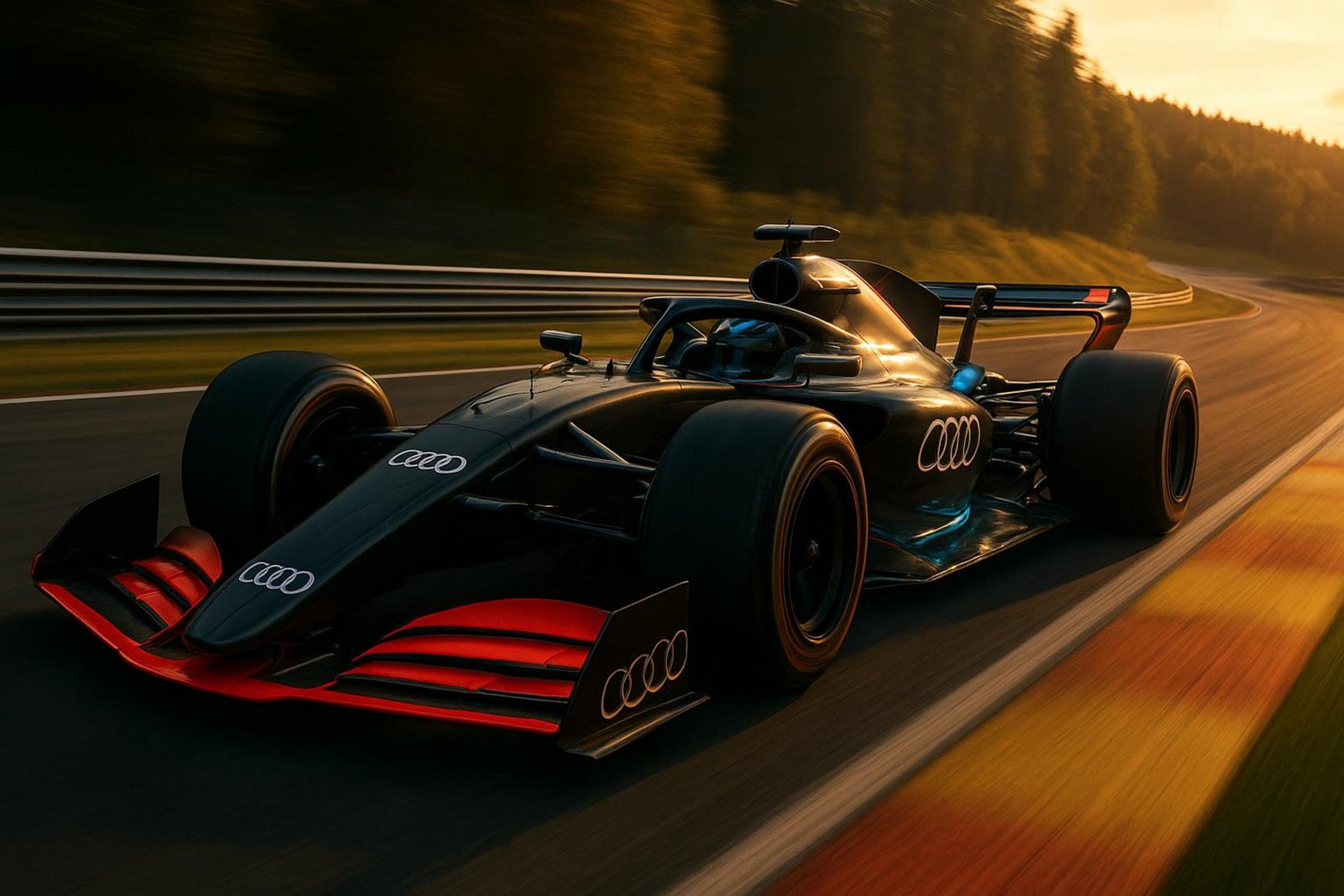
Audi enters Formula 1 in 2026 as a full factory team, racing as the Revolut Audi F1 Team out of Sauber's base in Hinwil, Switzerland. The debut lineup pairs a proven veteran with a rising talent, backed by a new power unit built entirely in Neuburg, Germany.
Audi will not just supply engines; it will run a full factory team after buying the Sauber Group completely in early 2024.
The choice to enter F1 is closely linked to the new power unit rules that will start in 2026. These rules fit Audi's plans for sustainability, electrification, and lower costs.
Over the next few years, Audi will work on combining its engineering skills with Sauber's existing F1 base to build a strong team, setting up what should be an exciting new period for Formula 1.
When Is Audi Joining F1?
What Is Audi's Official F1 Entry Date?
Audi's official entry into Formula 1 is set for the 2026 season. This date is central to their planning and gives them enough time to develop their power unit, build the team structure, and get ready for the tough demands of F1.
The entry date was announced at a press conference at Spa, before the Belgian Grand Prix, with Markus Duesmann (Chairman of the Board of Management of AUDI AG) and F1 President and CEO Stefano Domenicali present.
The 2026 season is a carefully chosen starting point that lines up with major rule changes, especially for power units. The new rules aim to bring in new manufacturers by focusing on more electric power and sustainable fuels, making F1 closer to where the car industry is heading.
Audi's focus on this date shows their confidence in F1's new direction and their willingness to take on the technical challenges that come with it.
What Prompted Audi's Decision to Join Formula 1?
Audi's move into Formula 1 comes from several key reasons, mainly the changing technical rules and the sport's worldwide reach.
The 2026 power unit rules played a big part, as they bring a stronger focus on electric power and advanced sustainable fuels. This fits closely with Audi's plan for its road cars, especially its focus on electric drive systems and greener technology.
Markus Duesmann has said that motorsport is a core part of Audi's identity, and that F1 offers both a global stage and a tough test bed for new ideas. The mix of high performance and fierce competition drives new technology and learning, which helps Audi keep moving forward.
The introduction of a cost cap for power unit makers in 2023, and F1's aim to reach Net Zero Carbon by 2030, also made joining more attractive from both a financial and environmental point of view for a big car brand like Audi.
How Will Audi's Entry Impact the F1 Grid?
Audi's arrival in 2026 is likely to shake up the F1 grid, adding new competition and fresh technology. By entering as a full factory team, Audi brings all its engineering strength and funding directly to the track, aiming to challenge the long-standing front-runners.
Their choice to build their power unit in-house and their full takeover of Sauber show that they plan to fight at the sharp end, not just make up the numbers.
A big name like Audi joining F1 should raise the sport's profile, attract new fans, and draw more sponsors. Extra competition between manufacturers will likely speed up progress in hybrid systems and sustainable fuels, which will help F1 overall.
Another major car maker on the grid can also affect driver choices and team tactics, making racing more open and less predictable. With experienced driver Nico Hülkenberg and rising star Gabriel Bortoleto already signed, Audi is clearly building a line-up that mixes proven skill with future promise.
Background of Audi's F1 Project
Timeline of Key Developments Leading to F1 Entry
Audi's path to Formula 1 has followed a clear plan, with several key steps leading up to the 2026 debut. The first big step came with the release of the new F1 power unit rules, written to make it easier and more attractive for new manufacturers to join. This was a major factor in Audi's choice.
Key moments in the timeline include:
- 2022 - Audi officially announces its intention to join F1 as an engine manufacturer.
- October 2022 - Audi confirms a strategic partnership with Sauber Motorsport, an F1 team since 1993.
- Early 2023 - Audi buys a minority stake in Sauber, deepening the cooperation.
- March 2024 - Audi acquires the Sauber Group completely, securing full factory team status.
- July 2025 - Audi opens a technology center in Bicester, England, adding to existing sites in Neuburg (power unit) and Hinwil (chassis and race operations).
Step by step, Audi has built a solid base, with clear roles for each site and a long-term plan for competing in F1.
Partnership with Sauber for F1 Operations
The Sauber partnership is the foundation of Audi's F1 effort. From the first agreement to the full buyout, Sauber's long experience and infrastructure have been key.
Having raced in F1 since 1993, the Swiss team offers more than 30 years of knowledge, which is very valuable for a new manufacturer entering a complex and highly technical sport.
Under the new structure, the former Sauber base in Hinwil, Switzerland, will stay as the center for chassis design and build, as well as race planning and track operations. This setup lets Audi use Sauber's existing facilities and staff, helping them enter F1 in a smoother, more stable way.
The full acquisition also allowed Qatar's sovereign wealth fund to join as an investor, giving extra financial strength to the new Revolut Audi F1 Team.
Motivation Behind Audi's F1 Entry
New F1 Power Unit Regulations and Opportunities
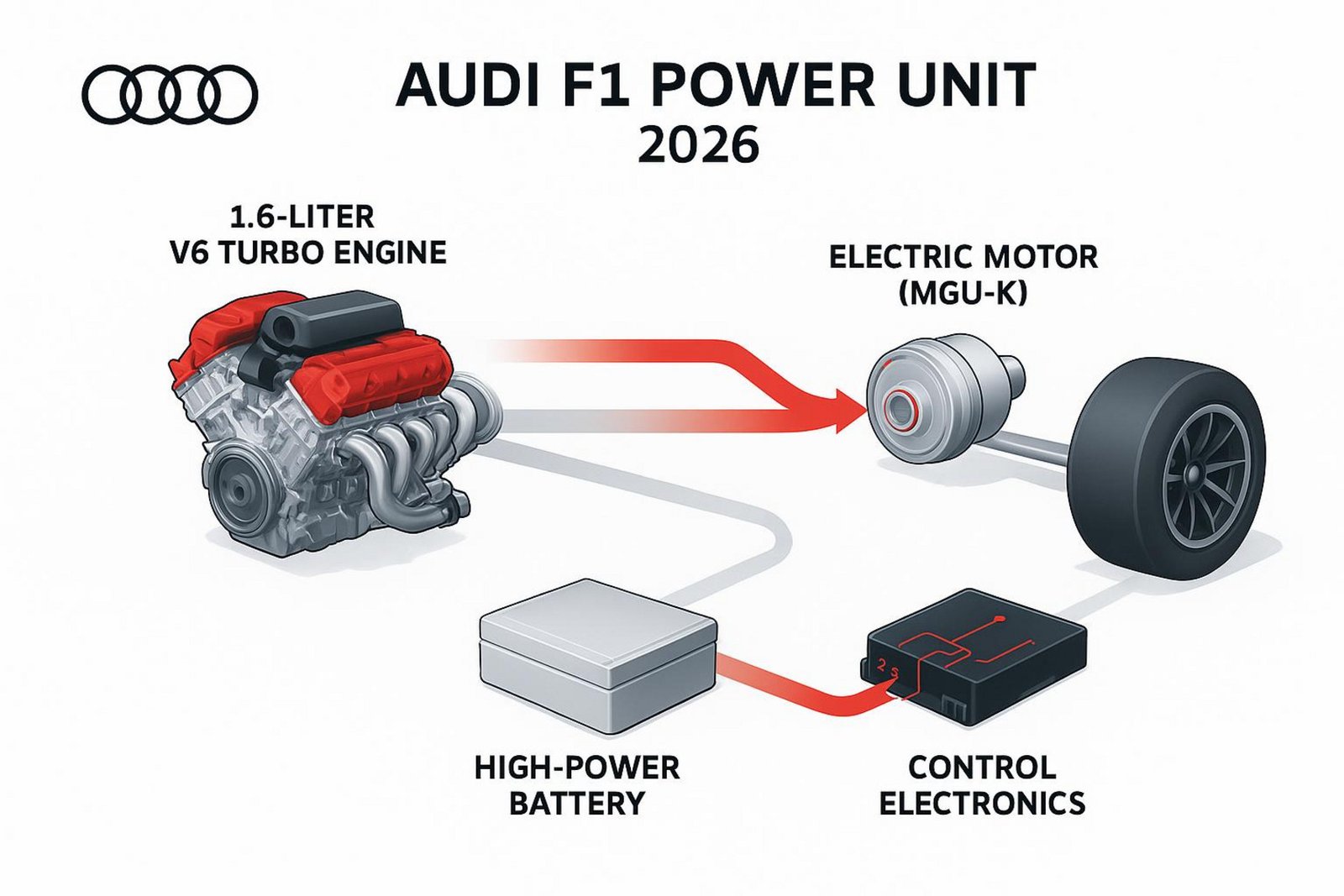
The updated 2026 F1 power unit rules were a major turning point for Audi. These rules are carefully written to make the sport more attractive for new engine builders. They keep the current V6 internal combustion layout but greatly increase the role of electric power and require advanced sustainable fuels.
Key features of the 2026 power units include:
- Engine: 1.6-liter turbocharged V6, highly efficient, running on sustainable fuel.
- Electric power: Much higher electric output, with the motor nearly as strong as the combustion engine.
- Energy recovery: More focus on recovering and reusing energy through hybrid systems.
For Audi, which invests heavily in green mobility and electrification, this mix is very attractive. It lets them show their "Vorsprung durch Technik" ("Advantage through Technology") on a worldwide stage and connect race technology directly to future road cars.
Oliver Hoffmann, Board Member for Technical Development, has said that these steps towards more sustainable technology mean 2026 will start a "new Formula 1," and Audi wants to play an active role in shaping it.
Alignment with Audi's Electrification and Sustainability Goals
Audi's F1 project fits closely with its wider plans for electric and sustainable mobility. The 2026 power unit rules give Audi a direct way to test and improve systems that will appear in its future cars. The push for more electric power and sustainable fuels in F1 matches the broader move in the car industry towards electric and hybrid models.
On top of the technology side, F1 as a whole is aiming for Net Zero Carbon by 2030 and has brought in a cost cap for power unit makers. This lines up with Audi's focus on responsible growth and controlled spending.
Joining F1 is therefore both a sporting project and a strategic brand move, showing Audi as a leader in advanced, environmentally conscious engineering. By racing at the highest level with these goals in mind, Audi wants to prove to fans and customers around the globe that high performance and lower environmental impact can go together.
Audi F1 Team Structure and Facilities
Sauber Partnership and Team Location
The structure of the Revolut Audi F1 Team follows a clear plan that combines Sauber's strengths with Audi's resources. The full buyout of the Sauber Group gives Audi an experienced team from day one, instead of having to build one from scratch.
Key points of the team setup:
- Main base: Hinwil, Zurich, Switzerland - former Sauber HQ.
- Main tasks: Chassis design, manufacturing, and race operations.
- Jonathan Wheatley is Team Principal and Management Board Spokesperson at Sauber Motorsport AG; he works closely with Mattia Binotto, Head of the Audi F1 Project.
This leadership team links Hinwil with Audi's wider F1 program, giving clear direction across all sites and guiding the change from Sauber to a full Audi factory team.
Role of Neuburg, Hinwil, and Bicester Facilities
Audi's F1 effort is spread across three main locations in Europe, each with a clear role:
| Location | Country | Main Role |
| Neuburg an der Donau | Germany | Power unit development and testing |
| Hinwil | Switzerland | Chassis development and race operations |
| Bicester | United Kingdom | Technology Office and talent hub |
In Neuburg, the Audi Competence Center Motorsport houses Audi Formula Racing GmbH, the company created for the F1 program. Opened in 2014, the site has been expanded with a new 3,000 m² building, fitted with advanced test benches for F1 engines, electric motors, and batteries. This marks the first time in more than ten years that a full F1 powertrain is being created and built in Germany.
Hinwil continues to handle chassis work and day-to-day race operations, drawing on its long F1 experience.
The new Technology Office in Bicester, opened in July 2025, places Audi in the middle of "Motorsport Valley," close to many F1 teams and suppliers. This makes it easier to hire experienced staff, work with key partners, and stay connected to the center of global motorsport know-how.
Together, these three bases give Audi a strong platform for its F1 plans.
Power Unit Program: Made in Germany
Development at Neuburg Facility
The Audi Power Unit project is central to the F1 entry and is based at the Audi Competence Center Motorsport in Neuburg an der Donau. This is a high-tech site where the full powertrain is planned, designed, and built. Audi Formula Racing GmbH leads the work, focusing fully on meeting the 2026 rules.
The expanded Neuburg facility includes:
- New 3,000 m² building for F1 development.
- Test benches for combustion engines, electric motors, and batteries.
- Advanced tools for simulation and data analysis.
Engineers and technicians are working on every part of the unit, from the efficient 1.6-liter turbo engine to the complex energy recovery system. Building the F1 powertrain fully in Germany again, after more than a decade, highlights Audi's aim to show German engineering at the highest level of racing.
Technological Innovations and Sustainability Focus
Audi's work in Neuburg is about more than just building a fast engine. The focus is on new technology with strong attention to sustainability. The 2026 rules require more electric power and sustainable fuels, matching Audi's long-term plans.
Main features of the Audi power unit:
- Hybrid system with electric motor, battery, and control unit.
- Highly efficient combustion engine running on sustainable fuel.
- High energy recovery to reuse more power during a lap.
The electric motor will be almost as powerful as the combustion engine, making the hybrid system a major part of performance. Better recuperation makes the power unit stronger and more efficient at the same time.
Using sustainable fuel supports Audi's wider environmental goals and connects directly with their work on road cars.
By developing these systems under F1 race pressure, Audi hopes to bring useful ideas and technology into its future production models, showing its long-term commitment to "Vorsprung durch Technik" and a more sustainable future for racing and everyday driving.
Frequently Asked Questions About Audi in F1
What Will Change for Sauber When Audi Joins?
Sauber will go through major changes as it becomes the Revolut Audi F1 Team. The biggest change is ownership: Audi now owns the whole Sauber Group, turning the former partner team into a full factory squad. From 2026, the team will race under the Audi name and brand.
Key changes include:
- Branding: Full Audi identity on cars, team kit, and official entries.
- Ownership: Sauber's assets and staff under Audi control.
- Technical link: Close cooperation between Hinwil (chassis) and Neuburg (power unit).
- Management: Jonathan Wheatley as Team Principal, Mattia Binotto leading the wider Audi F1 project, both reporting to Gernot Döllner (Chairman of the Board of Management at AUDI AG and Sauber Motorsport AG).
The driver line-up is already taking shape. Nico Hülkenberg and Gabriel Bortoleto will race for Stake F1 Team Kick Sauber in 2025, giving them a year to settle into the team before racing for Audi in 2026. This early start should help them work closely with engineers and shape the first Audi F1 car.
How Will Audi Compete Against Established Teams?
Taking on long-standing F1 giants is a big task, but Audi has built a clear plan backed by serious investment. Their method brings together technology, people, and partners.
Key parts of Audi's approach:
- In-house power unit: Developed in Neuburg for the 2026 rules, matched closely to the chassis.
- Existing race team: Using Sauber's experience, facilities, and staff in Hinwil.
- Talent hub in Bicester: Placed in Motorsport Valley to attract top engineers and specialists.
- Experienced drivers: Nico Hülkenberg offers strong feedback and leadership, while Gabriel Bortoleto brings fresh speed and development potential.
- Strong partners: Revolut (title partner), bp/Castrol (fuel and lubricants), and Adidas (team wear) add funding and know-how.
Gernot Döllner has said that Audi is entering with a realistic mindset, focusing on steady progress rather than instant wins. The aim is to grow year by year into a stable front-running team.
What Are the Next Steps for Audi's F1 Program?
With 2026 getting closer, Audi is now in a busy build-up phase. The main tasks ahead are:
- Power unit development in Neuburg:
- Final design and testing of the V6 engine.
- Refinement of the hybrid system (electric motor, battery, control unit).
- Work with bp/Castrol on sustainable fuel.
- Chassis and aerodynamics in Hinwil:
- Design and testing of the 2026 car around the new power unit.
- Simulation work and wind tunnel testing.
- Team building:
- Hiring and integrating staff at all three sites.
- Improving pit stops, race strategy, and logistics.
- Driver integration:
- Hülkenberg and Bortoleto racing with Stake F1 Team Kick Sauber in 2025.
- Using their feedback to shape car development and operations for 2026.
The first full Audi F1 car will follow the Audi R26 Concept shown earlier. The final livery and design will be revealed in January 2026, just before the team's first season begins, bringing Audi's long-awaited F1 project to the starting grid.