
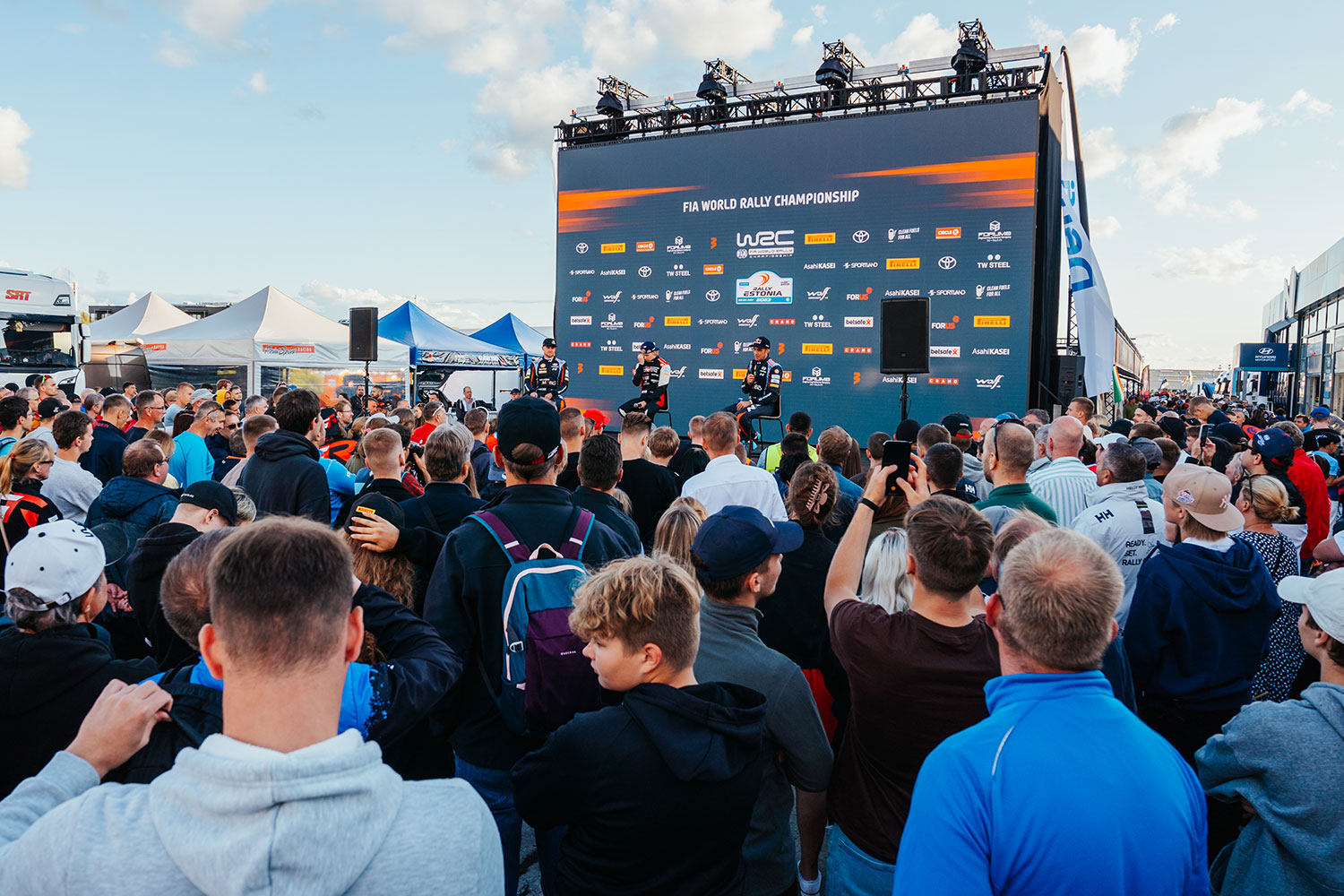
The World Rally Championship rarely makes headlines outside of a classification shake-up on a stage. This time, WRC fans got something of an entirely different magnitude - a deal that could reshape the series for the next decade. New owners, a new CEO with a deep F1 pedigree, and a technical framework arriving in 2027 that promises to open the door to manufacturers who have never run a rally car in competition. Here is what it all means, broken down piece by piece.
What the WRC Promoter acquisition means for the future of the championship
WRC Promoter GmbH is the entity that holds the keys to the championship - commercial rights, contracts with event organizers, deals with broadcasters and sponsorship partners. Whoever controls it decides how WRC looks on television, on streaming platforms and across social media worldwide. Until now, that control sat with Red Bull and investment firm KW25. The new owners are French automotive group Cosmobilis and private equity fund Park Square Capital.
Cosmobilis comes from the automotive industry, which signals a different approach than a pure financial play. Park Square Capital is an established private equity fund with sport and media firmly within its experience. The combination points to a clear strategy: operational knowledge of the car business paired with the financial firepower for aggressive growth.
The financial terms of the deal were not disclosed - standard practice for acquisitions of this type. What matters is not the purchase price but what the new owners actually do with the championship over the next few years.
Eric Boullier - an F1 operator takes the WRC helm
The face of the change is Eric Boullier. The Frenchman spent years building his reputation in Formula 1 - first as team principal of Lotus, then as racing director at McLaren through one of the most turbulent stretches in that team's history. McLaren was fighting to rebuild after its split with Mercedes and a difficult transition to Honda power units. Boullier ran the operation through that storm, gaining hands-on experience in crisis management, manufacturer relations and working under relentless media scrutiny.
He now steps in as CEO of WRC Promoter. His stated agenda: grow the global reach of the championship, develop broadcast output and digital content, and attract new fans and commercial partners. It is a familiar formula - because it is exactly the playbook Liberty Media ran after acquiring Formula 1's commercial rights in 2017. Boullier was inside that system and watched firsthand how a sport can be transformed from a niche product into a global phenomenon. He now has the chance to attempt something similar in WRC.
Rally racing delivers technically stunning action, but the series has historically struggled to reach a mass audience. It lacks the between-round narrative engine that F1 fills with driver interviews, team documentaries and controversy. Boullier understands that model well and will almost certainly push to build the WRC story between rally weekends, not only during them.
WRC27 - why the incoming technical rules are the critical backdrop
This ownership change did not land in a vacuum. It comes as the FIA is deep into developing WRC27, a new technical regulation set due from the 2027 season. The central objective is to bring down the cost of building and running a competitive rally car, making the championship accessible to manufacturers who currently have no path in. Right now the field is Toyota, Hyundai and Ford through M-Sport - too small a roster for a global series competing for fan attention alongside F1 and MotoGP.
Lower costs are the theory. In practice, WRC27 has to thread a needle - the cars still need to look and feel exciting, while becoming financially viable for brands that have stayed away from rallying. The FIA has committed to significant investment in making these changes work. The new WRC Promoter ownership arrives in lockstep with a technical overhaul, turning this into a genuine partnership with the governing body rather than simply a commercial transaction.
For fans, that translates to one thing: if the plan executes, the 2027 WRC could feature a much deeper manufacturer field and a story told far more effectively across streaming and social platforms.
What WRC gains and loses after parting ways with Red Bull
Red Bull's biggest asset as a WRC Promoter owner was its brand. The energy drink company has spent decades making itself synonymous with extreme sport and motorsport - Dakar, off-road racing, Formula 1, action sports. Nobody builds adrenaline associations more effectively. That said, WRC did not experience a viewership revolution under Red Bull's ownership comparable to what Liberty delivered in F1.
Cosmobilis and Park Square Capital are less recognizable names to the average rally fan, but that is not necessarily a problem. Liberty Media was not a household name outside media and investment circles before it took over F1 either. What matters is the plan and the capital behind it. Boullier as the operational face provides genuine credibility in the motorsport world - he has manufacturer contacts, promoter relationships and broadcaster connections built over years at the center of Formula 1.
The real question is whether Cosmobilis has the appetite to invest aggressively in television production and digital infrastructure - because that is precisely where F1 built its global reach after 2017. "Drive to Survive" on Netflix changed the way millions of people looked at Formula 1. WRC is still waiting for its equivalent.
What the ownership change means for fans and commercial partners
For the fan watching from a couch or standing on a hillside in Spain or Finland, the change at WRC Promoter is not immediately visible. The 2026 calendar stays unchanged, the cars run the same regulations and no driver has switched teams. The effects of this deal will show up gradually - in broadcast production quality, content availability on social media, new title sponsors and potentially new events on the calendar.
Manufacturers and commercial partners are watching more closely. A new owner with growth ambitions is potentially a stronger advertising platform. Toyota, Hyundai and Ford all need confidence that WRC will expand - that is what justifies maintaining multi-million-dollar rally programs. The WRC27 framework combined with new ownership sends a clear message that the championship has a serious long-term plan.
ERC - the European Rally Championship - is the second series affected by this transaction. WRC Promoter controls both series, and the new leadership will have to decide how much attention and resources go toward the European championship. ERC has historically lived in WRC's shadow, but for many young drivers it is the primary ladder to the top level. If Boullier and the new ownership invest in promoting ERC, it could build a far more effective talent pipeline into the world championship.
FAQ - common questions about the WRC ownership change
Who acquired WRC Promoter GmbH?
French automotive group Cosmobilis and investment fund Park Square Capital. The previous owners were Red Bull and investment firm KW25.
Who is Eric Boullier and what role does he take in WRC?
Former Lotus F1 team principal and McLaren racing director. He becomes CEO of WRC Promoter, overseeing the global development of the championship, broadcasting and digital content.
What is the WRC27 regulation?
A new technical framework coming into force from the 2027 season. Its primary goal is to lower participation costs and open the championship to new manufacturers.
Does the ownership change affect ERC as well?
Yes. WRC Promoter GmbH holds commercial rights to both WRC and the European Rally Championship. Both series now fall under the new ownership structure.
What role does the FIA play in this change?
The FIA has announced significant investment in the future of rallying, tied directly to the ownership transition and the rollout of the WRC27 technical regulations.