
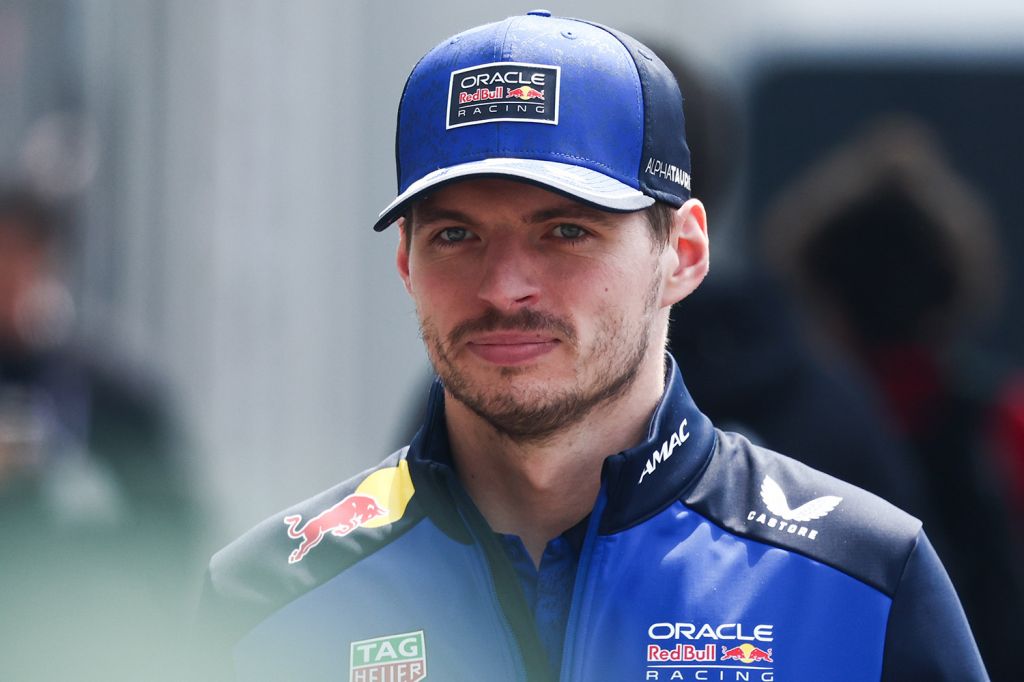
Early summer in Formula 1 always plays out the same way. Officially, everyone is happy right where they are - while the paddock is already buzzing about the season after next. The 2027 driver market is just warming up, but its central figure looks like the same man as the year before. Max Verstappen has a Red Bull contract, his own ecosystem built around the project, and full control over when he says anything at all. Here is why his silence locks up moves across the entire front of the grid.
Why Verstappen is the most important figure on the F1 driver market right now
Verstappen matters not because he is hunting for a new team, but because he can wait longer than anyone else. He has a signed deal with Red Bull, the standing of a team leader at Milton Keynes, and nothing left to prove. In F1, a contract alone never closes the subject. What counts is car performance, the balance of power after technical changes, and the relationships inside the team.
In his case there is one more question most rivals never have to ask themselves: how long he personally wants to keep building his life around Formula 1. Verstappen has never looked like a driver chasing record stats for another decade at any cost. He talks more and more about other forms of racing, endurance events among them. For Red Bull that is a warning sign, because a large financial offer or a long contract extension may not be enough to keep him around.
Why waiting is his best strategy
Red Bull would love to settle its leader's future as soon as possible - less speculation, fewer questions about release clauses, less nervous tracking of every move Mercedes or McLaren makes. The problem is that Verstappen has no reason to hand the team that comfort.
From his point of view, stalling has three concrete justifications. First, he needs to see whether the new regulations end up suiting his style. Second, he needs to judge who will actually have a competitive package over the next few years. Third, he has to decide for himself whether he even wants to keep racing in the championship beyond 2028. The longer he stays quiet, the more he learns about his own team's form and how rivals are progressing.
Red Bull does hold one strong card. Verstappen is not just a driver there - he is the center of a project that the sporting and technical structure has been built around for years. He has also been given plenty of freedom away from the track, including room for his own outside racing ambitions. Any rival team would have to offer not just a fast car but a similar level of autonomy to convince him to move.
What the 2027 technical rules will really change
Behind the whole game sit the technical regulations, and they carry more weight here than any contract amendment. The debate over the split between combustion and electric power in the new engines is not an academic argument between engineers - it is a question of car character and how they race, the kind of thing a driver feels through the wheel on every lap.
Verstappen has spoken favorably about a direction in which the combustion engine reclaims a bigger role. Behind the scenes, manufacturers see it differently. For some the barrier is cost, for others the technological direction, and for others still the risk that a major mid-cycle change blows up projects already underway. Until anyone knows what F1 will look like from 2027, the smart play is to keep every option open. That is another reason the Dutchman does not have to commit to anything.
How Verstappen freezes Mercedes, McLaren and Ferrari
The most obvious team that will keep coming up in the Verstappen conversation is Mercedes. Big brand, enormous resources, championship ambitions, and Toto Wolff, who has never hidden his interest in the Dutchman. On paper, the Brackley squad has its lineup sorted. George Russell says he is staying, and Kimi Antonelli is a project Mercedes has poured years of work into.
In F1, though, stability is often a conditional concept. If a driver of Verstappen's caliber hits the market, every top team has to at least run the numbers, even if it ultimately leaves the current pairing untouched. For Russell that means a season under added pressure: a contract is not enough - he has to show the team has no reason to look elsewhere for a leader.
The second name in those behind-the-scenes calculations could be Oscar Piastri. The Australian has a strong position at McLaren and does not look like a driver seeking an exit. His profile is exactly what the front runners crave: young, fast, already experienced, and still with plenty of room to grow. McLaren has no interest in letting him go, because the Norris-Piastri pairing is one of the strongest on the grid.
F1 contracts often carry performance-based clauses and conditions, though. That does not mean Piastri is about to switch colors, but his future cannot be treated as fully settled. If Red Bull ever had to find a Verstappen successor, the Australian would be one of the most logical candidates - drivers of that profile are simply very rare on the open market.
Why Ferrari is the calmest team in all of this
Against all this uncertainty, Ferrari made a preemptive move. Charles Leclerc's new deal tidies up the Scuderia's situation and reduces the risk of the Monegasque becoming a central figure in the transfer window. That matters, because Leclerc would be a natural target for any top team looking for a lead driver.
Ferrari needed that kind of stability. Leclerc has been tied to the brand for years, knows the team from the inside, and remains a driver you can build a sporting project around. Even with signs of interest from rivals, the signature on a new contract largely closes that conversation.
On the other side of the garage is Lewis Hamilton. His future will likely draw plenty of speculation, given his age and where he is in his career. Hamilton himself, however, has made clear he does not see Ferrari as a brief cameo. For the Scuderia it is a comfortable position: Leclerc as the long-term cornerstone, Hamilton as a global star, and Oliver Bearman in reserve should a generational shift become necessary.
What happens to the driver market once Verstappen decides
In practice, the picture heading into 2027 may be simpler than the volume of rumors suggests. If Verstappen stays at Red Bull, the front of the grid will probably remain relatively quiet. Ferrari has Leclerc locked in, McLaren has no reason to break up the Norris-Piastri pairing, and Mercedes can keep developing Russell and Antonelli.
A decision to leave would change everything instantly. Red Bull would have to find a driver capable not just of winning races but of carrying the weight that comes with replacing a four-time world champion. That would trigger talks with the biggest names on the market, and every such move would open further vacancies down the line. That is exactly why Red Bull wants a declaration early, and exactly why the Dutchman has no interest in giving one.
In F1, silence is sometimes read as a sign of tension. Here it may be cold calculation. Verstappen has the contract, the standing and the time, and Red Bull has no tool to force an earlier public commitment. The coming months could look familiar: plenty of questions, few specifics, and a market waiting on one signal. Heading into 2027, the most consequential move in the driver market might not be signing a contract at all - but staying quiet.
FAQ - the F1 driver market ahead of the 2027 season
Why is Verstappen the central figure on the F1 driver market? Because he has a Red Bull contract, a strong leadership position, and can wait longer than his rivals. Until he settles his future, Mercedes, McLaren and Ferrari have to plan with an asterisk.
Is Verstappen definitely staying at Red Bull? Staying is the base-case scenario today, but it is not guaranteed. A move would become realistic if Red Bull failed to show enough development pace, or if the driver decided the project was heading in a direction he did not like.
What do the 2027 rules have to do with this? The new engines and the split between combustion and electric power will change the character of the cars and the way they race. That affects driver decisions, because no one wants to commit before they know the real balance of power.
Could Mercedes sign Verstappen? Mercedes will keep coming up in speculation thanks to its resources and ambitions, but it has its own pairing in Russell and Antonelli. Without a Verstappen move, the team has no reason to break up that lineup.
Why is Ferrari in the calmest situation? Because it locked in Leclerc with a new contract, has Hamilton as a global star, and Bearman in reserve. That lets the Scuderia avoid reacting nervously to the competition's moves.