
Motorsport Fire Suppression System Buying Guide: FIA 2000 vs FIA 8865
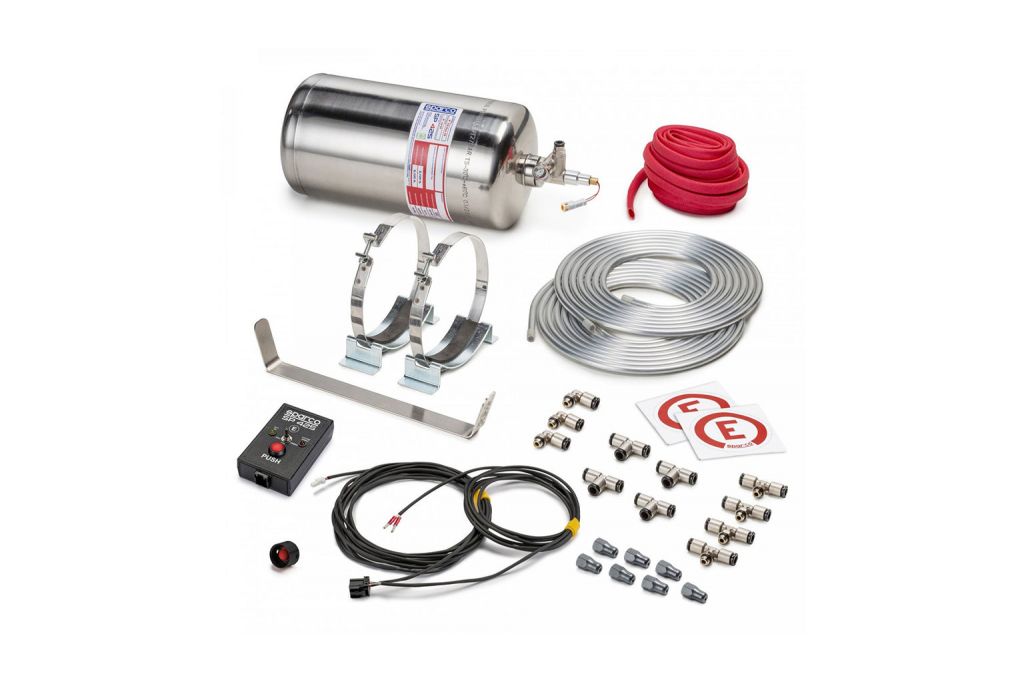
Fire in a race car is one of the most serious hazards in motorsport. Fuel ignition from a failed fuel line, an engine bay fire, or flames in the cabin during an accident - these scenarios still occur despite advanced safety technology and decades of regulation.
Unlike a handheld extinguisher, a fire suppression system is a permanently installed device built into the car's structure. On activation, it immediately floods the cabin and engine bay with suppressant, dispersed through strategically positioned nozzles.
A suppression system does not always extinguish a fire completely. Its job is to delay the spread of fire long enough for the driver and co-driver to safely exit the car.
What to Look for When Buying a Suppression System
FIA Homologation Standard
Two current standards apply:
- FIA 2000 - the older standard from 1999, FIA Technical List No. 16. A single cylinder serves both the cabin and the engine bay.
- FIA 8865-2015 - the current standard, mandatory for WRC, Rally2, R3, R2, WRX, GT3, GT4, T1, T2, RG-T, and TCR classes. Dual-circuit design: separate circuits for the cabin and engine bay.
Homologation requires re-certification every 2 years (legalization). The systems themselves have no age limit.
Tip: If you are building a car for amateur use or for national-level classes, FIA 2000 is entirely adequate.
Activation Type: Electric or Mechanical?
Mechanical system:
- Activated by a cable with a pull handle
- Available in FIA 2000 (and exceptionally in FIA 8865)
- Lower price
- Simpler installation
- Risk of cable snagging under crash loads
Electrical system:
- Activated by a button
- Required under FIA 8865-2015
- Higher price
- Faster and more reliable
- Electronic control unit with system status monitoring
Suppressant Type
FIA-approved suppressants:
- AFFF - foam-based, used in lower-cost FIA 2000 systems
- 3M Novec 1230 - gaseous, top-tier systems, leaves no residue (production ending 2025)
- FE-36 - used by Sparco
- Ecolife - used by OMP
FIA 8865-2015 systems typically use two different suppressants: one dedicated to the cabin and a second for the engine bay.
Tip: Even if your regulations don't require a suppression system, having one is strongly recommended. This is a life-safety device.
Cylinder Volume
- 0.9-1.3 L - single-seater formula cars
- 2.0-3.0 L - compact cars
- 4.0-4.25 L - sedans, rally cars
- 2.25-3.55 kg - gas-based systems (Novec)
FIA 8865-2015 is available in S and L variants, selected according to cabin volume.
Cylinder Material
Steel:
- Lower price
- 2-3 kg heavier
- More resistant to mechanical damage
Aluminum:
- Lighter
- Higher price
- Preferred in weight-sensitive builds
Nozzle Count and Placement
Standard for FIA 2000:
- 2-3 nozzles in the cabin
- 3-4 nozzles in the engine bay
FIA 8865-2015:
- 3 specialized gas nozzles
Kit Completeness
- Cylinder with suppressant
- 25g mounting bracket
- 4-6 m of aluminum tubing
- Nozzles, T-fittings, connectors
- Control panel / cable
- External "E" switch
- FIA stickers
- Installation instructions
Tip: Some manufacturers sell the cylinder separately. Verify that the kit is complete before ordering.
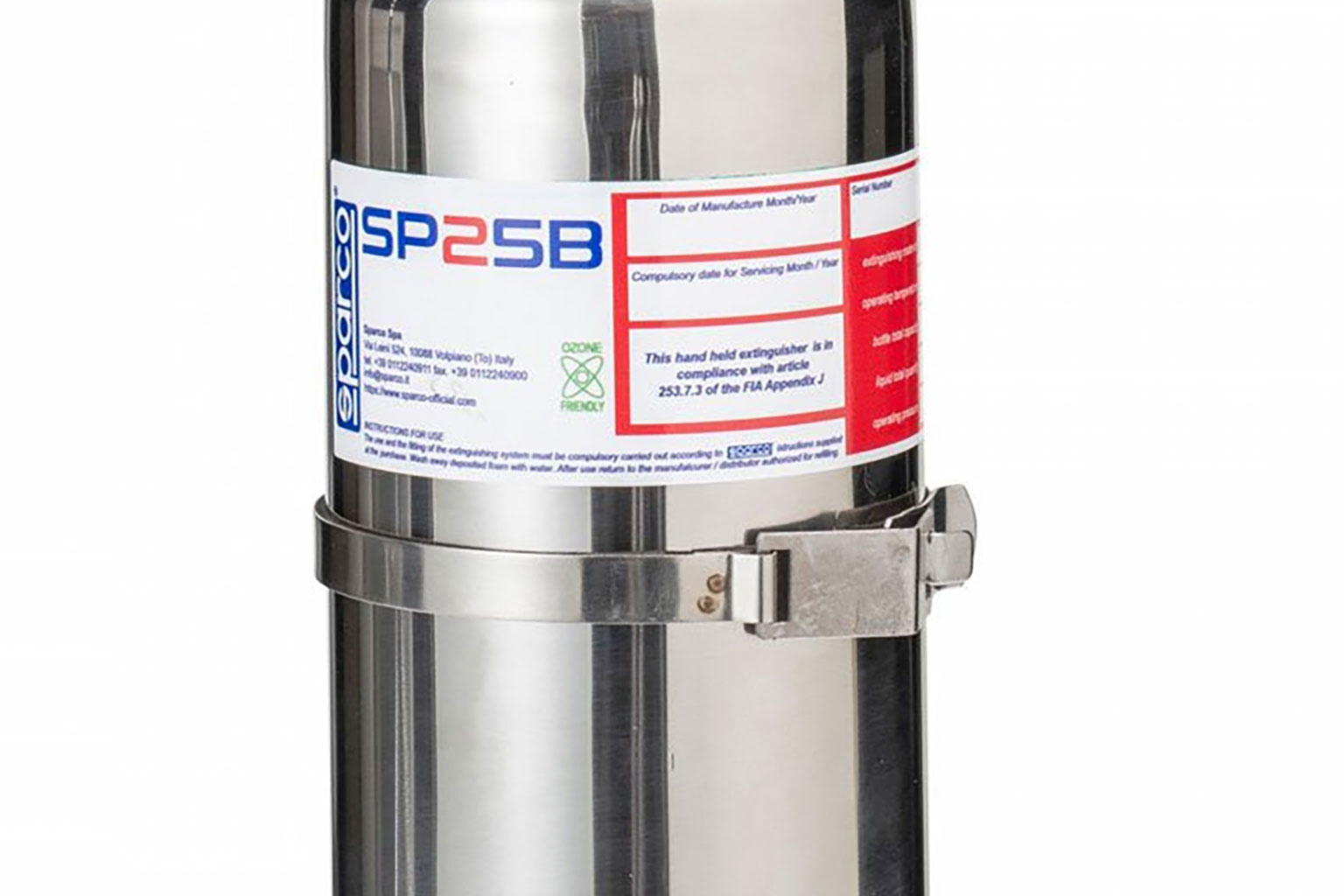
Types of Suppression Systems
FIA 2000 Fire Suppression System
The traditional single-circuit system in use since the 1990s. The entire cylinder capacity is shared between the cabin and the engine bay.
- Cylinder: 2.8-4.25 L
- 6-7 nozzles
- AFFF or Ecolife suppressant
- Activation: cable or electric
Pros:
- ✓ Lower price (~$375-875)
- ✓ Simple re-certification process
- ✓ Proven, time-tested design
Cons:
- ✗ Single shared circuit - no separation between cabin and engine
- ✗ Not permitted in international FIA championship classes
FIA 8865-2015 Fire Suppression System
Advanced dual-circuit system with electrical activation required.
- Cylinder: 2.95-3.55 kg
- Novec 1230 + cabin suppressant
- 3 gas nozzles
- Electronic control unit
Pros:
- ✓ Mandatory for the highest FIA classes
- ✓ Dual circuits = greater fire suppression effectiveness
- ✓ Electronic status monitoring
- ✓ Lighter than FIA 2000 systems
Cons:
- ✗ Very high price (~$2,000-3,375)
- ✗ Requires specialist installation
Handheld Extinguisher - Essential Supplement
A permanently installed suppression system and a handheld extinguisher serve different functions. The handheld unit extinguishes localized fires, particularly those caught early before they develop. In most rally regulations, both are required.
- 2 kg powder: ~$50-88
- AFFF 2-2.4 kg: ~$113-175
- Novec 1.25-2.5 kg: ~$475-600
Popular Brands and Models
Sparco
- 014772MSL - FIA 8865-2015, mechanical activation, budget entry point
- 014772EXL - FIA 8865-2015, electrical activation, more advanced solution
- 014777EXP - FIA 8865-2015, highest specification model
Price Ranges
Budget (~$375-625)
FIA 2000, steel cylinder, AFFF or Ecolife suppressant, cable activation. Complete system weight 8-9 kg.
For: amateur builds, national-level classes where FIA 2000 is permitted.
Mid-Range (~$625-1,125)
FIA 2000, aluminum cylinder, electrical activation. Weight 6-7 kg.
For: regular competitors wanting electric reliability without the FIA 8865 price point.
Premium (~$2,000-3,375)
FIA 8865-2015, dual-circuit, Novec 1230, advanced electronic control unit.
For: FIA championship competitors (Rally2, WRC, GT3/GT4, TCR), professional builds.
Installation and Re-Certification
Installation
- 25g-rated mounting to roll cage or floor
- Safe routing of tubing away from heat sources
- Nozzles: 2-3 in cabin, 3-4 in engine bay
- Activation switches: internal + external "E"
Re-Certification (every 2 years)
- Pressure gauge check
- Tubing and connector inspection
- Seal replacement
- Refill (if discharged)
Re-certification cost: ~$100-150 (+ refill ~$75-125 if discharged).
Maintenance
- Check pressure gauge before every event
- Inspect tubing and connectors for wear or chafing
- Protect the electrical panel during service operations
Summary
A fire suppression system is one of the most important safety investments in motorsport. Choose the system that matches your regulatory requirement, competition plans, and budget. Keep re-certification current every two years, ensure correct installation, and check pressure before each event.
Frequently Asked Questions
What happens if the system discharges accidentally?
The entire cylinder contents will be released. Re-certification and refill are required before the car can be used again.
Does the system replace the handheld extinguisher?
No. In rally competition, both are required: a fixed suppression system and a handheld extinguisher.
Can I install the system myself?
You can, but professional installation is strongly recommended. Incorrect installation can compromise system effectiveness and may invalidate homologation.
Does the system have an expiry date?
The system itself has no age limit. Re-certification every 2 years is required to maintain regulatory validity.