
Motorsport Steering Wheel Buying Guide: Size, Material and Quick-Release
A steering wheel looks like a simple component - a rim mounted on a steering column. In reality, choosing the correct motorsport steering wheel has a significant impact on driving feel, comfort, and control.
Different diameters, materials, and rim profiles translate into completely different sensations during dynamic driving - on circuit, in rally, or in off-road competition. This guide covers the key parameters to help you choose correctly.
Key Considerations When Buying a Motorsport Steering Wheel
Diameter
Diameter is measured at the outer edge of the rim. The most common motorsport sizes are:
- 350 mm - the standard for rally, circuit racing, and drift. Good leverage and comfortable reach for most drivers.
- 330 mm - more compact feel; single-seaters, karting, small race cars.
- 320 mm and below - formulas and single-seater constructions; very direct response.
- 370-380 mm - off-road and 4x4 vehicles; greater leverage makes steering easier at low speeds.
The right choice depends on the car, available cockpit space, and driver preference. With a bucket seat and a tight cockpit, a smaller diameter is usually more comfortable.
Offset (Dish)
Offset defines the distance between the rim and the mounting face:
- 0 mm (flat) - close to the driver; good for short drivers or deep seats.
- 39-65 mm - the most common range in motorsport, covers most applications.
- 90-95 mm - large dish, more often used in street tuning than in competition.
Offset should only be determined after the seat position is finalized - the goal is arms slightly bent at a comfortable angle when holding the wheel.
Tip: If unsure, start with 60-65 mm and use a spacer later if needed.
Rim Material
- Suede / Alcantara - best grip in gloves, the standard in rally. Requires maintenance.
- Natural leather - more durable and easier to clean, better for road use.
- Polyurethane (PU) - budget option, lower grip, entry-level models.
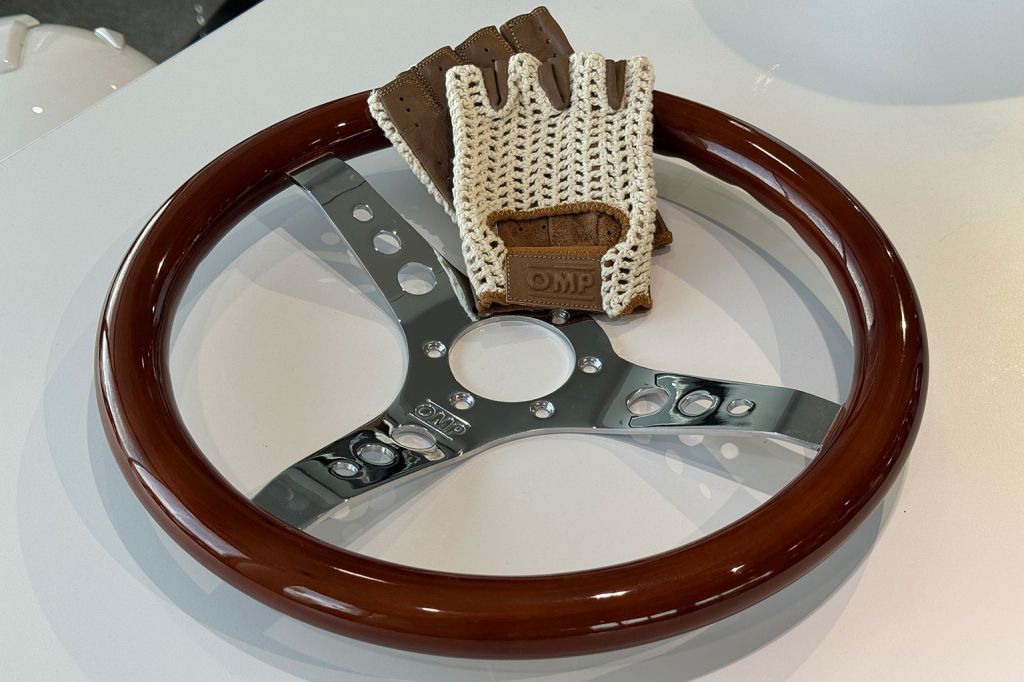
- Wood - classic look, mainly used in historic racing series.
Spoke Count and Material
- 3 spokes - the motorsport standard (approximately 95% of competition wheels).
- 2 spokes - improved instrument visibility, less common.
Spoke material:
- Steel - heaviest and least expensive.
- Aluminum - lighter; Superleggero series.
- Carbon - top-shelf models only.
Rim Profile
- Round - universal, the most common.
- Oval - preferred by some rally drivers.
- Contoured - ergonomic finger-groove profile.
Additional Details
- Top center stripe - standard in motorsport for steering reference.
- Angle markings - useful in rally for lock reference.
- Contrasting stitching - primarily aesthetic.
Road Homologation (TUV)
Motorsport steering wheels do not carry FIA homologation. TUV certification applies mainly to tuning wheels intended for road use (MOMO, some Sparco L series models).
Most motorsport wheels (suede) have no TUV approval and are not intended for public roads.
Types of Motorsport Steering Wheels
Competition Steering Wheels
Designed for rally, circuit racing, and drift. Suede rim, lightweight construction, wide choice of diameters and offsets.
Pros:
- ✓ Best grip in gloves thanks to suede
- ✓ Lightweight construction
- ✓ Wide diameter and offset selection
Cons:
- ✗ No road-use approval
- ✗ Suede requires gloves and a cover when not in use
Formula / GT Steering Wheels
Used in single-seaters and GT cars. Smaller diameters (250-320 mm), unconventional rim profiles, often with integrated buttons (radio, pit limiter).
Pros:
- ✓ Smaller diameters: 250-320 mm
- ✓ Specialized rim shapes
- ✓ Often include functional buttons
Cons:
- ✗ Higher price
- ✗ Requires adaptation from standard wheel feel
- ✗ Not suitable for road use
Tuning Steering Wheels
Diameters 330-350 mm, leather or suede with decorative inserts. Many models carry TUV approval for road use.
Tip: Suede requires gloves and a wheel cover when the car is parked. Without them, the material degrades quickly from skin oils.
Popular Brands and Models
Sparco
- R323 - 350 mm, suede, flat dish, the most popular club-level competition wheel
- R345 - 350 mm, leather, 65 mm offset, versatile
- P310 - 310 mm, suede, designed for single-seaters and compact formula cars
OMP Racing
- GP - 330 mm, polyurethane, accessible price (~$175)
- ALU Rally - 350 mm, aluminum-spoke construction
- Mugello - classic look with wooden rim insert
Tip: The hub is always car-specific. Hubs are not universal - order the correct model for your vehicle before everything else.
Price Ranges
Budget (~$45-125)
PU rim instead of suede, steel spokes, entry-level OMP or no-name models. Functional and compliant, but noticeably less grip and feel than mid-range options.
For: first racing wheel, dual-use (road + track day), very tight budget.
Mid-Range (~$150-300)
The best value segment for most drivers. Suede or leather rim, established brands, standard 330-350 mm diameter.
Examples: Sparco R323, OMP Corsica, Sparco R345
For: regular club and national competitors, the natural starting point for serious use.
Premium (~$300-500)
Superleggero aluminum-spoke construction, TUV road approval models, specialized rim profiles. Higher build quality and lighter weight.
For: drivers who notice the difference in feel and want the refinement.
Professional (~$500+)
Carbon construction, Formula/GT profiles, integrated control buttons. The segment for professional competitors and purpose-built race cars.
Accessories: Hubs and Quick-Release
A hub adapter is mandatory - without it the steering wheel cannot be mounted. Quick-release systems are highly practical in cars with a roll cage where getting in and out is difficult without removing the wheel.
- Standard hub: ~$50-88 (common cars), ~$88-125 (less common)
- Bolt-on quick-release: ~$150-250
- Weld-on quick-release: ~$250-375
- Spacer tubes: ~$13-38
Tip: A quick-release is a significant quality-of-life upgrade in a caged car. Once you have one, going back to a fixed wheel feels impossible.
Summary
Steering wheel selection affects comfort, feel, and safety. Diameter, offset, and rim material are the three most important parameters.
$150-300 covers the ideal range for most competitors. Below $125 you get the basics. Above $300 you enter premium territory with TUV approval, Superleggero aluminum, or carbon construction.
Frequently Asked Questions
Is a motorsport steering wheel legal on the road?
Only if it carries TUV approval. Road legality may also depend on the local vehicle inspection process and whether an airbag is present in the car.
What diameter is best?
350 mm is the universal default. 330 mm suits small cars and single-seaters. 380 mm is appropriate for off-road where extra leverage helps.
What is a hub?
A hub is the mounting adapter between your car's steering column and the aftermarket steering wheel. It is car-specific and absolutely required.
Is suede better than leather?
In motorsport, yes - suede grip in gloves is noticeably superior. For road use, leather is easier to maintain and more durable without gloves.
What about the airbag?
Installing a motorsport steering wheel removes the airbag. The airbag warning light requires an airbag fault eliminator. The car should ideally have a harness and bucket seat to compensate for the removed airbag.