
Racing Boots Buying Guide: FIA, Karting, and Pedal Feel
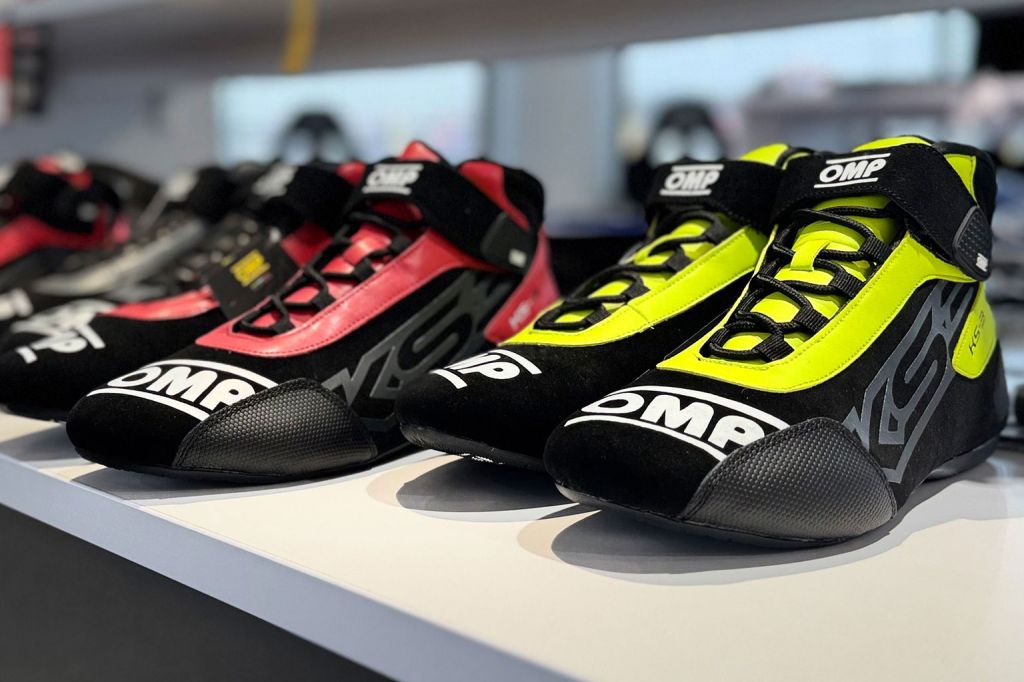
Motorsport boots have a direct effect on driving precision and feel. Braking control, delicate throttle application, confident clutch operation - all of this depends on the right footwear.
Racing boots are fundamentally different from everyday shoes. Their construction is the result of safety requirements and years of driver feedback: an ultra-thin sole for maximum pedal feel, and a high ankle to protect the joint.
What to Look for When Buying Racing Boots
Homologation
The most important parameter for competition use. The current standard is FIA 8856-2018, which replaced the older FIA 8856-2000 (the older standard remains valid through 2027).
FIA 8856-2018 introduces a 10-year validity period from the manufacture date - the date is always on the inner label. FIA boots pass rigorous fire-resistance and high-temperature tests.
For karting, FIA 8877-2022 homologation is emerging from 2024 onward, though it is not yet mandatory in all events.
Tip: If you're new to motorsport, don't cut the budget on boots. The most expensive suit won't give you the pedal feel that proper boots will - and you'll feel the difference from your very first session.
Sole Thickness and Construction
One of the most important parameters for pedal feel. The thinner the sole, the more precisely you can modulate brake force.
Racing boot soles are typically 3-5 mm thick - compared to 15-20 mm for mechanics' footwear or everyday sneakers.
Look for a sole with zoned texture across different areas - better grip at the heel and ball of the foot makes a real difference in fast footwork.
All quality motorsport boots have fuel- and oil-resistant soles and antistatic properties.
Upper Materials
FIA boots are made exclusively from natural, fire-retardant materials: natural leather, suede, or in top-shelf models, kangaroo leather. The interior is always lined with fire-retardant Nomex.
Karting boots more often use synthetic leather, microfiber, breathable mesh, and other modern materials.
Even laces are different: FIA boots use fire-retardant cotton or Kevlar laces; karting boots use polyurethane.
Weight
Weight matters with fast, repetitive footwork. The difference between a mid-range and a top-shelf boot in the same size can exceed 100 g per boot - across hundreds of pedal inputs during a race or stage, this translates into real fatigue.
Entry-level models weigh around 350-400 g (size EU 42); top models come in under 260 g.
Tip: When buying your first motorsport boots, prioritize pedal feel. The difference between a 4 mm and a 15 mm sole is immediate; the difference between 300 g and 400 g only becomes obvious after hundreds of laps.
Closure System
- Traditional laces - simple, requires careful tying before each session.
- Velcro - fast, but less precise tension control.
- Laces + velcro - the most common combination; good ankle stability.
- Rotor System - a steel cable tightened by a dial; the fastest and most precise option.
Ankle Height
All motorsport boots feature a high ankle that extends above the joint. This provides:
- protection against mechanical injury to the ankle,
- stabilization of the ankle joint under heavy braking loads.
The cuff typically ends with an elastic band or velcro, creating a sealed connection with the suit leg.
Reinforcements
Check for toe cap and heel reinforcements - they protect against abrasion and mechanical impacts, which matters especially in karting where foot contact with bodywork is common.
Types of Motorsport Boots
FIA-Homologated Racing Boots
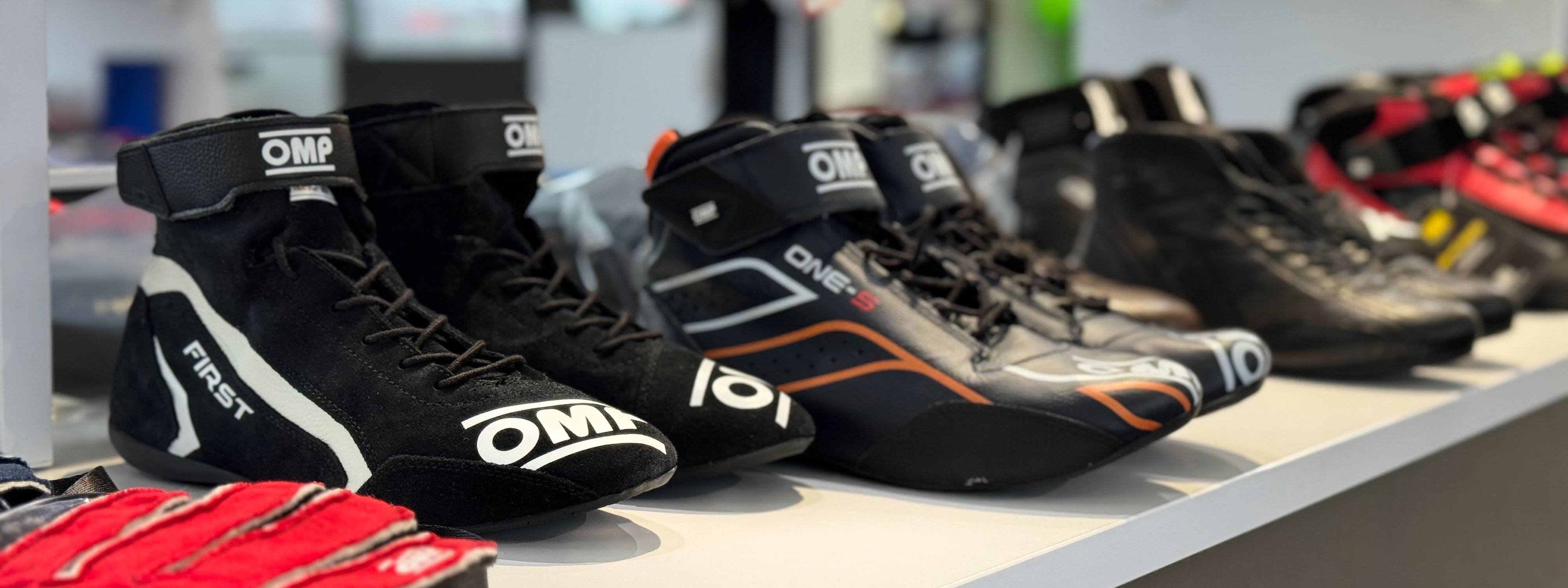
Professional racing footwear required in FIA events - rally, circuit racing, rallycross, hillclimb. Fire protection and pedal feel are the core functions.
Key specs:
- Upper: natural fire-retardant materials (leather, suede, kangaroo leather)
- Lining: Nomex fire-retardant lining
- Laces: cotton or Kevlar
- Sole: 3-5 mm, rubber, zoned grip pattern
- Homologation: FIA 8856-2018
Pros:
- ✓ Fire protection for a minimum of 11 seconds
- ✓ Required for FIA competition
- ✓ Can also be used in karting
- ✓ Robust long-term construction
Cons:
- ✗ Higher price
- ✗ Less breathable than karting-specific models
- ✗ Need breaking in
Karting Boots
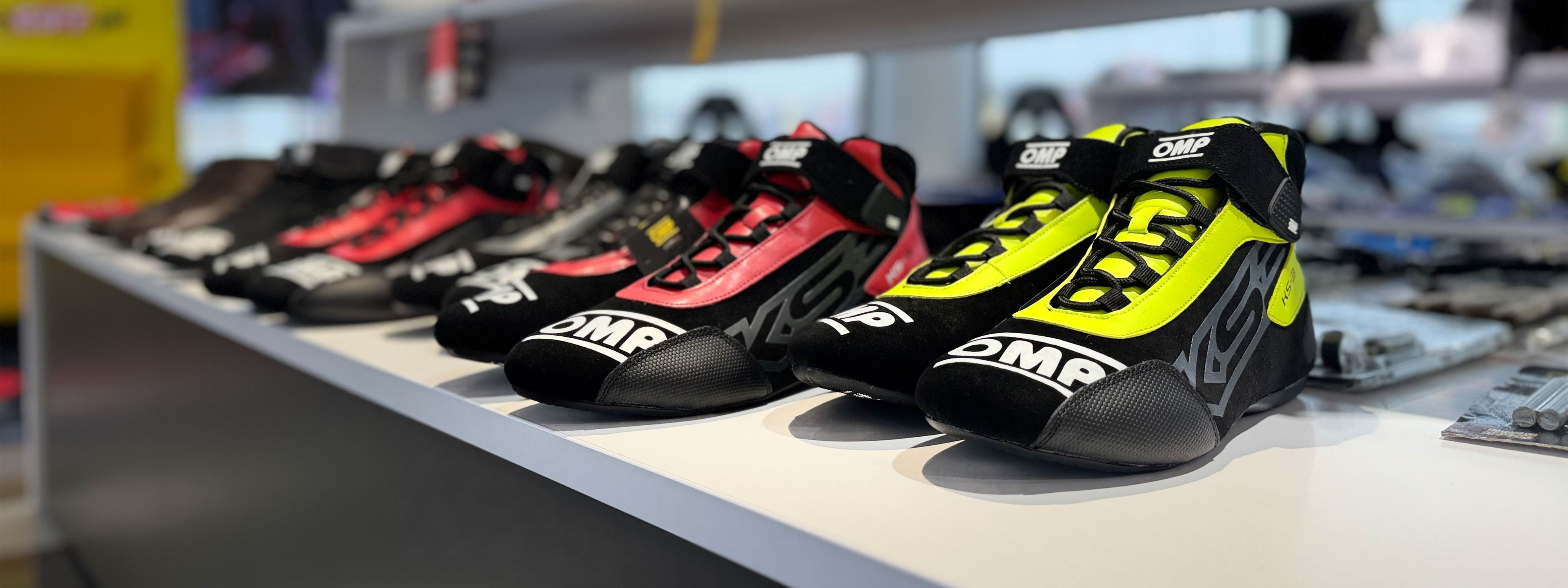
Purpose-built for kart driving - lightweight, breathable, and grippy. May or may not carry FIA 8877-2022 homologation.
Key specs:
- Synthetic leather, microfiber, mesh upper
- Often under 300 g per boot
- Excellent ventilation
- Thin sole with aggressive tread pattern
Pros:
- ✓ Lower price
- ✓ Very lightweight
- ✓ Good breathability for hot track days
Cons:
- ✗ No fire protection
- ✗ Shorter lifespan under heavy use
Tip: Do not use karting boots in car motorsport events - the fire protection difference is significant.
Boots for Mechanics and Co-Drivers
Specialist footwear with FIA homologation but built to a different specification than driver boots - thicker sole and more mechanical protection for pit lane and service park use.
Popular Brands and Models
Sparco
Racing models:
- SLALOM - ~$152-163
- TOP MY21 - ~$188-200
- X-LIGHT / X-LIGHT+ - ~$475-550
- SUPERLEGGERA - ~$625
Karting models:
- K-POLE - ~$106-163
- K-ROCK - ~$158
- K-PRIME FIA 8877-2022 - ~$258
- K-RAPID Lace / Rotor FIA 8877-2022 - ~$250
OMP Racing
Racing models:
- SPORT - ~$150
- FIRST - ~$198
- TECNICA - ~$275
- ONE EVO X R - ~$500
Karting models:
- KS-3 - ~$115
- KS-2 MY21 - ~$135
- ARP MY24 FIA 8877-2022 - ~$28
- KS-X R - ~$313
Alpinestars
Racing models:
- TECH 1-T V3 - ~$318
- TECH 1-Z V3 - ~$375-450
Karting models:
- Tech 1-K / Tech 1-KX - ~$125-200
- Tech 1-K START - ~$125
Price Ranges
Entry Level ($100-175)
Basic FIA-homologated boots in suede or microfiber, weight 350-400 g.
What determines the price:
- Entry-level materials
- Higher weight
- Basic ventilation
Mid-Range ($200-300)
Better materials, weight 300-350 g, improved ventilation, FIA 8856-2018 homologation.
What determines the price:
- Higher-quality material selection
- Lower weight
- Better ventilation integration
Premium ($325-550+)
Top-shelf models with the most advanced technologies - kangaroo leather, minimum weight.
What determines the price:
- Exotic materials (kangaroo leather)
- Advanced closure systems (Rotor)
- Maximum breathability
Karting Boots ($75-275)
Lower price point, no fire-resistance requirement, excellent ventilation for outdoor karting in all conditions.
Tip: The best value-for-money sweet spot is $200-300 - quality FIA boots that will last multiple seasons.
Summary
Motorsport boots are the foundation of precise driving and an important safety element. The wrong footwear will limit your performance regardless of how good your suit or helmet is.
A quality FIA boot can serve you for up to 10 years - it's an investment that genuinely pays for itself over multiple seasons of competition.
Frequently Asked Questions
Can I use FIA boots for karting?
Yes - it's perfectly legal and safe, though FIA boots are heavier and less breathable than purpose-made karting boots.
How do I size motorsport boots?
Racing boots run narrower than everyday shoes. Go by insole length; if you have a wide foot, consider sizing up. Never buy without checking the manufacturer's size chart.
Are top-shelf boots worth $475-625?
If you compete regularly, yes - the improvement in pedal feel and weight reduction is significant. Top models are also more durable, so the cost-per-season is lower than it appears.
Can I wash motorsport boots?
No - never machine-wash. Clean by hand with a soft brush or damp cloth. Allow to dry naturally away from direct heat.