
Bucket Seat Buying Guide: FIA Homologation, Materials, and Fit
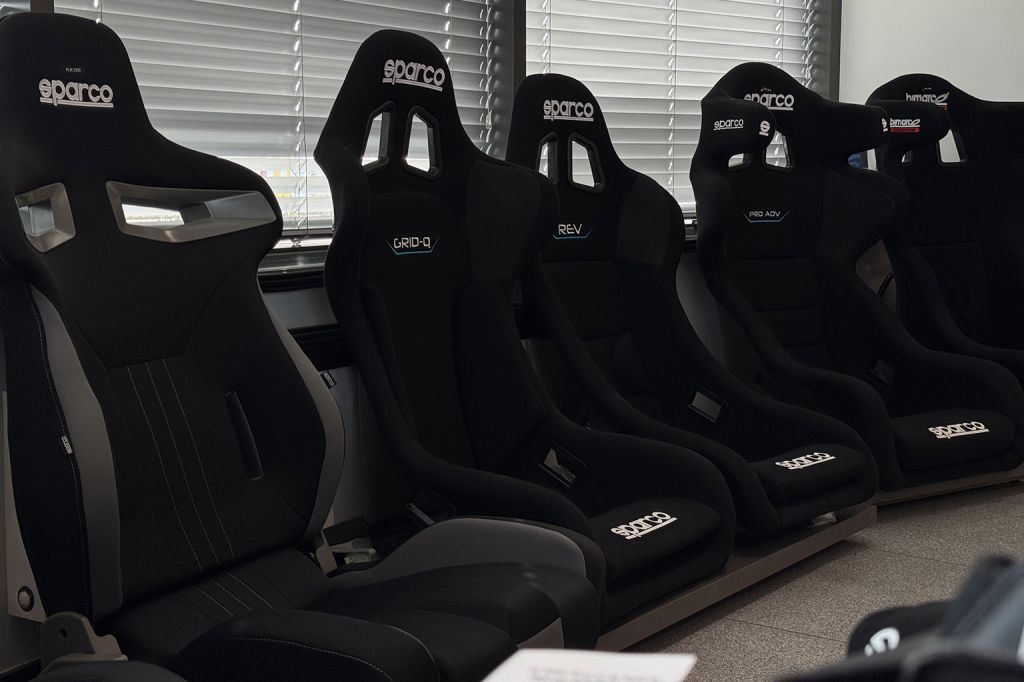
A bucket seat is one of the most critical components in any race, rally, or track car. Properly chosen, it locks you into a stable driving position and protects you even in the most serious accidents.
This isn't purely about comfort - it's primarily about safety. A poorly fitted seat makes driving harder, fatigues you faster, and compromises the effectiveness of both your harness and your HANS collar.
What to Look for When Buying a Bucket Seat
FIA Homologation
The defining parameter for motorsport use. Three standards are currently in force:
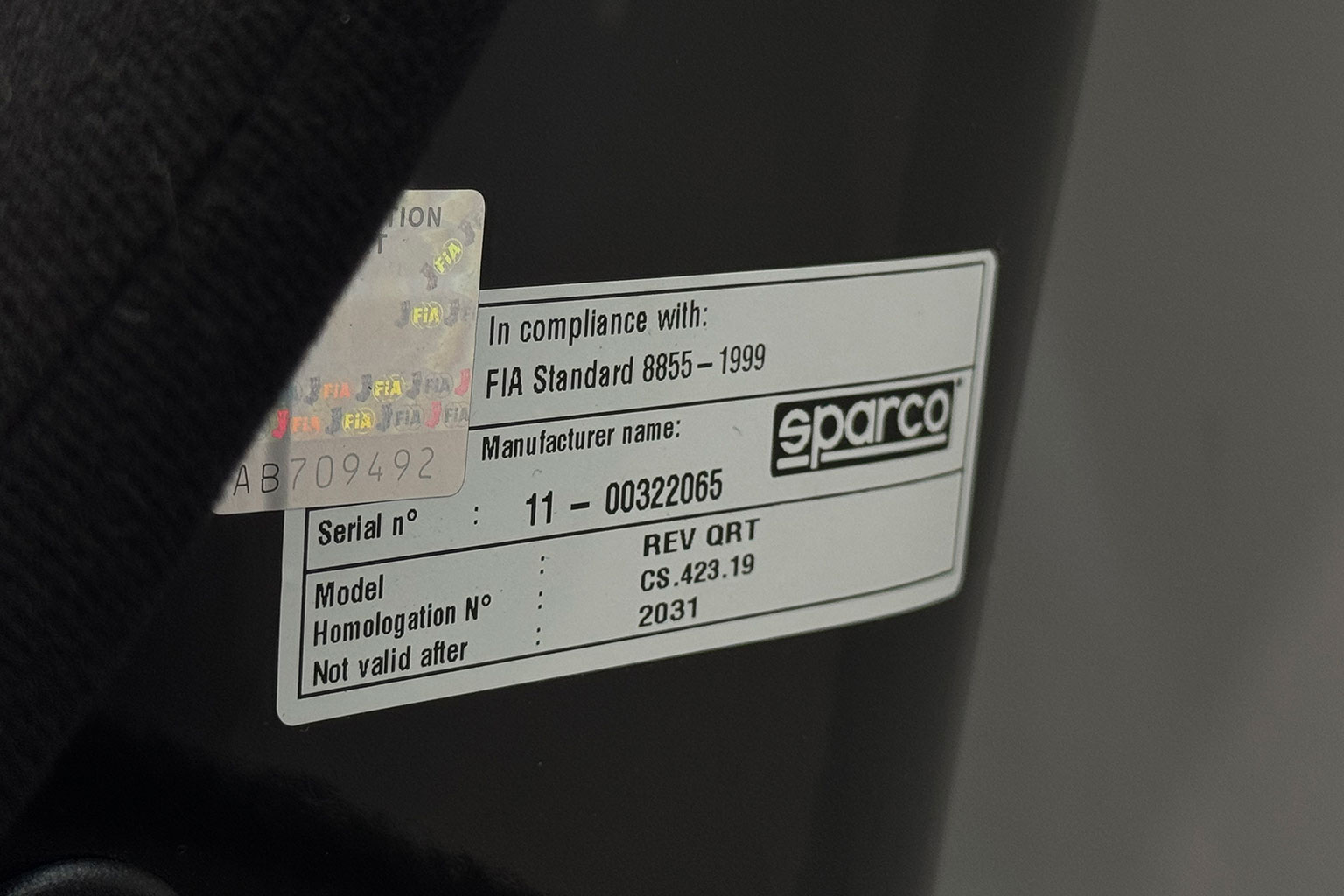
- FIA 8855-1999 - the most widely used standard, the baseline homologation. No expiry date currently set. The right choice for most amateur and semi-professional drivers.
- FIA 8855-2021 - a newer and more rigorous standard with a 10-year validity period. Gradually replacing 8855-1999 in competitive series.
- FIA 8862-2009 - the highest safety standard, mandatory in WRC, GT, and Formula series. Requires carbon construction and purpose-built mounting hardware.
Note: FIA homologation does not automatically guarantee road-legal status in your country - that depends on your vehicle's technical inspection requirements.
Shell Construction Material
- Steel tube frame - cheapest option (~$250), heaviest at 9-14 kg, but very durable.
- Fiberglass - the best compromise between price and weight (6-8 kg). The most popular choice for rally, drifting, and track days.
- Carbon fiber - lightest (4-6 kg) and most expensive ($1,750-7,500+). Mandatory for FIA 8862-2009.
Fit to Driver Body
A seat must fit the driver like a boot - too large or too small immediately compromises its safety properties.
- The seat's "ears" (side wings) should reach eye level - providing lateral head protection.
- The shell must not be too wide (loss of lateral support) or too narrow (pressure, circulation problems).
- Popular models come in multiple shell sizes, e.g. Sparco Evo / Evo L / Evo XL, Sabelt Taurus M/L/Max.
Tip: Always check the seat's internal dimensions against your body measurements. Sitting in the seat before purchasing is the only reliable check - never buy blind.
Mounting System
- Side mounting - the FIA standard. Aluminum or steel brackets bolt to the seat's side lugs and to the car's floor or roll cage mounting points.
- Bottom mounting - used mainly in non-FIA tuning seats.
- Sliders - convenient for daily driving, but raise the center of gravity and add weight. Rarely used in professional motorsport.
Tip: Installation must comply with FIA Appendix J. Undersized plate thickness, incorrect bolts, or uncertified mounts can disqualify the car at technical inspection.
Harness Belt Routing
The seat must have belt routing slots matched to 5- or 6-point harness geometry. Verify that the slot height and width match your harness installation - incorrect routing defeats the harness's protection.
HANS Compatibility
Modern seats feature a shoulder profile that supports correct HANS/Hybrid collar operation. Verify that the construction allows the correct shoulder strap angle from your specific seat position.
Upholstery and Padding
- Fire-retardant materials (FIA requirement).
- Anti-slip inserts keep the driver from moving under cornering loads.
- 3D fabric, AIRNET, and velour provide better ventilation for long events.
- For off-road or muddy conditions, synthetic leather is far easier to clean.
Types of Seats
FIA 8855-1999 Bucket Seats
The most popular choice in amateur and semi-professional motorsport. Wide availability, multiple shell materials, proven safety record.
Pros:
- ✓ Wide model range from ~$250
- ✓ Available in steel, fiberglass, and carbon
Cons:
- ✗ Less rigorous testing protocol than the newer standard
- ✗ Steel versions are heavy
For: club rallies, amateur championships, track days, drifting.
FIA 8855-2021 Seats
A modern, more stringent safety standard - higher impact resistance and a 10-year validity period.
Pros:
- ✓ Higher g-force resistance
- ✓ 10-year homologation validity
Cons:
- ✗ Higher price
- ✗ Fewer models currently available
For: ambitious drivers, teams targeting higher-level competition.
FIA 8862-2009 Seats (Professional Grade)
The highest safety standard in motorsport, mandatory in WRC, GT, and single-seater series.
Pros:
- ✓ Maximum structural protection
- ✓ Mandatory carbon shell and dedicated mounting system
- ✓ Maximum head and shoulder support
Cons:
- ✗ Price from $5,000 upward
- ✗ More complex installation
For: professionals and teams competing at world-championship level.
Semi-Bucket Seats (No FIA Homologation)
Ideal for road-going sports and performance cars, balancing daily comfort with improved lateral support.
Pros:
- ✓ Lower price
- ✓ Adjustable backrest angle
Cons:
- ✗ No FIA homologation
- ✗ Less lateral support than a true bucket
Popular Brands and Models
Sparco
- Sprint - steel tube frame, entry-level FIA 8855-1999
- EVO - competition seat, available in multiple shell sizes (M/L/XL)
- ADV Competition - FIA 8862-2009
- R100 MY22 - semi-bucket for road cars
OMP Racing
- TRS - steel tube frame, entry-level FIA 8855-1999
- WRC - fiberglass shell, two shell sizes
- RT Carbon - lightweight carbon shell
- HTE EVO Carbon - top-shelf FIA 8855-1999
Beyond Sparco and OMP, Italian manufacturer Sabelt produces well-regarded FIA bucket seats - the Taurus series in sizes M, L, and Max appears regularly in rally and circuit cars at all competition levels.
Price Ranges
Entry Level (up to $500)
- Steel tube FIA 8855-1999 seats
- Basic upholstery and shell profiles
Examples:
- Sparco Sprint (~$300)
- OMP TRS (~$300)
Mid-Range ($500-1,250)
- Quality fiberglass shell
- Anti-slip insert panels
- Lighter construction than entry-level steel
Examples:
- Sparco Grid-Q
- OMP WRC
Premium ($1,250-2,500)
- Carbon FIA 8855-1999 / 8855-2021 seats
- Advanced energy absorption structures
Professional ($2,500+)
- FIA 8862-2009 seats
- WRC/GT carbon construction
- Purpose-built mounting hardware included
Mounting Hardware and Accessories
- Steel side mounting brackets - $50-100
- Aluminum side mounting brackets - $150-250
- Dedicated bottom adapters - $75-150
- Seat sliders - $100-200
Tip: Always factor mounting hardware into the seat's total cost - it is an inseparable part of any installation.
Summary
Choosing a bucket seat is one of the most important decisions when building a motorsport car. The key factors are homologation, fit to the driver's body, shell material, and correct installation. A fiberglass FIA 8855-1999 seat in the $375-750 range is the right answer for most amateur drivers.
Even the best seat cannot do its job if it is incorrectly installed. Use certified mounting hardware and verify compliance with FIA regulations before the first event.
Frequently Asked Questions
Can an FIA seat be legally fitted in a road car?
In principle yes, but the decision rests with the vehicle inspector at your country's roadworthiness test. Consult a workshop and inspection station before installation.
Which shell material should I choose?
Steel: cheap and heavy. Fiberglass: best compromise. Carbon: light but expensive. For most competitors, fiberglass is the right call.
Side mounting or bottom mounting?
Virtually all motorsport installations use side mounting - it is safer and consistent with FIA homologation requirements.
What happens if the seat doesn't fit properly?
Too wide means no lateral support - you'll shift in the seat under cornering. Too narrow means pressure, pain, and impaired circulation. In both cases the seat's protective properties are compromised. Fit is not negotiable.