
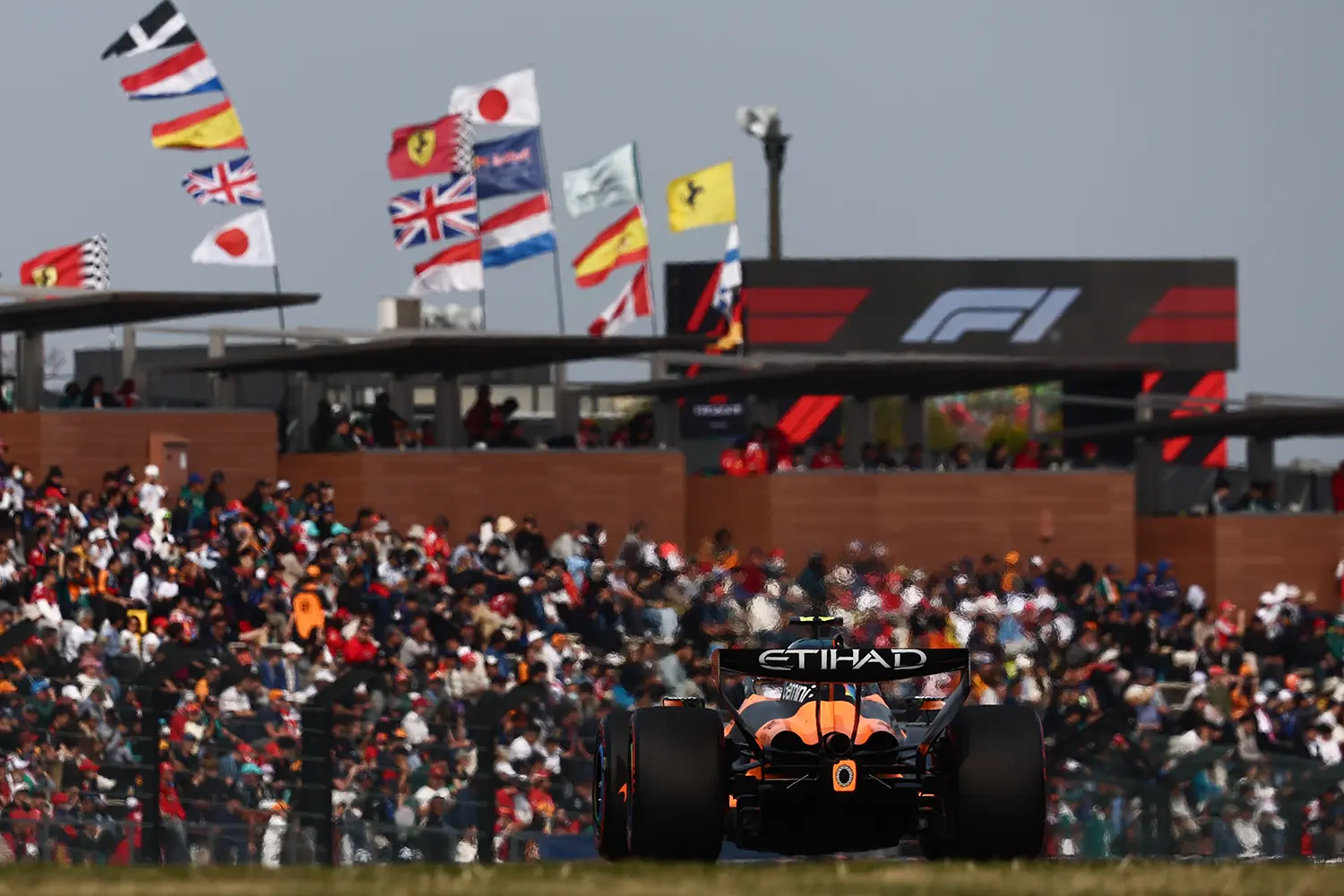
Six point seven million fans at Formula 1 race weekends in a single season. That's not a single venue, a single country, or a single Saturday afternoon — it's the cumulative weight of what's been happening to this sport since the pandemic emptied circuits and fans came roaring back louder than ever. The 2025 F1 season was officially the most attended in the championship's 75-year history.
F1 2025 attendance records — what 6.7 million actually covers
Formula 1's official season review confirmed 6.7 million spectators across 24 race weekends in 2025. Liberty Media's financial filing puts the precise figure at 6.75 million; F1's own editorial reporting rounds to 6.7 million. Either way, the trajectory is unambiguous: up from 6.5 million in 2024, up from roughly 4.2 million back in 2019, when the sport's modern growth cycle was just starting to register.
Nineteen of 24 events sold out completely in 2025. Eleven weekends set new all-time attendance records at their respective circuits. Four race weekends cleared 400,000 fans: the British Grand Prix at 500,000 and the Australian Grand Prix at 465,000 led the field, with Belgium (389,000), Italy (369,000), and Canada (352,000) rounding out the biggest draws. A further ten events surpassed 300,000. That's not a boom anymore — that's a new baseline.
The season had the narrative pull to match. Lando Norris delivered McLaren's first Drivers' Championship in 26 years in a three-way title fight that reached the final race. Lewis Hamilton made his Ferrari debut. The championship stayed alive until Abu Dhabi in a way that hadn't happened in over a decade. Those are the kinds of stories that keep grandstands booked years in advance.
Silverstone — half a million fans and one perfect winner
The British Grand Prix was 2025's defining attendance moment. Over four days from Thursday to Sunday, 500,000 fans passed through Silverstone's gates — more than any event on the calendar, and more than any crowd the circuit had ever assembled. Silverstone's previous record stood at 480,000, set in both 2023 and 2024. This one broke it by 20,000.
Historically, the only Formula 1 race weekend with a larger confirmed attendance is the 1995 Australian Grand Prix in Adelaide, which drew around 520,000 fans over four days. The 2025 British GP was the biggest F1 event in 30 years. On race day itself, 168,000 people watched Norris win at Silverstone for the first time in his career — the highest single-race attendance in the sport since the 2000 United States Grand Prix at Indianapolis.
What Norris gave that crowd was something it had been building toward through years of near-wins: a home hero, a world champion, a wet-weather battle that went to the last lap. Hülkenberg took an improbable first podium on his 239th appearance. Nobody left early.
The fans who'd worn McLaren colors through seasons of podiums and almosts watched that papaya car take the top step at the circuit where F1 began. It was the payoff they'd been carrying around for years.
How F1 counts its crowds — and why the fine print matters
The methodology behind "weekend attendance" in Formula 1 is something every serious fan should understand. The headline figure is not the number of unique individuals who attended — it's the total of every fan counted on every day they were present. Buy a four-day Thursday-to-Sunday ticket at Silverstone and you appear in the data four times. That's the standard that's been used across the sport for decades, but it matters enormously when you compare events against each other.
Circuits that run four-day weekends — primarily Australia and Britain — start with a structural advantage over three-day events. A sold-out venue with 100,000 daily capacity contributes 300,000 to a three-day total and 400,000 to a four-day one, with the same actual crowd size. Some promoters compound this by including circuit staff, press, and operating personnel in their totals. Four venues — Saudi Arabia, Azerbaijan, the United States, and Las Vegas — released no official figures for 2025 at all.
Race-day attendance is the cleaner comparison. The 168,000 at Silverstone on race day was a genuine standout, comparable to the largest single-session crowds the sport has seen since the late 1990s. And the growth trend — from 4.2 million in 2019 to 6.7 million in 2025 — is real regardless of methodology. The counting conventions haven't changed between those years; the crowds have.
The American angle — TV records, sold-out circuits, and a home team on the way
The US market ran a parallel story in 2025. ESPN averaged 1.32 million viewers per race across the season — the highest single-season average in the network's seven-year relationship with Formula 1. All but three of 24 races improved on their previous-year ratings; 16 set individual event viewership records. That's a weekly habit now, not a spike driven by one blockbuster Sunday.
COTA and Las Vegas both sold out in 2025, though neither promoter released a headline attendance figure. Based on Liberty Media's financial data and the confirmed sold-out status, the United States GP likely drew over 400,000 fans across the weekend; Las Vegas came in above 300,000 for the third consecutive year. The Strip circuit has answered the critics who called it a one-time spectacle.
Part of what's sustaining US engagement is the sport's expanding narrative architecture — the F1 movie, the Las Vegas night race as a recurring event, and the 2026 debut of Cadillac F1 as the first American constructor on the grid since 2016. Fans don't just watch differently when there's a home team in the race. They show up differently too.
Beyond Britain — the races that confirmed the trend
Australia opened 2025 with 465,000 fans at Albert Park across four days — the circuit's own record, and the highest-attended race of the year until Silverstone arrived in July. Melbourne has now delivered back-to-back blockbuster weekends since the event returned to its original March slot, and demand shows no sign of softening. Formula 1 attendance figures for 2025 grew year-on-year at 14 of the 24 events where data was available.
Belgium at Spa drew 389,000 over the sprint weekend and produced the largest television audience of the entire season — over 80 million viewers globally, a 30% jump year-on-year. Monza delivered a record 369,000, with the tifosi providing the kind of end-of-race atmosphere that cameras don't quite capture. Canada came in at 352,000 in Montreal, where the permanent culture of a street-festival race weekend keeps demand strong regardless of the championship picture. Japan returned 266,000 at Suzuka, with a precision and passion in those grandstands that's unique on the calendar. Singapore surpassed 300,000 for the first time since 2022.
The tifosi who fill Monza's tribunes have been pulling on Ferrari colors at this circuit since the Italian GP first ran there in 1950. The record numbers are modern. The loyalty that generates them is not.
Ticket prices, the growth ceiling, and what 2026 brings
Underneath all those record figures runs a tension Formula 1 hasn't fully resolved: getting to a Grand Prix costs more than it did, and the gap between demand and accessibility keeps widening. Ticket prices across the 2026 calendar have increased an average of 6.4% compared to 2025, extending a multi-season trend that's moved faster than general inflation. The median three-day grandstand ticket now sits around $600. General admission runs lower — roughly $250 for a three-day pass at most European venues — but for fans in Houston or Chicago factoring in flights, hotels, and three days on-site, even the budget option is a serious financial decision.
The range is real. Japan still offers three-day grandstand seats from around $140. Some central European events have early-bird general admission in the €150-200 range. Las Vegas sits at the opposite end: three-day grandstand access starts well above $900, with luxury options stretching into five figures. A single-day general admission at $50 remains a deliberate accessibility anchor for the Strip circuit, but it's the outlier, not the standard.
The harder ceiling isn't price — it's physics. Most of the 24 events now sell out. You can't grow attendance at a venue where every ticket is gone without building more seats, and circuits don't add capacity quickly. Silverstone cannot expand to 600,000. Monza's grandstands aren't doubling by next season. The 6.7 million figure is approaching its natural limit under the current circuit footprint.
What 2026 offers instead is a different kind of energy. New technical regulations, a reshaped grid with Cadillac F1 joining as the 11th constructor, and driver moves that took years to finalize. The sport has rarely entered a regulatory reset with this much narrative already loaded into the starting grid. The question of who can afford to be there in person is one F1 still needs to answer — but the demand to find out isn't going anywhere.