
FHR Collar Buying Guide: HANS and Hybrid Explained
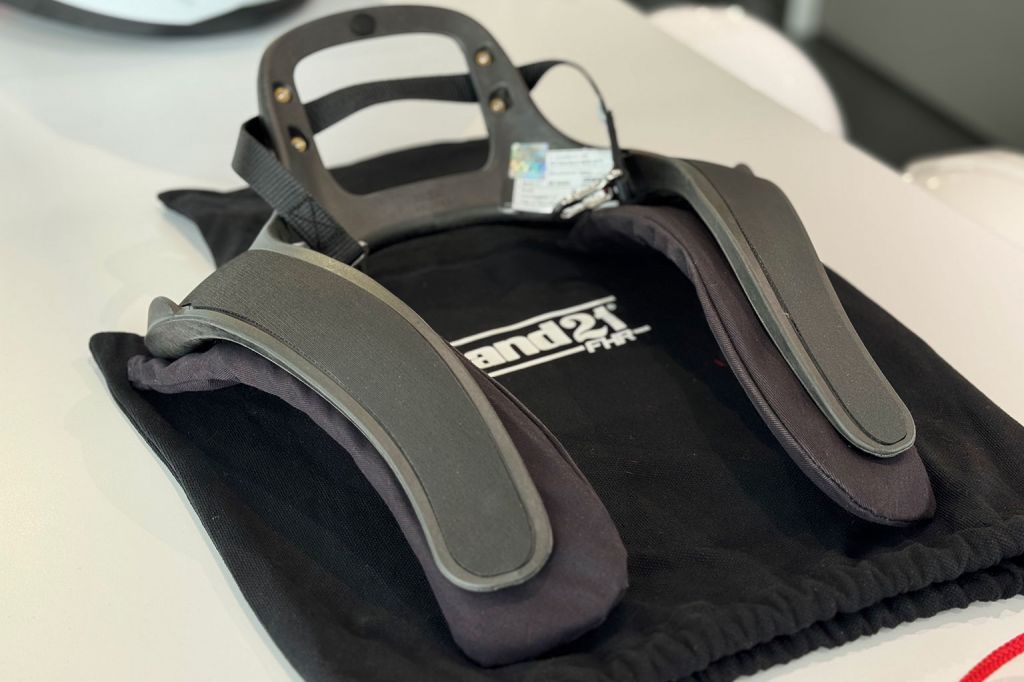
FHR (Frontal Head Restraint) devices have permanently changed safety in motorsport. Today it is impossible to imagine starting a rally or race without a HANS or Hybrid - yet only two decades ago the obligation to wear one was contested by Formula 1 drivers.
The purpose of the collar is to protect the cervical spine in a sudden impact. The device limits the violent movement of the head relative to the torso, absorbing more than 80% of the forces acting on the neck. That is a difference that can determine the outcome of an accident.
What to Look for When Buying an FHR Collar
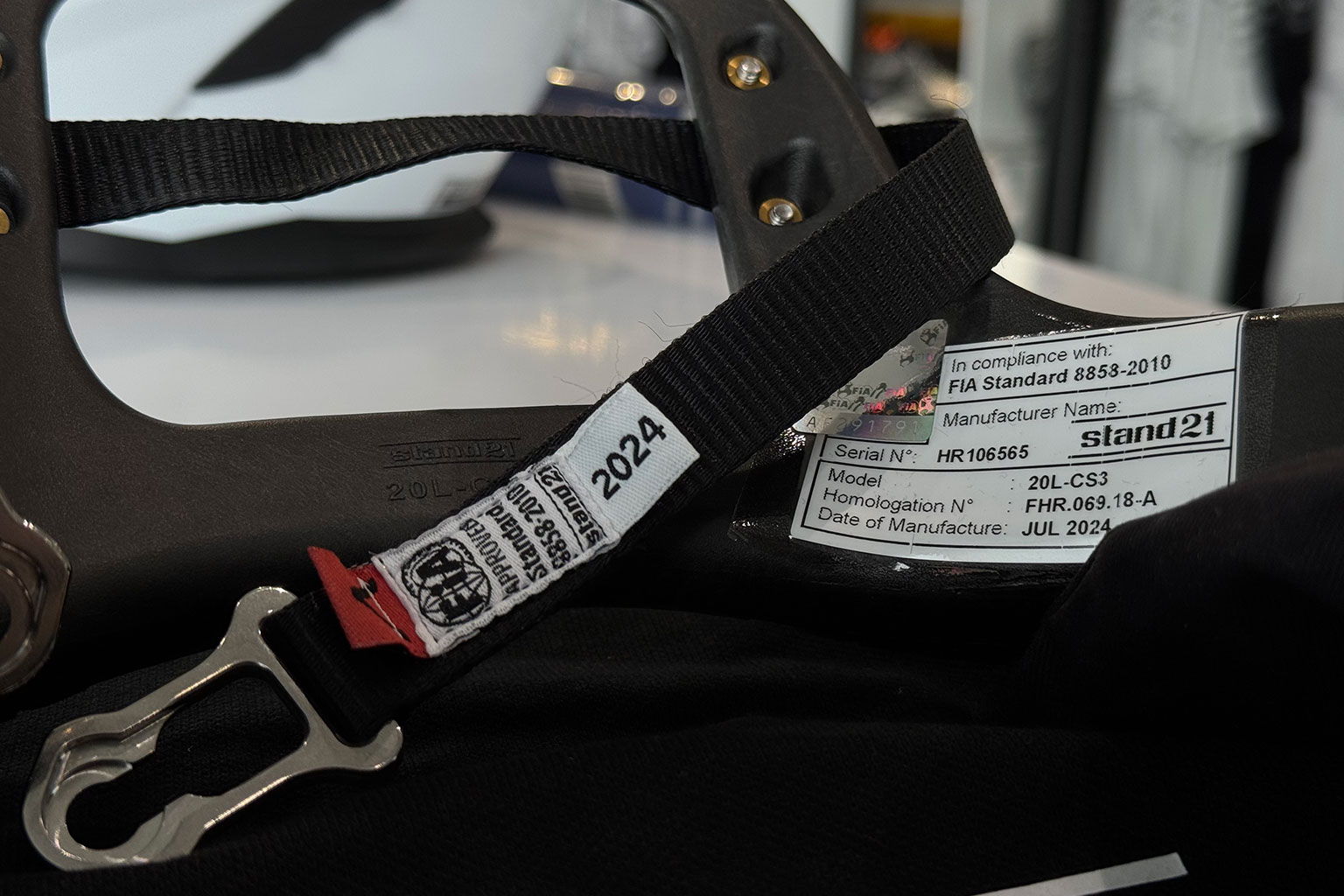
FIA 8858-2010 Homologation
This is the only current standard for FHR devices. Every collar used in competition must carry it. Older standards may no longer be accepted at scrutineering.
Type: HANS or Hybrid
HANS - the classic design, placed over the head from behind, resting on the collarbones and shoulders.
- Primarily protects against frontal impacts.
Hybrid - a more recent solution worn like a backpack, with double straps in a triangular configuration.
- Also protects against lateral impacts - the most common in motorsport.
Size (Neck Circumference)
Collars are produced in M and L sizes. Selection is based on the driver's neck circumference. The collar must be neither too loose nor too tight.
Measure your neck and compare the result against the manufacturer's sizing chart.
Shoulder Angle
- 20° - standard for rally, circuit racing, and drift
- 30° or 40° - for single-seaters, where the driver's position is more reclined
With the Hybrid system, angle is irrelevant - the design works correctly across all disciplines.
Construction Material
- Composite/plastic - around 950-1000 g, from approximately $300.
- Carbon - 450-600 g, four to five times the price.
A lighter collar means less pressure on the collarbones and significantly more comfort during a long event.
Helmet Clip Type
Two standards are available:
- Traditional HANS clip - spring-loaded, standard on most FIA helmets.
- M61 (Simpson) - quick-release with a pull cord for instant disconnection.
Tip: The most convenient approach is to buy a helmet with clips already factory-fitted. Retrofitting is possible but requires precision.
Harness and Seat Compatibility
HANS requires 6- or 8-point harnesses, 2 or 3 inches wide. Tapered models (3 inches at the buckle, 2 inches at the shoulders) are the best match.
Hybrid works with virtually any seat and harness configuration - no "HANS Friendly" certification is required.
Types of FHR Devices
FHR devices became universal thanks to refined engineering, falling prices, and a number of high-profile accidents in which they saved drivers' lives. A basic collar is now available from around $300.
HANS (Head and Neck Support System)
The classic design from which everything started. It rests on the shoulders, with tethers connecting it to the helmet. Shoulder pads underneath improve comfort during long events.
Pros:
- ✓ Proven design with a decades-long track record
- ✓ Wide choice of models and price points
- ✓ Ready availability of parts and accessories
- ✓ Lower price than Hybrid
Cons:
- ✗ Primarily protects against frontal impacts only
- ✗ Collarbone pressure can be problematic for drivers with prior shoulder injuries
- ✗ Less convenient for getting in and out of the car
- ✗ Composite versions are relatively heavy (~1 kg)
For: the majority of rally and circuit drivers, particularly amateurs and intermediate-level competitors.
Tip: If you have orthopedic issues or experience discomfort from shoulder pressure, the Hybrid may be the only comfortable option.
Hybrid (Simpson and others)
A more advanced system developed in the USA. The construction resembles a lightweight backpack, with triangular straps that stabilize the head against impacts from multiple directions.
Pros:
- ✓ Protection against both frontal and lateral impacts
- ✓ No pressure on the collarbones
- ✓ Can be worn outside the car
- ✓ Works with any seat and harness
- ✓ No need to choose a shoulder angle
Cons:
- ✗ Significantly higher price
- ✗ Requires knowledge for correct strap setup
- ✗ Requires helmet clips rotated 40° for proper function
For: professional drivers, competitors with collarbone injuries, drivers competing across multiple disciplines.
Karting Collars (without FHR homologation)
Soft foam collars used exclusively in karting. They protect against abrasion and minor impacts - they are not FHR devices.
Pros:
- ✓ Low price
- ✓ High comfort
- ✓ Adequate for indoor and amateur karting
Cons:
- ✗ No FIA homologation
- ✗ Not suitable for car racing
- ✗ Do not protect the cervical spine like HANS or Hybrid
For: kart drivers, children, and amateur competitors.
Popular Models
- Stand21 Club - the most affordable carbon model (~$296)
- Simpson Hybrid Pro Lite - top-shelf carbon Hybrid model
Tip: The best parts availability and service network in Europe is with Simpson and Stand21.
Price Ranges
Budget (up to ~$375)
Basic HANS devices in composite or resin construction.
What determines the price:
- Material: plastic or fiberglass composite
- Weight: approximately 1000 g
- Basic shoulder pads
Examples: Stand21 Club, Simpson HANS III (base versions)
For: newcomers to competition, occasional starters, mandatory-equipment compliance.
Mid-Range (~$375-875)
Lighter, more comfortable HANS collars in better-grade materials.
What determines the price:
- Composite blends or entry-level carbon
- Weight: 700-850 g
- Improved shoulder pads and ergonomics
For: regular club and national competitors.
Premium (~$875+)
Top-shelf full carbon constructions and all Hybrid models.
What determines the price:
- Full carbon: 450-600 g
- Hybrid technology with stabilizing straps
- Highest build quality
Examples: Stand21 Hi-Tech, Simpson Hybrid Sport / Pro Lite
Accessories:
- Gel shoulder pads (comfort during long events)
- Rubber anti-slip strap clips
- Replacement tethers and service kits
- M61 quick-release clips as upgrade to standard attachments
Tip: The 400-500 g difference between a composite and a carbon HANS is enormous after several hours of driving.
Summary
An FHR collar is one of the most important pieces of driver safety equipment. The choice between HANS and Hybrid depends on budget, discipline, and personal needs. HANS is less expensive and sufficient for the majority of competitors. Hybrid provides the broadest protection and greatest comfort, but at a significantly higher price.
The collar works correctly only in combination with:
- a helmet with homologated FHR clips,
- correctly selected 6- or 8-point harnesses,
- properly adjusted tether length.
If a collar was involved in a serious accident, replace it. Structural damage is often invisible to the naked eye.
Frequently Asked Questions
Is an FHR collar mandatory?
In most FIA championship classes and the majority of national rally and circuit series, yes. Always check the specific event regulations.
What is the M61 quick-release?
The M61 allows the collar to be disconnected with a single pull of the cord. It is faster and more convenient than traditional HANS clips, particularly during rapid cockpit evacuation.
Is Hybrid better than HANS?
Hybrid offers broader protection and greater comfort, especially against lateral impacts. However, it costs significantly more. For the majority of amateur and club competitors, HANS is entirely adequate.
Can I paint the collar?
Only following manufacturer guidelines and only with FIA-approved coatings. Never paint the rubberized surfaces that contact the harness straps.