
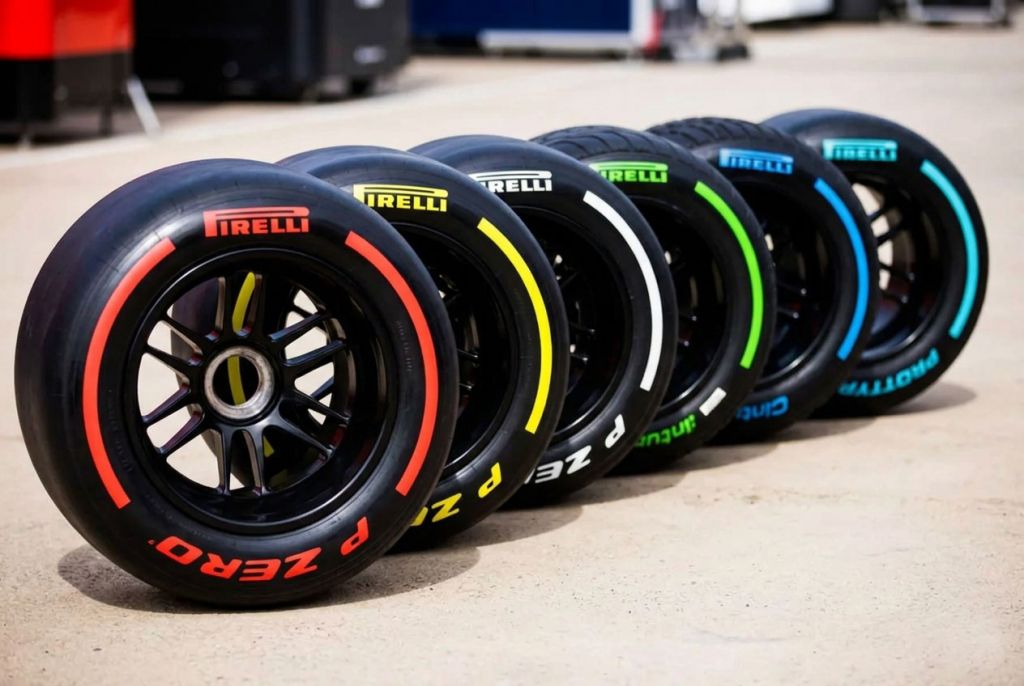
No fanfare, no drama, just one stroke of an administrator's pen - the FIA put to rest a question that had been an open secret for months. Italy's Pirelli is staying in Formula 1 longer than the original 2023 contract called for. For fans that means one thing: those familiar colored sidewall stripes will keep showing up trackside for a few more seasons. But underneath the decision sits a far more interesting story about money, Japanese competition, and what happens starting in 2029.
Pirelli F1 Tire Supplier Through End of 2028 - What the FIA Decided
The FIA exercised the option written into the deal, and Pirelli will remain the exclusive tire supplier for Formula 1 through the end of the 2028 season. The news landed in press releases in June 2026. The contract covers not only the top series - it extends to F2, F3 and F1 Academy as well, the entire ladder young drivers climb on their way to the pinnacle of the sport.
The move surprised nobody who had been watching behind the scenes. From the moment the deal was signed in November 2023, the signs pointed toward the one-season extension being triggered almost automatically. The original contract covered 2025-2027, and the 2028 clause was essentially a ready-made safety net. The FIA simply flipped the switch.
The practical upshot is stability for both the teams and the supplier. Current tire regulations should hold all the way through the end of 2028, which means no upheaval for engineers in one of the hardest parts of the car to tame. The next tender will not happen until the 2029 season comes into view.
Why This Deal Means Stability for the Whole Sport
In F1, tires are the variable that can flip a race result on its head. One-stop versus two-stop strategy, compound degradation, asphalt temperature - all of it hinges on what the supplier delivers. When the supplier stays put, teams do not have to relearn a new tire's character from scratch. Data from previous years stays useful.
That consistency reaches the lower series too. A driver moving from F3 to F2 and then to F1 works on tires from the same manufacturer all the way up. It simplifies talent development and lets results be compared across the entire pyramid - something worth a lot to fans tracking young drivers' careers.
Pirelli has been the exclusive tire supplier in Formula 1 since 2011. Early on, at F1's own request, the company built 13-inch tires that degraded quickly by design - the idea being to force more pit stops and more strategic gambles. Over the years the demands shifted. Tires got wider, and from 2022 the 18-inch wheels arrived and became the standard they are today.
Narrower Tires in 2026 - A Fresh Challenge for Pirelli
The 2026 season brought another change. Wheel size stayed the same, but the tires were narrowed, which pushed Pirelli into a significant amount of prep work. A narrower tire spreads load onto the asphalt differently, heats up differently and wears differently - and every one of those traits has to suit the new generation of cars. This was no cosmetic tweak but a real construction change.
Those same regulations are set to hold for the life of the deal, through the end of 2028. Pirelli will spend the coming seasons developing its product inside a known framework, with no further dimensional overhaul. For the teams that is good news, since they can focus on squeezing the maximum out of the current spec instead of chasing a moving target.
The Previous Tender - Pirelli vs. Bridgestone
In 2023, a tender was held for tire supply to F1 and its support series for 2025-2027, with an option on the 2028 season. This time Pirelli had a serious rival. Japan's Bridgestone wanted back into Formula 1 after more than a decade away, and the company was highly motivated. It was the only moment since 2011 when a real chance to unseat the incumbent appeared on the table.
Bridgestone put forward a strong financial offer and raised it further during the tender. The Japanese manufacturer wanted to bring its Enliten technology into F1, known from road tire production. It relies heavily on recycled materials and produces summer road tires roughly 10 percent lighter than standard. Tires built this way cut rolling resistance by around 20 percent, improve handling and reduce fuel consumption. The environmental angle fit neatly into the story F1 likes to tell about itself.
Despite the appealing Japanese proposal, Pirelli won. The FIA and F1 have worked with the Italian manufacturer for years and are satisfied with the partnership. Pirelli was the preferred supplier - but staying in the game cost it dearly.
What Pirelli's F1 Presence Costs
Bridgestone's competition drove the price up. Germany's Auto Motor und Sport reported three years ago that the annual figure climbed by as much as 20 million dollars specifically because of Japanese pressure. Under the current deal, Pirelli pays Formula 1 around 60 million dollars a year for advertising rights alone.
On top of that come tire development and production costs, which have never been disclosed. Estimates put Pirelli's annual F1 commitment in the range of 100-150 million dollars. The true figure cannot be pinned down precisely, because the research budget stays secret. That is enormous money, but in return F1 offers the best promotional window in the sport.
The Pirelli logo appears at nearly every track on the calendar. The company runs Hot Laps in sports cars around F1 circuits and awards the Pirelli Pole Position - the distinctive trophy for the driver who sets the fastest qualifying time. Pirelli also recognizes young drivers from F2, F3 and F4. It is an exposure package you would struggle to find anywhere else in sport.
A 1:1 Scale Pirelli P Zero in Our Showroom
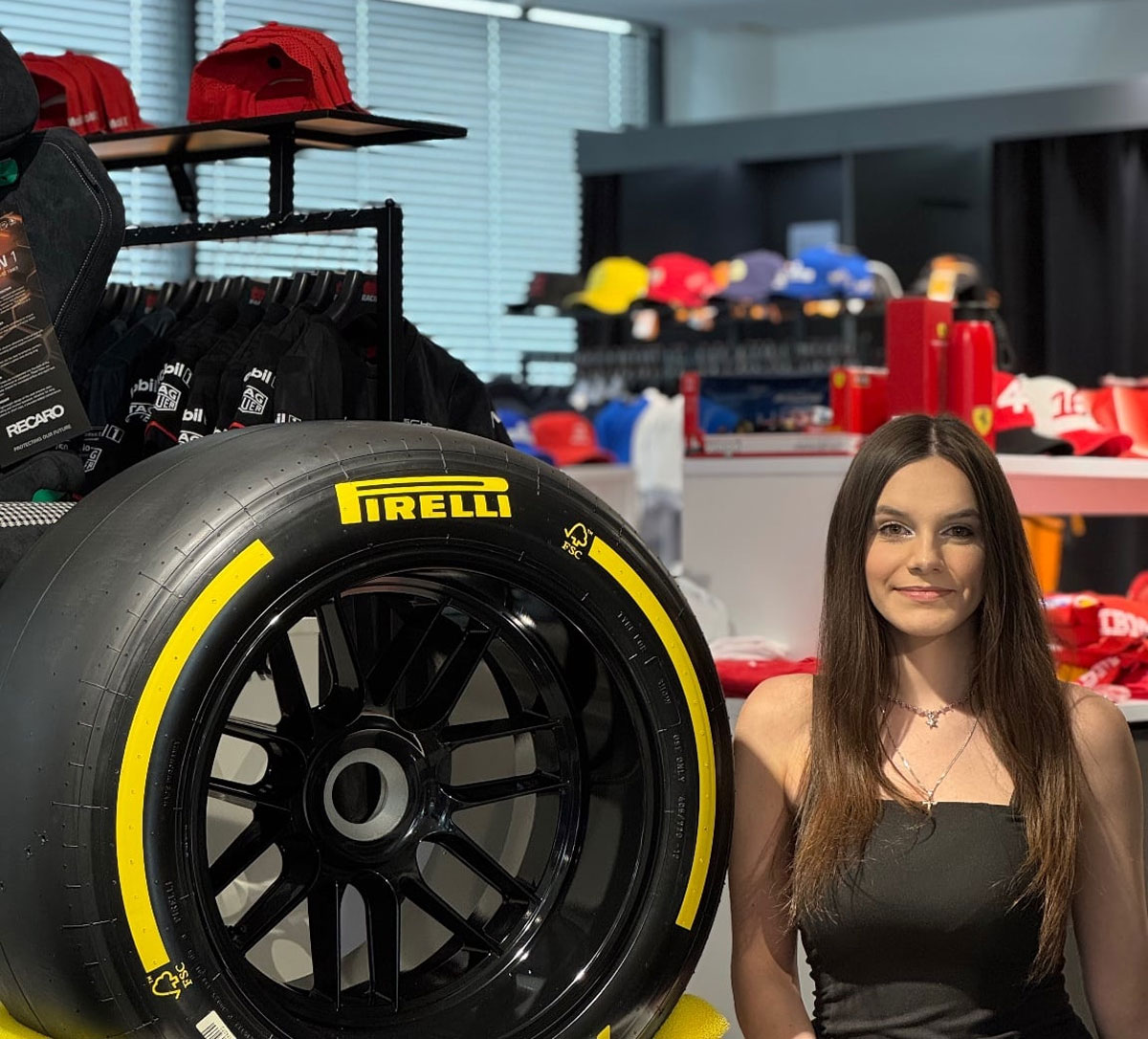
The sheer scale of a Formula 1 tire only hits you when you are standing next to one in person. Our store has a Pirelli P Zero in the Medium compound available in full 1:1 scale, right off the shelf - exactly the kind you associate with Saturday qualifying and Sunday races. You can see it in person at our showroom in Warsaw's Bemowo district.
It is a piece of motorsport you normally only watch on screen from dozens of meters away. Here you can stand beside it and study the distinctive tread and compound markings up close.
Who Will Supply F1 Tires From 2029
When the previous tender was settled, some voices suggested it could be Pirelli's last F1 contract. The reasoning sounds plausible: over more than a decade the Italian brand has hit its marketing targets, and the cost of staying keeps rising. Continued participation may no longer deliver proportional returns, given how thoroughly the company has already built its name through F1.
That opens a door for Bridgestone, which may still want to return. Other candidates could enter the tender too - worldwide there are only a handful of manufacturers capable of pulling off a job like this: Goodyear, Michelin, Dunlop or Hankook. The list of realistic contenders is short, because supplying tires for F1 is a logistical and technological challenge of the highest order.
On the other hand, a lot has changed inside Pirelli itself over the past three years, so another run cannot be ruled out. The tender should be organized in the second half of 2027, meaning concrete names are still more than a year away.
What This Decision Means for Fans
In short: calm through the end of 2028. No tire revolution, no adjustment period with a new supplier, no unexpected swings in compound character mid-regulation cycle. Teams get predictability, and fans get the continuity that makes it easier to follow driver form and race strategy.
The real contest only kicks off in the second half of 2027, when the tender for the 2029 season opens. That is when we will find out whether Pirelli extends its F1 presence into a third decade, or whether someone else takes over for the first time since 2011. Until then, the colored sidewall stripes remain a Formula 1 trademark.
FAQ - Common Questions About Pirelli's F1 Tires
How long will Pirelli supply F1 tires? Through the end of the 2028 season, after the FIA exercised the extension option written into the 2023 contract.
Does the deal also cover the lower series? Yes, the contract also covers F2, F3 and F1 Academy, so Pirelli remains the single supplier for the entire ladder leading to F1.
Since when has Pirelli supplied F1 tires? It has been the exclusive tire supplier in Formula 1 since 2011.
Who was Pirelli's rival in the tender? Japan's Bridgestone, which in 2023 wanted back into F1 with its Enliten technology and put forward a strong financial offer.
When is the next tender? It should be organized in the second half of 2027 and cover the 2029 season.