
Racing Harness Buying Guide: ECE, FIA, and HANS
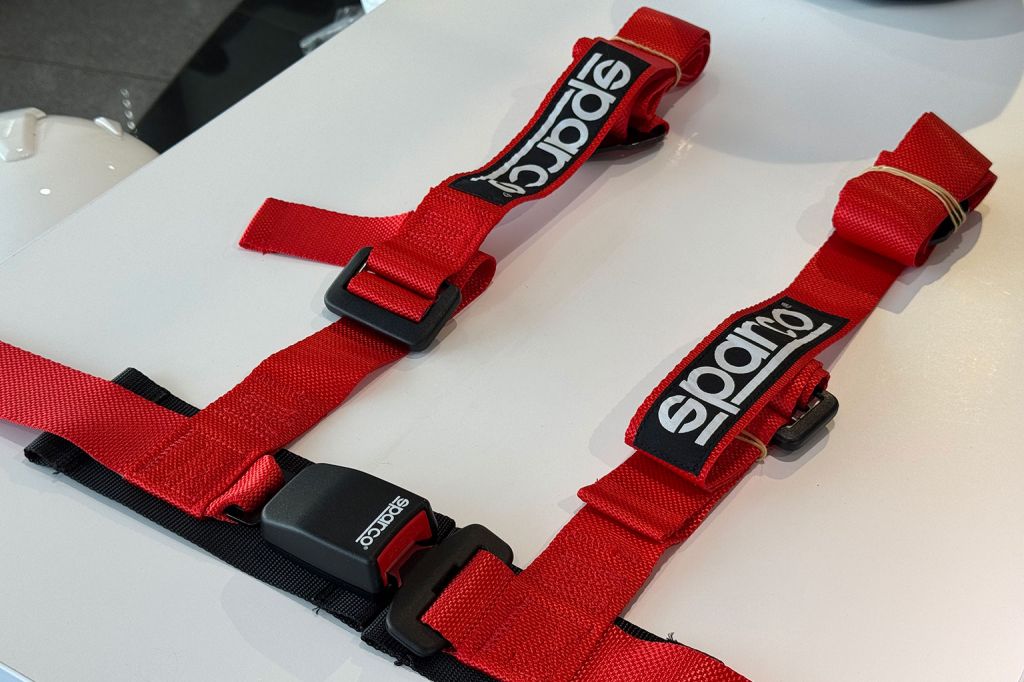
A motorsport harness does far more than keep you in the seat. Strapped firmly into a bucket seat, you feel every movement the car makes - through your back, hips, and shoulders - and start reading weight transfer and chassis behavior in a way a standard three-point belt simply can't replicate. That tactile feedback is a genuine performance advantage.
The choice between an ECE road harness and an FIA competition harness, between a 4-point and a 6-point setup, between standard and HANS-compatible straps - these aren't marketing distinctions. They determine what events you can enter, how much protection you actually get, and how long the harness legally stays in service. This guide covers every decision point.
What to Look for When Buying a Racing Harness
Certification: ECE vs FIA
ECE 16.04 - road-legal certification covering 3- and 4-point harnesses with a push-button buckle. No expiry date. Permitted in club-level and KJS-class events.
FIA 8853-2016 - the professional motorsport standard. Minimum 6-point configuration with a rotary camlock buckle, valid for 5 years from the end of the year of manufacture. Required for rally and circuit competition.
Note: FIA harnesses are not road-legal - they lack the ECE certification required for public road use.
Number of Anchor Points
- 3-point (ECE) - basic, rarely the right choice.
- 4-point (ECE/FIA) - popular for road cars and track days; FIA is phasing these out.
- 6-point (FIA) - the motorsport standard.
- 8-point (FIA) - used in top-level series for maximum HANS anchor stability.
Tip: Never run a competition harness in a standard factory seat - it's both dangerous and grounds for technical exclusion.
Belt Width
Shoulder straps come in 2" (50 mm) or 3" (75 mm) widths.
- ECE - 2" as standard.
- FIA - shoulder straps in 2" or 3", lap belts typically 2".
Wider straps distribute load more evenly across the torso - but HANS requires 2" straps at the contact point with the device.
HANS Compatibility
For use with a HANS device, you need one of three strap configurations:
- Straps marked "HANS compatible,"
- Tapered straps that narrow from 3" to 2" at the shoulder, or
- 2" shoulder straps throughout.
Full 3" shoulder straps are not compatible with HANS.
Buckle Type
- Camlock - the FIA standard. Single-rotation release, fast under pressure.
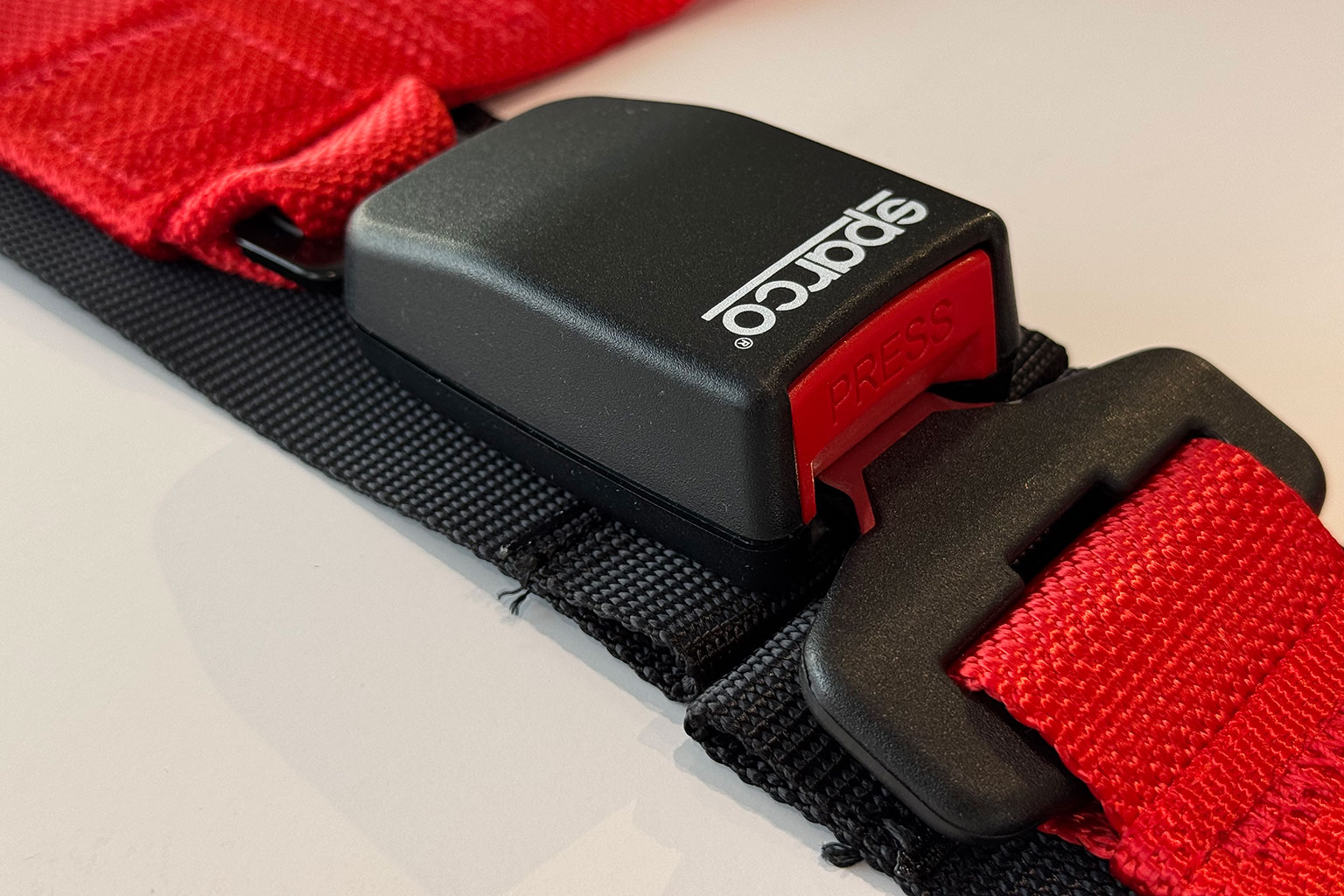
- Push button - the ECE standard, similar to production car buckles.
Buckle and Adjuster Material
- Steel - heavier, very durable, more affordable.
- Aluminum - used in mid-range and premium models.
- Magnesium - found in top-tier series hardware, minimum weight.
Look for harnesses with a Quick & Easy Lift adjuster system - it makes strapping in and out considerably easier.
Mounting System
- 7/16" UNF eye bolts - the FIA and ECE standard.
- Snap hooks (carabiners) - quick install and removal.
- Wrap-through roll cage bar - the most common method for shoulder straps.
Tip: Read FIA Appendix J before installation. Incorrect mounting is grounds for refusing a start.
Types of Racing Harness
ECE 3-Point Harnesses (Road Use)
The most basic type of competition harness - rarely the right call.
Pros:
- ✓ Road legal
- ✓ Low price (~$60-100)
- ✓ No expiry date
Cons:
- ✗ Weakest lateral restraint of any harness type
- ✗ A 4-point delivers meaningfully better support at a similar price
ECE 4-Point Harnesses (Road Use)
The most popular choice for road cars and track days.
Pros:
- ✓ Road legal
- ✓ Good value (~$75-150)
- ✓ Major improvement in lateral support versus standard seatbelts
Cons:
- ✗ No FIA competition approval
- ✗ No crotch straps
FIA 6-Point Harnesses
The standard for professional motorsport.
Pros:
- ✓ Maximum occupant protection
- ✓ Crotch straps prevent submarining under hard braking
- ✓ Full FIA regulatory compliance
Cons:
- ✗ Not road legal
- ✗ Price range $150-500+
- ✗ 5-year certification life
FIA 6-Point Tapered Harnesses (HANS)
Designed specifically for use with a HANS collar.
Pros:
- ✓ 3" comfort for most of the shoulder strap length
- ✓ 2" at the HANS contact point
- ✓ All the advantages of a standard 6-point
Cons:
- ✗ Higher price
- ✗ Less catalog choice
FIA 8-Point Harnesses
The most advanced system, used at the highest levels of the sport.
Pros:
- ✓ Maximum protection
- ✓ Superior HANS anchor stability
Cons:
- ✗ Highest price point
- ✗ Complex installation
Tip: In 90% of cases, a 6-point FIA harness is the right answer.
Popular Brands and Models
Sparco
- Club H-4 (ECE) - classic 4-point road harness
- Formula H-7 (FIA) - 6-point competition
- Formula H-9 Endurance (FIA) - lightweight, high-quality construction for endurance events
OMP
- Road - 3-point ECE harness
- Tecnica Formula - 6-point for drivers running a HANS collar
- WRC Endurance - professional rally specification
Tip: Avoid unknown brands and counterfeits - often sold as Takata lookalikes. They can fail catastrophically in a real accident.
Price Ranges
Entry Level (~$60-175)
- ECE harnesses or entry-level FIA
- Steel hardware
- 2" straps
Examples:
- OMP Road 4-point - around $120-150
- Sparco Racing ECE - from around $100
Mid-Range (~$200-375)
- FIA 8853-2016 certified
- Aluminum hardware
- HANS-compatible versions available
Examples:
- Sparco Competition H-2 PU - around $325
- OMP One 3+2 - around $300-350
Premium (~$400-625)
- Top FIA specification
- Ultralight components
- 8-point configurations
Examples:
- Sparco Competition H-3 LT - around $440
- Sabelt top models - around $500-625
Accessories and Installation
- Mounting plates - $4-8 each
- Eye bolts - $3-5 each
- Snap hooks - $8-13 each
- Professional installation - $50-125
Tip: Previous-year harnesses often come at a meaningful discount. The full 5-year FIA certification runs from the end of the manufacture year, so a year-old harness still has four years of competition life remaining.
Summary
Choosing a racing harness is one of the most consequential safety decisions in motorsport. A $75-175 budget covers basic track day and entry-level competition use; $200-375 is the sweet spot for most competitors; above $400 you're getting professional-grade equipment.
If you're not certain which setup fits your car, cage geometry, and specific regulations - ask a specialist or consult an experienced driver in your discipline. The rules vary and the stakes are real.
Frequently Asked Questions
Can I use FIA harnesses on public roads?
No. FIA harnesses do not carry ECE road-use certification.
How long is a racing harness valid?
ECE - no expiry date. FIA - 5 years from the end of the year of manufacture.
Can I renew FIA certification?
No - FIA certification is not renewable. Once expired, the harness must be replaced.
What should I do after an accident?
Replace the harness immediately - load forces can cause invisible internal damage even when the assembly looks intact.
How do I choose shoulder strap length?
Standard shoulder straps (~185-190 cm) fit most cars. For roll cages or unusual body configurations, look for extended-strap models.