
Racing Helmets Buying Guide: FIA, Snell, Open-Face, and Full-Face
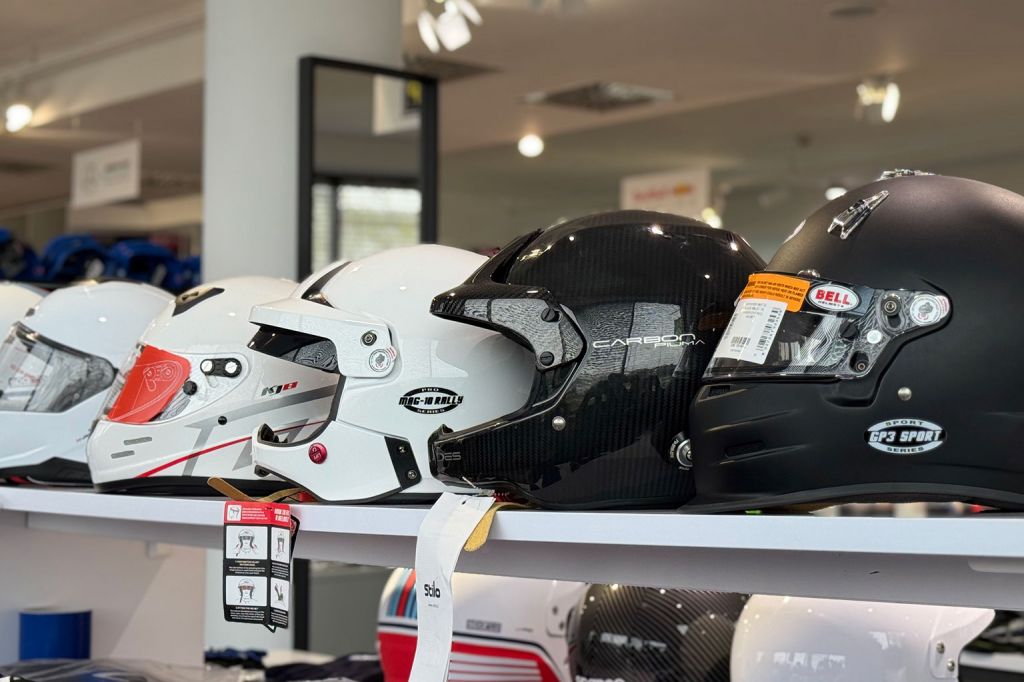
A helmet protects the most valuable thing you carry - your head. It deserves the most thought and the largest share of your safety budget. While you can make reasonable compromises on a suit or boots, there is no acceptable compromise on a helmet.
Choosing one means working through a series of questions: open-face, full-face, or GT-style? FIA, Snell, or ECE homologation? ABS, composite, or carbon shell? What's the intercom setup? What's the color?
The manufacturer range is enormous and frequent changes to homologation standards make the decision more complex than it looks.
What to Look for When Buying a Racing Helmet
Homologation
The most important spec - it determines whether your helmet is accepted at your event.
FIA homologations:
- FIA 8859-2024 - the most widely used standard, covering entry-level to mid-range models. No expiry date currently set.
- FIA 8860-2018 / 8860-2018-ABP - required in the highest series (WRC, F1). Carbon shell only, price $2,500-$5,000+.
- FIA 8859-2015 - older standard, being phased out.
Snell homologations:
- SA2020 and SA2025 - recognized by FIA as equivalent for most categories.
Road-use homologations:
- ECE 22.05/22.06 - road-legal certification, accepted only in amateur events.
Note: Helmets don't have an expiry date tied to their manufacture date. What matters is the validity of the homologation and the physical condition of the shell.
Helmet Type by Construction
- Full-face (closed) - complete protection with a visor. Ideal for circuit racing, single-seaters, and karting.
- Open-face - the dominant choice in rally. Wider field of view, better communication with the co-driver.
- GT / rally-style - compromise: enclosed chin bar, open eye area, often a peak rather than a visor.
Shell Material
- ABS/ATM - heavier and cheaper; restricted to ECE-standard and amateur events.
- Composite (fiberglass) - the standard for FIA 8859-2024; good balance of weight and protection.
- Carbon fiber - lightest and strongest; required for FIA 8860-2018.
Tip: The practical difference between a $375 composite helmet and a $750 carbon helmet is primarily weight and comfort - both offer a high level of protection under their respective standards.
Helmet Weight
- ABS helmets: 1600-1800 g (3.5-4.0 lb)
- Composite helmets: 1400-1600 g (3.1-3.5 lb)
- Carbon helmets: 1100-1400 g (2.4-3.1 lb)
- Top carbon helmets: under 1100 g (2.4 lb)
Important: A 300-500 g weight difference has a real impact on neck fatigue over a long rally stage or endurance stint.
Shell Sizes
Most models come in one (XS-XXL) or two shell sizes (XS-M and L-XXL). Shell size affects the fit and the weight of the helmet - a smaller shell is lighter.
Interior Padding
Better helmets have breathable, soft padding with replaceable cheek pads. After each event, remove the padding and let the helmet dry - moisture buildup degrades both the lining and the shell over time.
HANS Posts
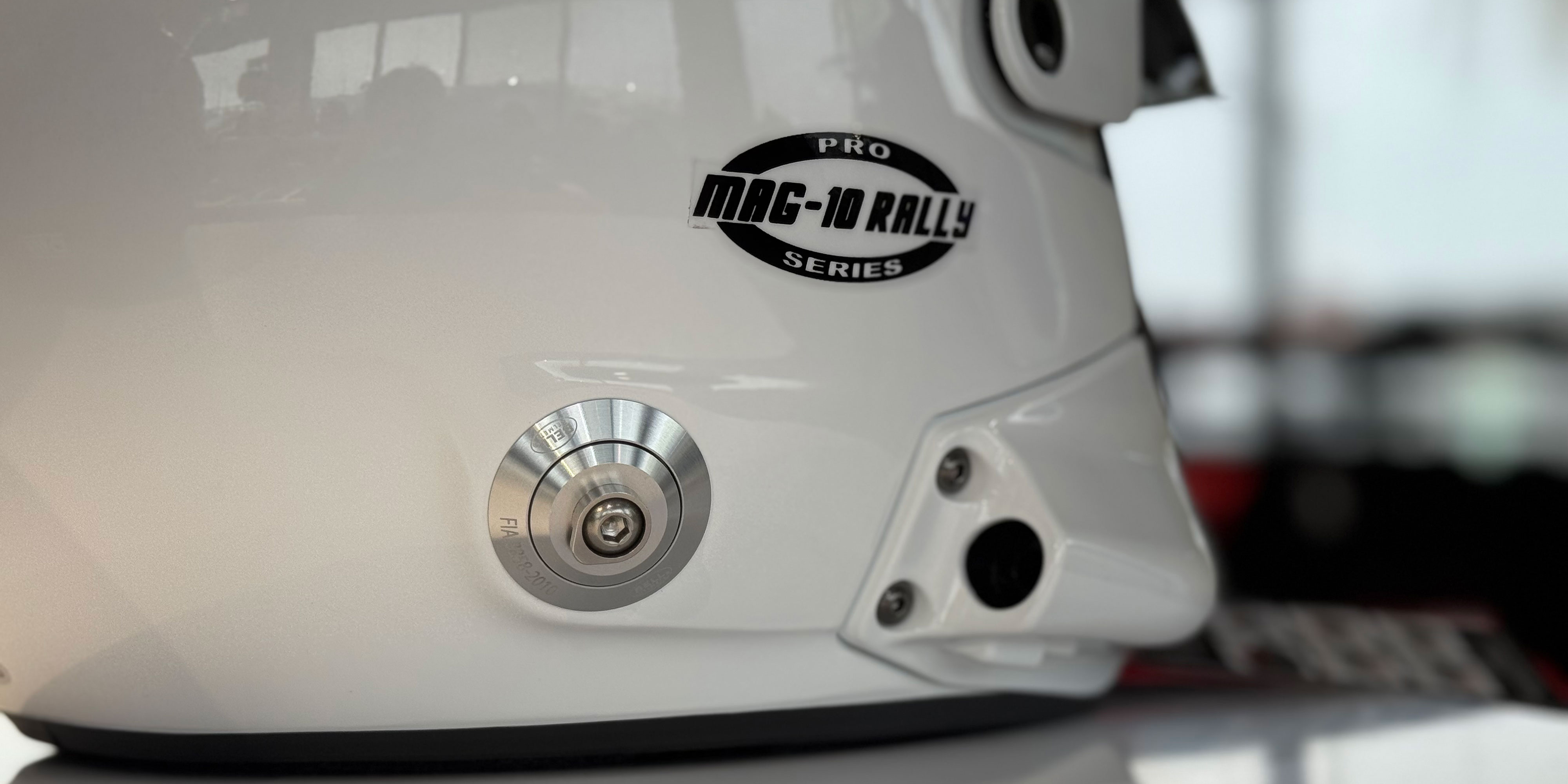
The standard on all FIA helmets. If a used helmet doesn't have them, most manufacturers can fit them at their service centers - the helmet then receives an FIA sticker confirming correct installation.
Intercom System
- Built-in intercom - the best solution for rally use, with optimized speaker and mic placement.
- Coil-spring microphone - the classic approach, used in most open-face helmets.
- Boom-arm microphone - found most often in Stilo and Bell models; most stable for high-vibration environments.
Important: Always verify intercom compatibility with your car's communication system before buying (e.g., Stilo WRC DES - Nexus intercom).
Ventilation
Critical in full-face helmets, especially in summer heat. Air intakes at the front and top of the shell significantly improve comfort on long stages. Look for models with a direct airflow path to the face.
Visor and Peak
Full-face helmets use clear or tinted visors. Open-face helmets typically come with a sun peak. The latest visors for FIA 8859-2024 helmets feature improved quick-release locking systems.
Types of Helmets by Use Case
FIA-Homologated Rally and Racing Helmets
The professional-grade option, mandatory for circuit racing and timed rally stages. Composite or carbon shell, fire-retardant interior lining, HANS posts as standard, usually with intercom provisions.
Pros:
- ✓ Maximum safety
- ✓ FIA competition-legal
- ✓ Long service life
- ✓ Wide spare parts availability
Cons:
- ✗ High price ($500-$5,000+)
- ✗ Heavier than ECE helmets
- ✗ Requires regular maintenance
Karting Helmets
Purpose-built for karting. Lighter construction, different shell geometry - especially CMR models for children.
For children (under 15):
- CMR2016 homologation
- Low weight, small shell sizes
- Price ~$200-625
For adults:
- Snell K2015/K2020 or FIA 8878-2024
- Price ~$250-$1,000+
Pros:
- ✓ Lightweight construction
- ✓ Strong protection for karting-specific impacts
Cons:
- ✗ CMR helmets are restricted to karting only
ECE Road-Homologated Helmets
ECE 22.05/22.06 certified helmets are permitted only in amateur and club events without FIA regulations.
Pros:
- ✓ Lower price ($100-175)
- ✓ Good starting point for beginners
- ✓ Wide availability
Cons:
- ✗ Not accepted at FIA events
- ✗ No HANS posts
- ✗ Lower protection level than FIA equivalents
Tip: If you plan to move into regulated competition within one to two years, buy an FIA helmet from the start and avoid paying twice.
Popular Brands and Models
Stilo
The market leader in rally helmets. The choice of WRC drivers at every level.
Popular models:
- WRC series - open-face with boom-arm microphone, Trophy DES intercom, composite or carbon. ~$1,000-2,000
- ST5 - full-face, homologations from 8859 to 8860, carbon versions available. ~$1,250-3,000
- Trophy / Venti - open-face and GT-style at lower price points. ~$625-1,250
OMP Racing
- OMP J-R / J-Rally - the most popular FIA rally helmets in the open-face category, Zero Noise intercom. ~$625-875
- KJ-8 EVO CMR - CMR karting helmet for young drivers
- OMP Star - ECE homologation, bestseller for amateur events. ~$100-150
Sparco
- Flux RJ / RJ-I - FIA rally open-face, ~$625-875
- Club J-PRO / X-PRO - ECE full-face helmets, under $150
- STEALTH RF - FIA helmets in composite and carbon configurations
Bell
- KC7 CMR - high-quality CMR-homologated karting helmet for young drivers
- MAG-10 Rally Pro - open-face with integrated microphone arm
- GP3 - high-quality full-face circuit racing helmet
Tip: The best service support in North America and internationally comes from Stilo, OMP, and Bell. The OMP J-Rally is among the best value-for-money FIA helmets available.
Price Ranges
Entry Level ($100-300)
ECE helmets and basic CMR karting helmets for children. Models such as OMP Star, Sparco Club J-1.
What determines the price:
- ECE homologation only
- ABS shell
- No intercom provisions, no HANS posts
Mid-Range ($500-1,125)
FIA 8859-2024 helmets with composite shells, built-in intercom provision, HANS posts as standard.
What determines the price:
- FIA homologation
- Composite shell
- Better ventilation and interior padding
Premium ($1,250-2,500)
Carbon or top composite shells, advanced intercom systems, lightest construction in the FIA 8859-2024 bracket.
What determines the price:
- Carbon fiber construction
- Low weight (1100-1400 g)
- Top-tier ventilation and padding
Ultra-Premium ($2,500-6,000+)
FIA 8860-2018 helmets, advanced carbon weave, ultralight construction, best-in-class communication systems.
What determines the price:
- FIA 8860-2018 homologation requirement
- Highest-grade carbon construction
- Minimum weight
Tip: The sweet spot for most competitors is $625-1,125 - a solid FIA helmet with intercom provisions and HANS posts. This covers everything you need for national-level rally or circuit competition.
Summary
A helmet is the foundation of motorsport safety and the one piece of equipment you genuinely cannot compromise on. Choose within your regulations, prioritize fit and comfort, and never buy a helmet you can't try on first.
The price range is wide - from $100 for an ECE helmet to over $5,000 for a top FIA 8860 model. For most competitive drivers, a quality FIA 8859-2024 composite helmet with intercom is the right long-term investment - it'll outlast a suit and complement any car you drive.
Frequently Asked Questions
How long can I use a helmet with FIA homologation?
You can use it for as long as the homologation standard remains valid and the helmet is in good physical condition. FIA 8859-2024 has no expiry date currently set. Under heavy use, replacing every three to four years is good practice regardless.
Can I paint my helmet?
Yes, but only with paints and methods approved by the manufacturer. Incorrect paint products can damage the shell structure and void the homologation.
What should I do if my helmet is dropped?
Send it to the manufacturer for inspection or replace it. Micro-cracks in the shell are invisible to the eye but compromise the helmet's ability to absorb impact energy.
How do I clean the helmet and padding?
Dry the helmet after every use. Padding can be hand-washed in lukewarm water. Clean the visor with a microfiber cloth. Never machine-wash the interior.