
Racing Suit Buying Guide: FIA, Karting, and What Actually Matters
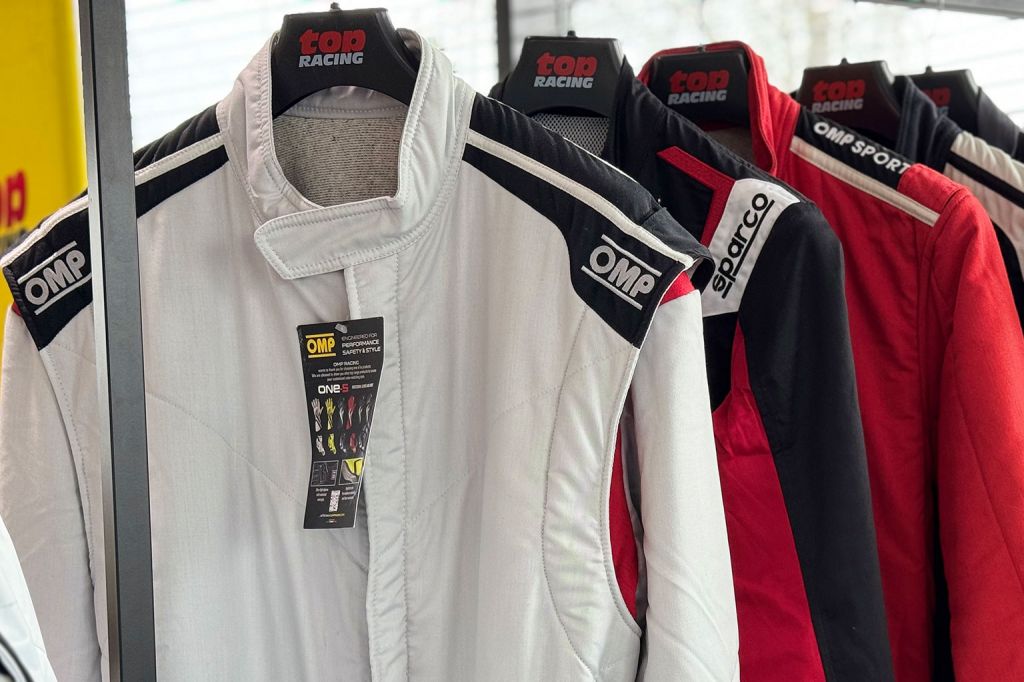
A racing suit - alongside the helmet - is the most critical piece of safety equipment a driver wears. It covers the largest body surface area and forms the first line of defense in a fire or rollover. Getting the choice right is a long-term investment: a quality suit will see you through many seasons.
What to Look for When Buying a Racing Suit
Homologation
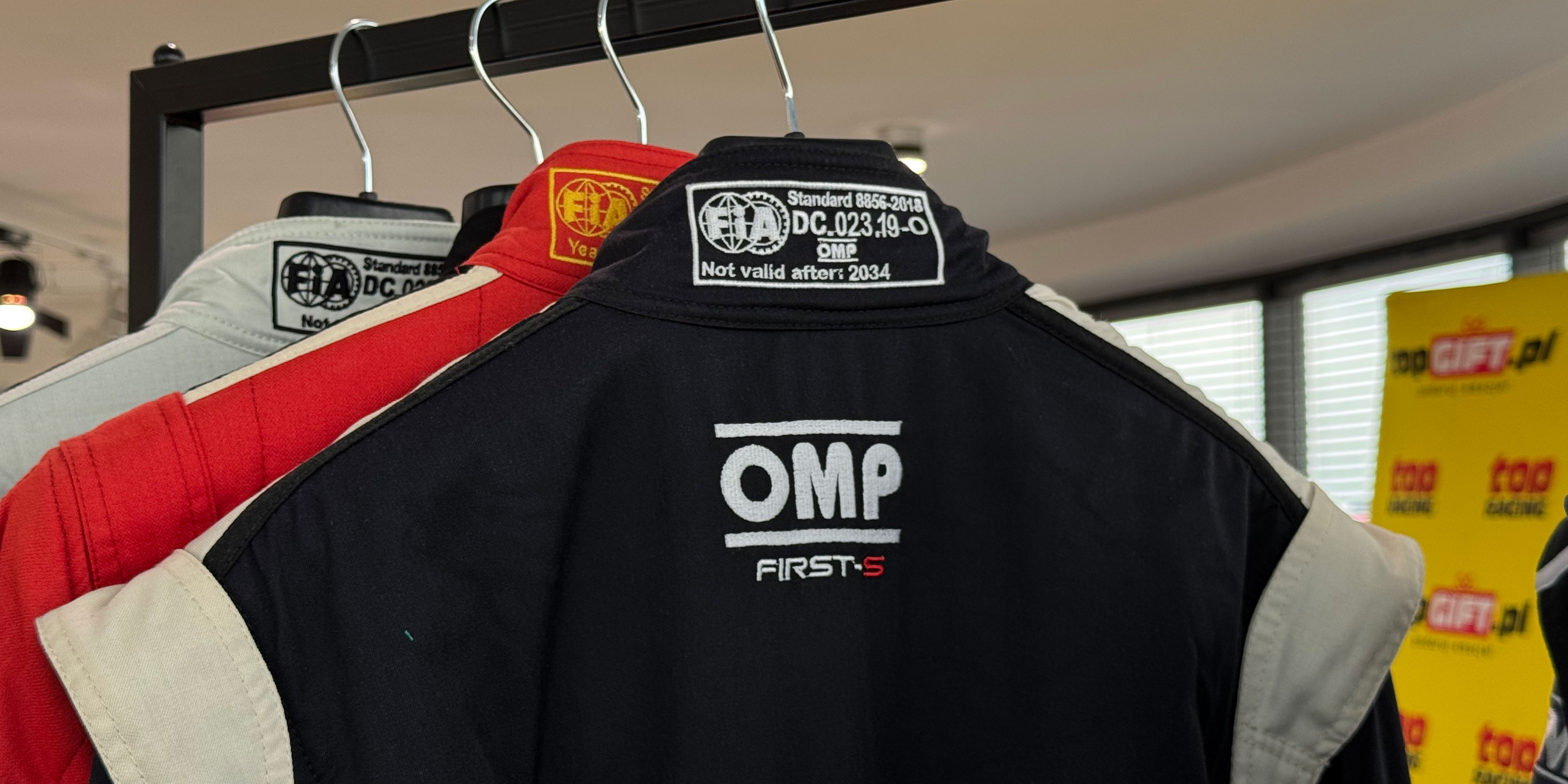
The defining criterion. The current standard for rally and circuit racing suits is FIA 8856-2018.
Karting suits carry CIK-FIA Level 2 homologation (valid for 5 years from manufacture) - but the CIK-FIA system is being phased out by the end of 2029. The recommended transition is to FIA 8877-2022 karting suits.
Always check for the hologram tag on the interior label - that's the guarantee of competition acceptance.
Tip: Check your series regulations before buying. A mismatched certification can bar you from the start line.
Weight and Number of Layers
Fabric weight determines how much the suit weighs and how well it breathes:
- Entry-level models: ~400 g/m²
- Mid-range: 300-350 g/m²
- Top-shelf: ~230 g/m²
Counter-intuitively, 3-layer suits are lighter and more comfortable than basic 2-layer suits - the construction allows lower fabric weight while meeting the same fire protection standard.
Materials and Technologies
FIA suits are made from fire-retardant Nomex, which provides several seconds of protection against direct flame exposure - enough time to escape or be extracted from the car.
Notable modern technologies:
- Sparco HoCo Tex - single-layer honeycomb construction, outstanding breathability
- OMP Dry System - ventilation inserts for active moisture management
- X-Cool - menthol and silver-ion technology for improved thermal comfort
Cut and Ergonomics
The suit must fit snugly without restricting movement. Key details: stretch panels under the arms, in the groin, and across the back. Check sleeve and leg length - they should cover wrists and ankles even when you're at full reach on the wheel.
Safety Features
- Elasticated cuffs on sleeves and ankles
- Velcro collar closure
- Covered zipper
- Contrasting epaulette loops on the shoulders (aid extraction)
In karting, reinforced knee and elbow patches also matter - impacts against the kart's bodywork are frequent.
Thermal Comfort
A quality competition suit must breathe. Ventilation inserts, mesh panels, and cooling technologies meaningfully reduce driver fatigue - especially in summer events.
Tip: The comfort difference between a 400 g/m² and a 300 g/m² suit is enormous - particularly during a July rally.
Types of Racing Suit
FIA-Homologated Suits (Rally and Circuit)
Professional race suits made from Nomex, mandatory in rally, circuit racing, rally sprints, and drifting. Fire protection is the defining feature.
Pros:
- ✓ Maximum fire protection
- ✓ Required for FIA competition
- ✓ Available from entry-level to top-shelf
Cons:
- ✗ Higher price (from ~$375)
- ✗ Entry-level models have limited breathability
- ✗ Fire-retardant underwear is mandatory underneath
For: rally drivers, circuit racers, drifters, rally sprint competitors.
Karting Suits
Focus on mechanical protection rather than fire resistance. Outer Cordura shell and soft interior padding deliver durability and comfort under real karting conditions.
Pros:
- ✓ Lower price (~$120-250)
- ✓ Highly flexible and comfortable
- ✓ Reinforced at impact points
Cons:
- ✗ CIK-FIA certification valid only 5 years from manufacture
- ✗ No fire protection - cannot be used in cars
For: indoor and outdoor karting, beginner championships, hobby and training use.
Non-Homologated / Mechanics' Suits
Pros:
- ✓ Low price
- ✓ Comfortable workshop wear
- ✓ Wide color and style choice
Cons:
- ✗ Not competition-legal
- ✗ Lower protection level
For: mechanics, track days, and amateur events without homologation requirements.
Tip: If you're unsure which events you'll enter - buy an FIA-homologated suit from the start. You'll avoid a duplicate purchase.
Popular Brands and Models
Sparco
Known for innovative technologies including HoCo Tex construction and X-Cool comfort add-ons.
Popular models:
- Sprint - the bestseller, FIA 8856-2018, 360-390 g/m²
- Competition - mid-range, lower weight at 300-330 g/m²
- Prime - 4-layer lightweight competition suit
- Thunder - karting suit (~$243)
OMP Racing
High manufacturing quality with excellent ventilation through the Dry System technology.
- OMP Sport MY20 - entry-level FIA (400 g/m²)
- OMP First Evo MY25 - mid-range (345 g/m²)
- OMP Tecnica EVO - Dry System ventilation, 340 g/m²
- OMP KS-3X / KS-4 - karting suits
Price Ranges
Mid-Range ($500-1,125)
A real step up in comfort - lower fabric weight and 3-layer construction.
What determines the price:
- Fabric weight 300-350 g/m²
- Ventilation inserts
- More refined cut and finishing
Premium ($1,125+)
Top-shelf models for professional use. Maximum comfort and minimum weight.
What determines the price:
- Fabric weight 230-280 g/m²
- HoCo Tex, X-Cool technologies
- Advanced single-layer constructions
Custom Designs
OMP One Art, KS Art, and Sparco Infinity offer full personalization. Individual embroidery and livery add a significant premium - typically 20-40% above the base suit price.
Tip: The comfort gap between 400 g/m² and 300 g/m² is massive - especially in summer heat. If you race more than a few times per year, the upgrade pays for itself in focus and energy at the end of a long stage.
Summary
Choosing a suit is one of the key decisions in motorsport. For an FIA suit, fire-retardant underwear is also mandatory - it's both a regulatory requirement and a genuinely important protection layer.
A full underwear set (balaclava, top, bottoms, socks) runs around $250, with premium cooling-technology options priced higher. A good suit is a multi-season purchase - proper care will keep it competition-legal for years.
Frequently Asked Questions
Is a 3-layer suit heavier than a 2-layer?
No. 3-layer suits are lighter and more breathable because they're constructed with lower fabric weight - they achieve the same fire protection standard with less overall mass.
Can I machine-wash a racing suit?
Nomex suits require specialist detergents (such as Molecule). Dry-cleaning by a professional service is the recommended approach to preserve the homologation integrity.
Do I need underwear under a racing suit?
Under an FIA suit - absolutely yes. The underwear must be fire-retardant (Nomex); standard cotton or synthetic underwear can melt at high temperatures. Under a karting suit, underwear serves a comfort and hygiene function.