
Rally Intercom Buying Guide: NEXUS Standard, Analog, Digital and Wireless
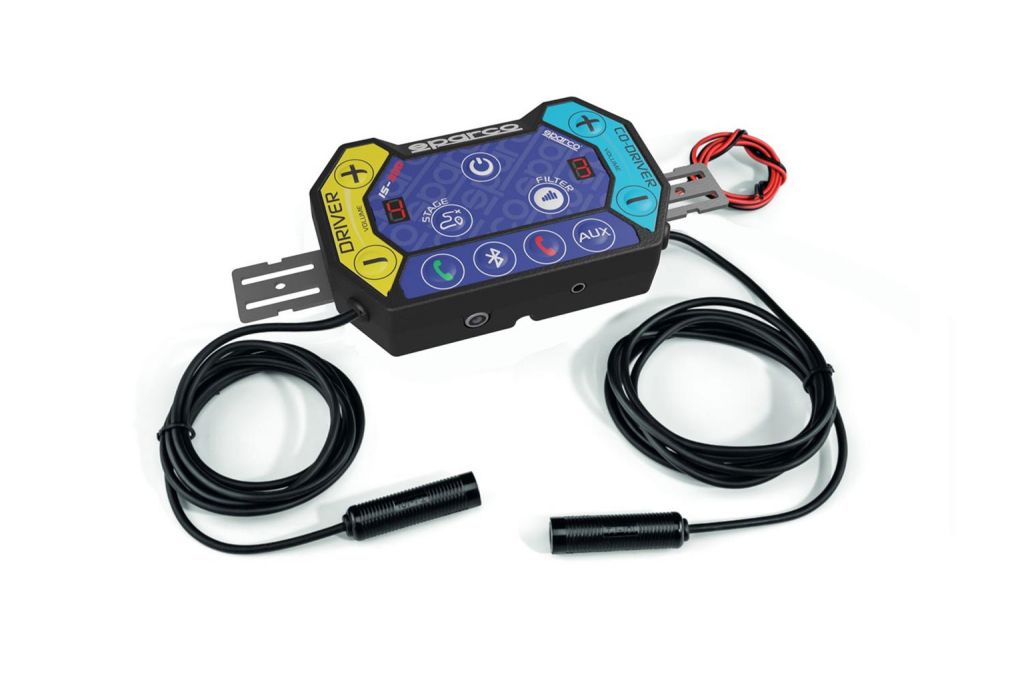
In rally, communication between driver and co-driver is not optional - it's a safety-critical system. The co-driver reads pace notes that guide the car through stages at speeds where there is no margin for missed information. A bad intercom system, a dropped transmission at the wrong moment, or a co-driver fighting wind noise isn't just inconvenient: it's dangerous.
At the same time, a good intercom system makes the crew more efficient and more comfortable over long events. This guide covers everything you need to choose the right system: the NEXUS standard, the differences between analog and digital, popular models, and what to budget.
Key Considerations When Buying a Rally Intercom
NEXUS Standard Compatibility
Before anything else: check whether your helmets and the intercom system use the NEXUS standard. NEXUS is the industry connector standard for motorsport communication equipment - helmets with NEXUS connectors (the large 6-pin circular connector) are compatible with NEXUS intercoms from any manufacturer. The alternative is brand-specific connectors (older Peltor, some budget systems), which limit your options and cause problems at service.
Most current Stilo, OMP, Sparco, and Bell helmets have NEXUS connectors. If you're buying a new intercom, buy a NEXUS-compatible system - you'll never regret it.
Analog vs. Digital
This is the most consequential decision. The difference is significant in practice, not just on paper.
Analog intercoms transmit voice as a continuous electrical signal. They are reliable, simple, and inexpensive, but vulnerable to electrical interference from the car (engine, ECU, alternator). In an electrically noisy car, analog intercoms produce constant background hiss or buzz that fatigues both crew members over a long stage.
Digital intercoms convert voice to a digital signal before transmission. The result is dramatically cleaner audio - digital either works cleanly or it doesn't, with no gradual degradation. The co-driver's voice is clear even with a loud engine. Digital systems are more expensive, but for anyone planning to compete regularly, the investment pays for itself quickly in reduced fatigue and fewer communication errors.
Tip: If you have a highly modified car or turbocharged engine, seriously consider a digital system. The difference in audio quality compared to analog is night and day.
Wireless Intercoms
High-end systems offer wireless connectivity between driver and co-driver. The obvious advantage is no cable running between the seats, which simplifies the interior and eliminates cable management issues during service.
The disadvantage: wireless systems are significantly more expensive, require battery management, and in rare cases can have synchronization issues. For most club and national-level crews, wired digital is the better value proposition. Wireless makes the most sense for professional teams or anyone for whom cable management is a genuine problem.
Radio Integration
Competition rules in many rally series require communication with service. Check whether the intercom system supports external radio integration (PTT button, push-to-talk functionality). Most current systems do, but verify before buying - especially if you're stepping up to regional or national championship level.
Noise Attenuation
The speakers and microphones in the system matter as much as the electronics. High-quality dynamic or electret microphones reject background noise effectively. For open cars (kit cars, buggies) or particularly loud vehicles, look for systems with active noise cancellation (ANC) or noise-canceling microphones.
Popular Brands and Models
Stilo dominates the European rally intercom market to a degree that would be remarkable in any other equipment category. Their systems are used from club level to WRC. Here's an overview of the current lineup:
Stilo
Stilo Trophy 2 - the entry analog system. Clean NEXUS connection, reliable basic transmission, suitable for club events and novice crews. Proof that NEXUS compatibility and decent build quality don't require a large budget. Price: around $100.
Stilo WRC DES 9V - the most popular choice for serious club and national-level crews. Digital signal (DES = Digital Enhanced Sound), battery-powered (9V standard battery), dramatically cleaner audio than analog. The benchmark for value in the digital segment. Price: around $364.
Stilo DG-10 - premium digital system with higher audio quality than the WRC DES, passive noise reduction (PNR), and support for active noise reduction (ANR) helmet options. Rechargeable battery. The choice for long events, loud cars, and crews who prioritize voice clarity. Price: around $593.
Stilo WL-10 - the flagship wireless system. Full wireless connectivity between driver and co-driver, rechargeable battery management, Bluetooth for phone integration. Professional-grade for crews where cable management matters. Price: from around $750+.
Tip: For most crews competing at club or national level in a reasonably quiet car, the Stilo WRC DES 9V is the correct choice. The jump from analog to digital is transformative; the further jump from WRC DES to DG-10 is meaningful but incremental.
Price Ranges
Budget (up to $125)
Basic analog NEXUS systems - Stilo Trophy 2 and equivalents. Reliable for occasional use, club events, and crews just starting in rally. The step up to digital is worth saving for, but an analog system won't leave you without communication.
For: beginners, occasional competitors, second cars, testing days.
Mid-Range ($125-375)
Digital systems including the Stilo WRC DES 9V and comparable alternatives. Clean digital audio, NEXUS compatibility, standard-battery convenience. The sweet spot for regular club and national-level competitors.
For: regular competitors, national level, crews who've experienced interference on analog.
Premium ($375+)
Premium digital systems (Stilo DG-10 and above) and wireless systems (Stilo WL-10). Maximum audio quality, noise reduction, rechargeable batteries, wireless options. The segment for serious competitors and professional crews.
For: professional crews, long-distance events, particularly loud cars, wireless preference.
Summary
Buy NEXUS-compatible equipment. For any regular competitor, choose digital over analog - the improvement in audio quality is immediately apparent and pays dividends over a full season. The Stilo WRC DES 9V is the natural choice for most crews: digital quality at a price accessible to national-level competitors.
If your budget allows, the DG-10 is worth the step up for endurance events or loud cars. Wireless (WL-10) is a genuine upgrade for professional crews where cable management is a real concern.
Frequently Asked Questions
Do driver and co-driver need to have intercoms from the same brand?
Both must use the same system - the intercom unit connects both helmets. You cannot mix a Stilo unit with OMP headsets unless they share a compatible standard. As long as both helmets have NEXUS connectors, they'll work with any NEXUS-compatible intercom unit.
What battery does the Stilo WRC DES 9V use?
A standard 9V alkaline battery (PP3 / 6F22 type). The name gives it away. The advantage: available at any hardware or electronics store, including service parks in remote rally locations. Budget one battery per event day.
Can I use an intercom without a full roll cage installation?
Yes. The intercom unit typically mounts on a bracket or with velcro in the footwell or under the dashboard. It does not require integration with the roll cage. Installation is straightforward and reversible.