
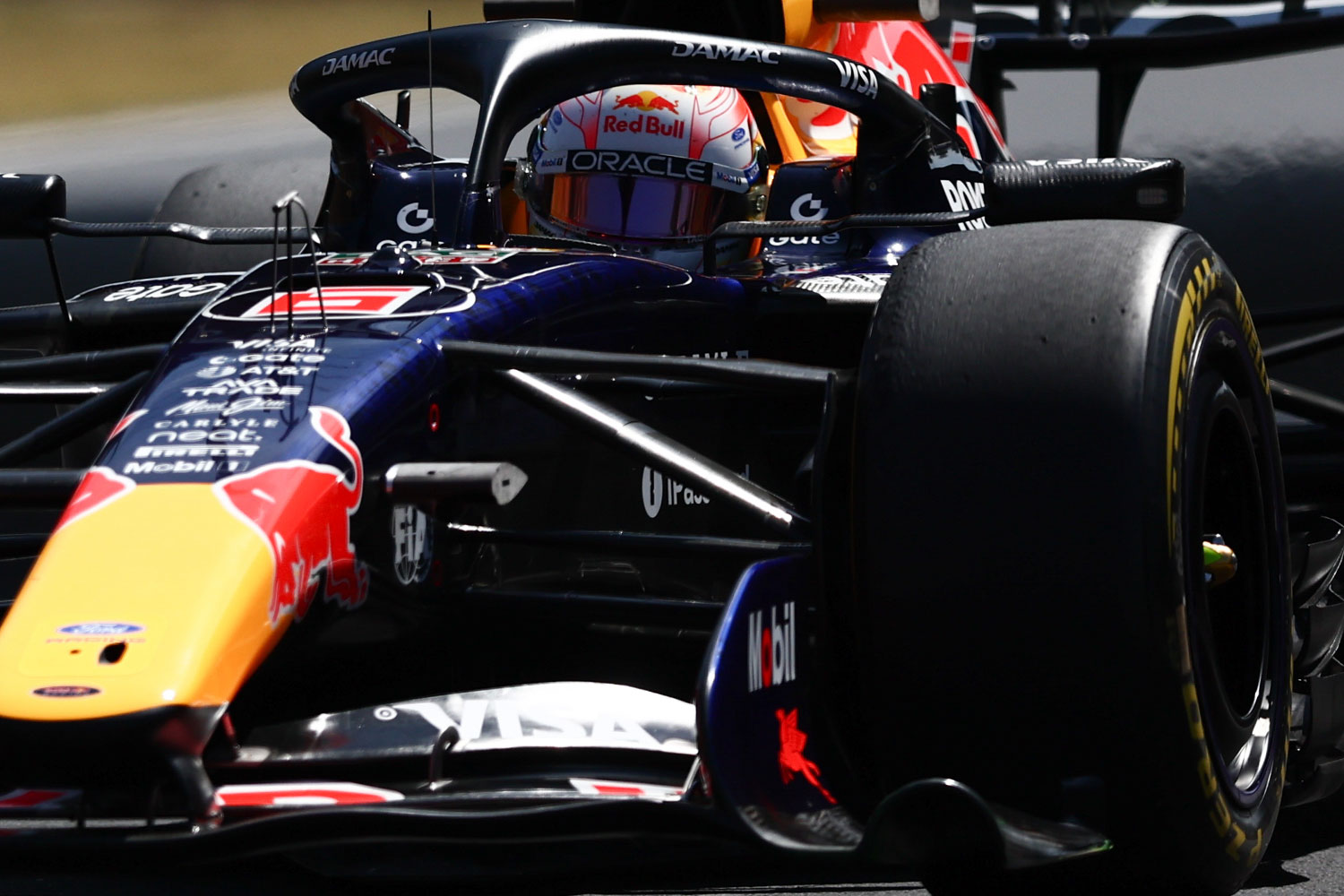
Red Bull's home race at the Red Bull Ring always carries extra weight, but the stakes at Spielberg this year go well beyond a home-crowd result. The team is arriving with its second upgrade package for the RB22, and Max Verstappen's contract situation is still unresolved. On Thursday the Dutchman acknowledged that the progress made so far has been the easy part - the hardest step is still to come. So what exactly is this package supposed to fix, and why could its effectiveness have a direct say in where Verstappen races next?
Why the Austria package matters beyond a single race
Verstappen's contract situation stays unresolved because he holds a card no other driver on the grid has - he can wait. Red Bull wants a long-term commitment, but clauses in his current deal let the four-time champion sit back and watch for as long as he chooses. It's a near-exact replay of last year: the team has to prove it can reverse a difficult trajectory, and Verstappen is watching and keeping score.
This upgrade package is not just a block of aero parts. It's a statement. If Red Bull can show that the RB22's development arc is pointing toward race wins, the case for staying gets stronger. If the gains are cosmetic, Italian media aren't wrong to keep connecting his name with the option clause in George Russell's Mercedes contract. Every tenth of a second recovered at Spielberg carries consequences that stretch well past the Austrian border.
How Red Bull got here - the development story so far
The 2026 season started in a hole. The RB22 arrived at the opening rounds roughly 12 kilograms overweight, and under the current regulations that is a real anchor - even a few kilos costs measurable tenths per lap. The first concrete fix came with the Miami package: the excess mass was cut by half and the team carried out a substantial aero rebuild, including revised sidepods.
Technical director Pierre Wache told Autosport shortly after Miami that a second round of changes would land in Austria. That's why the RB22 is generating this level of scrutiny this weekend. The logic is straightforward: first you eliminate the obvious handicaps like overweight, then you go after performance nuances. The first is organizationally demanding but conceptually clear. The second requires understanding exactly where the car is losing time - and that is considerably harder to pin down.
How much lap time Red Bull is chasing
The numbers coming out of the garage are specific. Team principal Laurent Mekies puts the deficit in the range of three-and-a-half to four tenths per lap, and expects the Austria package to bring that gap down to roughly one tenth. That's a significant jump on paper, but Mekies is quick to manage expectations - the Spielberg package alone won't put Red Bull in genuine contention for wins.
There's a real problem buried in that math. Closing from four tenths down to one tenth sounds like a massive stride, but that final tenth is the most expensive one. Verstappen put it plainly: the steps you make when you're well off the pace are easier. The hardest one is the last - the step that gets you into the fight for the lead. He made no promises about Austria being that moment.
There's also the caveat every engineer carries around: the competition isn't standing still. McLaren, Mercedes, and Ferrari are bringing their own updates to nearly every round, so Red Bull has to keep adding just to stop the gap from growing back. Chasing a moving target is a fundamentally different problem from chasing a fixed one.
Where the RB22 is actually losing time
Heading into the Barcelona weekend, Red Bull's focus was primarily on high-speed corners. Earlier rounds had offered some cautious optimism in slower-speed sections - on tracks like Miami, Montreal, and Monaco the car was reasonably competitive. The concern was the fast, sweeping corners of the Circuit de Barcelona-Catalunya, a traditional chassis benchmark.
What came back from Barcelona was more complicated than a single weak point. High-speed corner performance didn't disappoint - but the overall takeaway was worse for a different reason: the RB22 is simply losing small amounts of time everywhere. There's no single hole to plug, just a distributed deficit spread across the entire lap. That's a much harder problem to solve, because you can't address it with one well-aimed aerodynamic move.
For the driver, that characteristic is genuinely frustrating. Verstappen acknowledged that the gap in Barcelona was clear, and said he hoped Austria would be "a bit better." That qualifier matters. Nobody inside Red Bull is talking about a breakthrough - they're talking about closing the gap step by step.
What this means for the title fight and the rest of the grid
For anyone watching on Apple TV this weekend, the thing to track is pace, not just finishing positions. If Verstappen starts qualifying closer to the front after this package drops and can match the race pace of the fastest cars, that's evidence the RB22's development arc is real. If the gap stays the same, the pressure on his contract decision only intensifies.
For the rest of the field, the outcome matters just as much. A stronger Red Bull with a motivated Verstappen tightens the fight for wins, and McLaren and Mercedes can't afford to ease off their own development rates. A package that underwhelms and a champion who starts weighing his options? That's a completely different scenario - one with an open transfer window that could reshuffle the entire driver market before the 2027 season.
The Red Bull Ring atmosphere is part of the story too. The sea of orange in the grandstands - Verstappen's Dutch fanbase traveling in force - is one of the defining images of the Austrian Grand Prix weekend. It's a reminder that whatever happens on track, the place will be loud.
FAQ - Red Bull's Austria package and Verstappen's future
Will the Austria package be enough for Red Bull to fight for wins? According to Laurent Mekies, no. The Spielberg package is expected to cut the deficit from around three-and-a-half to four tenths down to roughly one tenth per lap - but another development step will be needed before the team can genuinely fight for the top step.
Why does Verstappen call the next step the hardest? Because improvements made from a big deficit are more straightforward - you're eliminating obvious handicaps like excess weight. The last tenth that actually gets you into victory contention is the most difficult and most expensive to find.
What did the Miami package fix? The RB22 started the season roughly 12 kilograms overweight. In Miami the team cut that excess by half and carried out a major aero rebuild including revised sidepods.
Where is the RB22 losing most of its lap time? Barcelona showed there's no single soft spot. High-speed corner performance wasn't the problem - the car is simply losing small amounts of time across the whole lap, which makes it much harder to address with a targeted fix.
Could Verstappen leave Red Bull? Clauses in his contract allow him to wait and evaluate the team's progress rather than commit immediately. Italian media have linked him to an option in George Russell's Mercedes deal, which means how well these upgrade packages work has a direct bearing on his decision.