
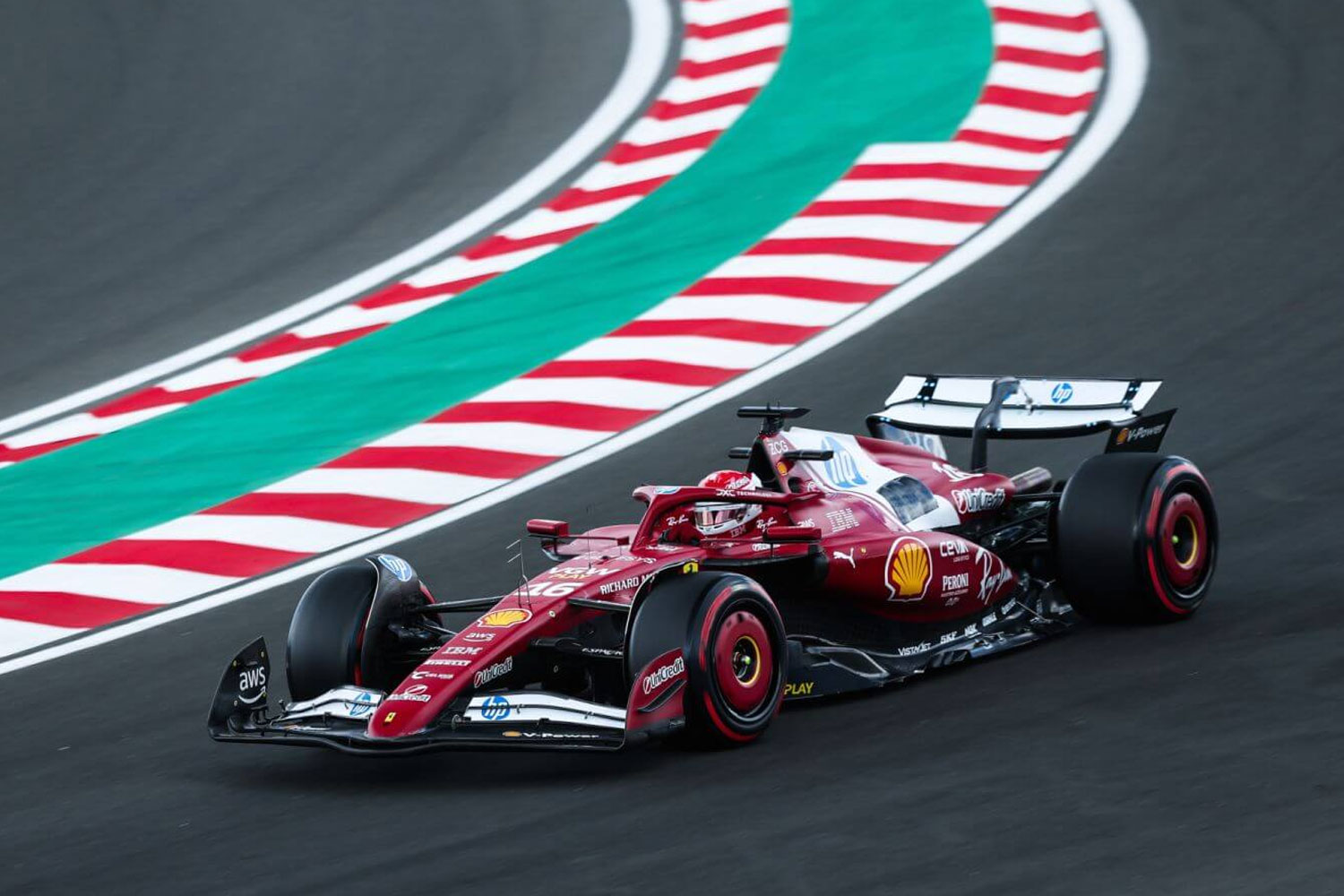
The 2026 Hungarian Grand Prix looked like Ferrari's weekend to lose. The team arrived at the Hungaroring with a genuinely competitive car, Charles Leclerc and Lewis Hamilton went fastest in both Friday practice sessions, and the tight, twisty Budapest layout seemed tailor-made for the SF-26. A few hours on Sunday afternoon dismantled that picture completely - fourth and fifth was all they had to show for it. Fred Vasseur did not reach for excuses. He said flatly that the team's execution across the weekend was very poor. Ferrari outscored Mercedes by one point, but the size of the missed opportunity was far larger than any single-point margin suggests.
What went wrong for Ferrari at the 2026 Hungarian GP?
The situation was already complicated before lights out. Hamilton had qualified second and Leclerc third, but Hamilton collected a three-place grid penalty for impeding Oscar Piastri. That dropped him to fifth, pushed Leclerc to second on the grid, and left the Monegasque driver lining up on the front row alongside Lando Norris.
Lap one erased whatever advantage that front-row position carried. Leclerc suffered too much wheelspin off the line, got squeezed by the cars around him, and dropped from second to fifth. Hamilton moved forward from P5 to P4 in the same chaos, but instead of splitting the McLarens the two Ferrari drivers were now bunched in the midfield pack. Vasseur later said that keeping Leclerc between the two McLarens could have fundamentally changed the shape of the race - a gap that opened in the first corners and never really closed.
The problems kept stacking up from there. Ferrari lost positions through multiple pit stop sequences, Hamilton made an error at his final stop, and then received a five-second penalty for exceeding the pit lane speed limit by just 0.1 km/h. He also lost track position to Max Verstappen. Vasseur's verdict was blunt: everything that could go wrong, went wrong. Each incident in isolation might have been recoverable. Combined, they eliminated any realistic shot at the podium.
Leclerc on SF-26 inconsistency: too many highs and lows
Leclerc finished fourth and was candid about how unpredictably the SF-26 behaved depending on the tire compound and the stage of the stint. His first long run on the hard tires was decent. The second stint on the same compound, he said he almost completely lost feel for the car. The closing run on softs was significantly better again.
He acknowledged that Ferrari did not have exceptional pace at any point in the race, but the bigger issue was the wide swing between stints. The car allowed competitive lap times in certain conditions and then became very hard to drive - for both him and Hamilton - shortly after.
That kind of unpredictability does not just frustrate the drivers; it undermines strategy calls too. If the team cannot accurately forecast how the car will respond to the next compound, a given track temperature, or traffic, even a sensible strategy on paper can fall apart at the pit wall. Budapest made clear that Ferrari still needs to work on the SF-26's consistency just as much as its outright performance ceiling.
Hamilton's VSC pit stop call: opportunity or mistake?
The most debated moment of Ferrari's race was Hamilton's final stop, taken under the Virtual Safety Car after Piastri pulled over. Ferrari bolted on soft tires. Verstappen stayed out. When the dust settled, Hamilton had also lost a position to Kimi Antonelli.
At the stop itself, Hamilton locked up on entry and did not place the car cleanly on the stop marks. Those lost fractions of a second were enough to leave Antonelli ahead when the pit stop sequence completed. The speed-limit breach made things worse - Ferrari's timing showed Hamilton's entry at 80.1 km/h against a limit of 80 km/h. Vasseur said his driver switched off the pit lane limiter a fraction too early.
Hamilton questioned the call after the race. He said the instruction came just as he was turning into pit lane and there was no time for a real back-and-forth with the engineers. His read was that staying on hard tires probably would have cost him second place to Verstappen, but might have been enough to hold third.
Vasseur backed his engineers. Hamilton's hard tires were the oldest in the front group at that point, and Verstappen's pace on fresher rubber made staying out look risky. The Ferrari team principal said that with the same information in front of him again, he would make the same call. That said, several other cars completed very long hard-tire stints later in the race, which means the scenario Hamilton described was not far-fetched.
What does this mean for the championship standings?
Vasseur pointed to the one-point gain over Mercedes as a small positive from Hungary. But it barely moved the needle in the constructors' championship, where Ferrari still has a significant deficit to make up. The drivers' standings stung more. Kimi Antonelli extended his lead over Hamilton from 45 to 50 points.
With the number of rounds shrinking, every weekend Ferrari leaves points on the table becomes more expensive. Hamilton came to Hungary with a genuine chance to cut into the championship lead - the Hungaroring's winding layout was supposed to limit the straight-line advantage that benefits Mercedes' power unit. Instead, the gap grew again.
The circuit profile looked right for the SF-26. High downforce, strong traction, stable handling through extended corner sequences - these are demands that should suit the car. Ferrari confirmed the potential on Friday and converted it into two top-three qualifying slots. Sunday told a different story. The question is no longer only whether the SF-26 is fast enough; it is whether the team can actually execute across an entire race weekend when things do not go to plan.
The coming rounds will show whether Vasseur can turn an unusually frank post-race assessment into concrete operational fixes. Ferrari needs to address both in-race decision-making and the SF-26's predictability across tire compounds. The diagnosis after Budapest was honest. The response is what matters now.
Vasseur on raw pace: was the SF-26 actually fast in Hungary?
Vasseur was careful to note that judging pure car pace from a race this chaotic is difficult. Leclerc spent a large portion of the race stuck in traffic after the opening-lap drop, and Hamilton's afternoon was distorted by the pit stop errors and the time penalty. That said, Vasseur believes the SF-26 showed more potential at the Hungaroring than it did at the two preceding rounds in Spa and Silverstone.
If that read is correct, Ferrari has a foundation for cautious optimism. The car can be quick in the right conditions, on the right compound, in clean air. The problem is that Formula 1 rarely hands you an ideal sequence. Championship-level execution means limiting the damage when the start goes sideways, a strategy call lands wrong, or a Safety Car reshuffles the order at the worst possible moment.
Ferrari did not demonstrate that capability in Budapest. Back-to-back fastest times in Friday practice and two front-row qualifying positions confirmed the SF-26's potential - they did not replace a strong Sunday result. One fast day without a matching race outcome is not a turning point. It is a promise the team still has to keep.