
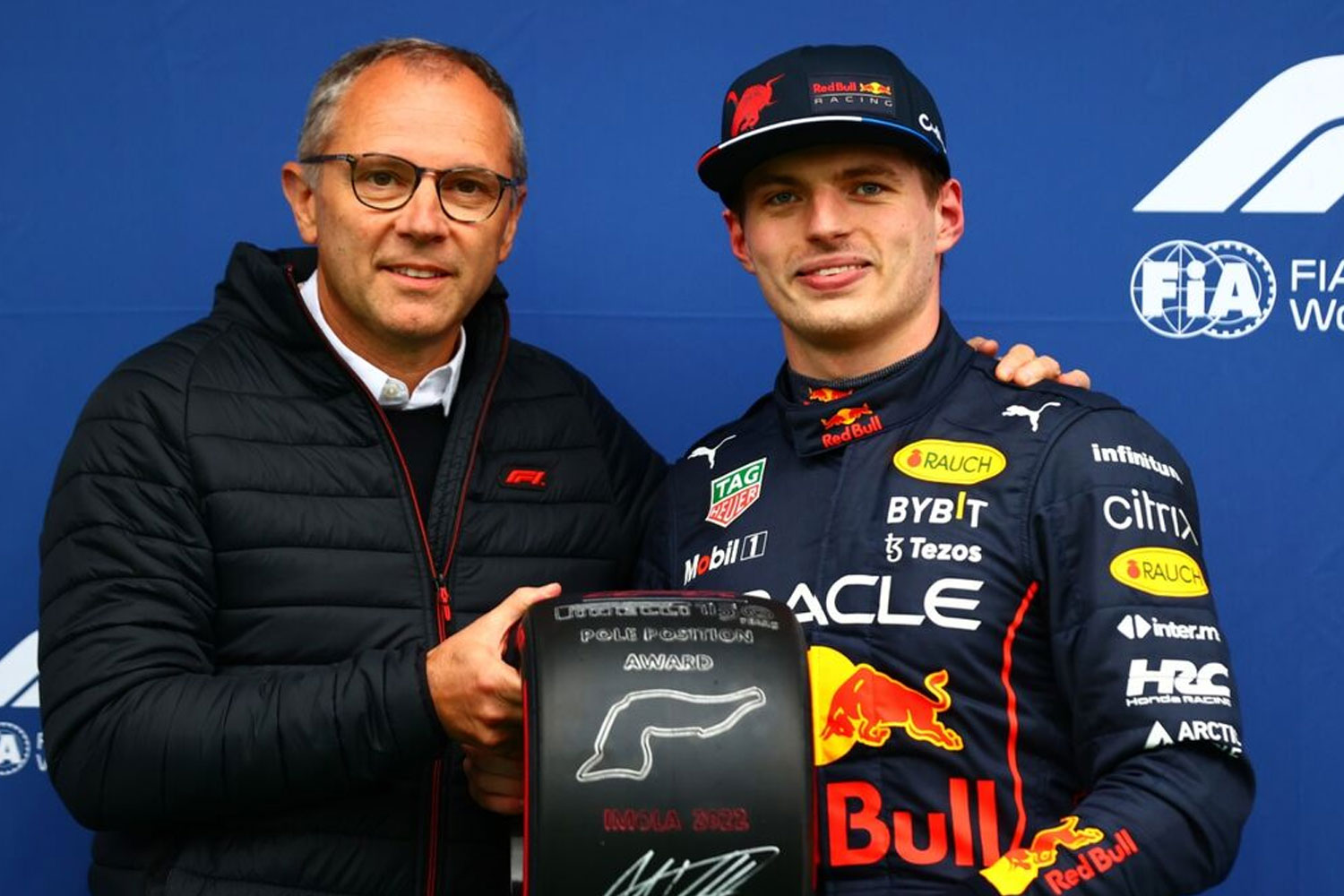
The 2026 season lit up the paddock long before the opening lights went out. A sweeping new technical framework split opinion down the middle - fans have largely warmed to the changes, while several drivers have not. Now Stefano Domenicali has stepped into that debate with data, direct language and one unmistakable message: nobody is getting silenced, but he wants a real conversation, not just noise. Here is what the numbers actually show and what is driving the tension at the top of Formula 1.
What Domenicali says about F1 2026 driver criticism
The Formula 1 CEO did not mince words. "We're not going to tape anyone's mouth," Domenicali told Autosport. Every driver is entitled to an opinion - positive or negative. The line he draws, though, is clear: criticism needs to be constructive. Emotion without argument, in his view, helps no one.
Domenicali acknowledged that he prefers some of those conversations to stay behind closed doors. He pointed to his private meeting with Max Verstappen as an example. Verstappen spent the opening weeks of 2026 as one of the most vocal critics of the new regulations. After that sit-down with the F1 boss, his tone shifted - he became more measured in public, even if he did not walk back every objection.
Domenicali was also direct about where his primary responsibility sits. "For me, the fans come first. Drivers can have their say, but my job is to look after what is best for this sport," he said. He called the drivers the "jewel of the sport" - and then made clear in the same breath that even a world champion's voice cannot outweigh the interests of the series as a whole.
F1 Fan Voice data: fans rate the 2026 season higher than 2025
Domenicali did not rely on words alone. He cited concrete figures from the F1 Fan Voice program - a panel of 60,000 fans who rate races on a regular basis. The numbers are straightforward: in 2025, 60% of respondents rated races as good or excellent. By the midpoint of the 2026 season that figure had climbed to 66%.
Six percentage points is not a seismic shift, but the direction is unambiguous. The F1 CEO reads it as confirmation that the new regulatory cycle is tracking in the right direction - at least from the stands and the couch. "The championship is being followed closely by fans who appreciate what we have achieved," Domenicali said.
Fan polling and a driver's opinion from inside the cockpit are two fundamentally different things, of course. A fan scores the show from the grandstand or the screen. A driver feels every ripple in the asphalt, every handling quirk and every moment the car demands backing off. Those two perspectives do not have to cancel each other out - but they do not always line up.
The throttle-lift debate and the 1980s comparison
Domenicali had already been defending the 2026 rules before this latest round of comments - and not without pushback. When premature throttle-lifting on straights emerged as one of the central complaints against the new package, the Italian reached back to the turbo era of the 1980s and 1990s, arguing a similar phenomenon existed then and did not ruin the spectacle.
Nigel Mansell, the 1992 world champion, publicly rejected that comparison. For the British legend, drawing a direct parallel between that era and the current situation was unfair and went too far. That exchange captures the depth of the divide between those who run the sport today and those who built its history on track - or are still writing it now.
Domenicali's focus, though, has stayed on the organizational picture: more passing, less predictable racing, stronger fan engagement. From where he stands, those elements add up to a positive balance - even if the cars have become more demanding for the drivers who have to manage them.
Verstappen, the criticism and the closed-door conversations
Verstappen is the central figure in this whole dispute. The four-time world champion did not hold back - his objections to the 2026 regulations were public, specific and persistent. Domenicali chose dialogue over confrontation. The two met privately, away from cameras and recorders.
The result? Verstappen did not pull all his critical comments, but he stopped taking shots at the regulations at every media opportunity. Domenicali cited that as exactly the kind of constructive exchange he is looking for. The point is not to shut anyone up - it is to move at least part of the argument into a room where it can happen without media escalation driving the temperature higher.
Verstappen is not the only skeptical voice in the paddock. Several other front-runners have expressed doubts - mainly around performance characteristics and the way the new technical rules have changed how the cars feel to drive. Domenicali declines to name them individually, but the message is consistent: those conversations are welcome, and they work better in four walls than in a press conference.
One path forward - what Domenicali actually wants
There is a specific management philosophy behind Domenicali's public statements. He is not asking for driver self-censorship - he is asking for maturity. The difference matters. A driver who says "this regulation hurts racing because it reduces grip in medium-speed corners" is a productive partner in the conversation. A driver who simply declares the season bad is delivering an emotional verdict that is hard to translate into any concrete change.
"There is only one path we need to take together," Domenicali said. That line cuts two ways: it reads as an invitation to collaborate, and as a quiet reminder that drivers are part of an ecosystem with its own direction of travel. Almost certainly it was meant as both at once.
The F1 CEO looks at Formula 1 as a global product - fans on six continents, broadcaster agreements, sponsors and host cities all in the mix. From that vantage point, one unhappy driver is an important signal, but not the only metric that counts. Rising fan ratings, new commercial deals and growing audience numbers are the arguments Domenicali puts on the table.
What this means for fans watching the 2026 season
For anyone following the championship on Apple TV, this debate has real consequences. If the F1 Fan Voice data actually shapes decisions, the 2026 season could continue to evolve - though mid-season regulatory changes remain a long shot. Domenicali's message is that fan input acts as his compass.
For the drivers, the situation is more layered. They can speak - that much is certain. They can criticize - also certain. But the clearer Domenicali's signal becomes, the more the paddock understands that purely emotional criticism, left unaddressed with specifics, will not move the needle. The argument matters; the volume does not.
The 2026 season is still running. Fan data will keep coming in, drivers will keep talking - and by the time the final checkered flag drops, it will be worth seeing whether the final verdict lands closer to Domenicali's position or Verstappen's.
FAQ - common questions about the Domenicali vs. F1 2026 drivers dispute
Why is Domenicali talking about censorship in F1?
He was responding to mounting driver criticism of the 2026 regulations. He confirmed that no one plans to stop drivers from speaking, but expects negative opinions to be constructive and backed by solid reasoning.
What does the F1 Fan Voice data say about the 2026 season?
The program polls 60,000 fans. In 2025, 60% rated races good or excellent. By mid-2026 that number had risen to 66%.
Where does Verstappen stand on the 2026 F1 regulations?
Verstappen was one of the loudest critics. After a private meeting with Domenicali he became noticeably more careful in his public comments, without dropping all of his objections.
What does Domenicali expect from F1 drivers?
A constructive approach. Criticism is allowed, but it should be grounded in specifics. He prefers difficult conversations happen behind closed doors rather than through the media.
Why is Domenicali defending the 2026 F1 rules despite the criticism?
He points to rising fan race ratings, more passing and less predictable racing as evidence the new rules are working - and those figures support the direction he has chosen for the sport.